Delhi merchants up in arms, say MDR on UPI could mark return to cash | Finance News
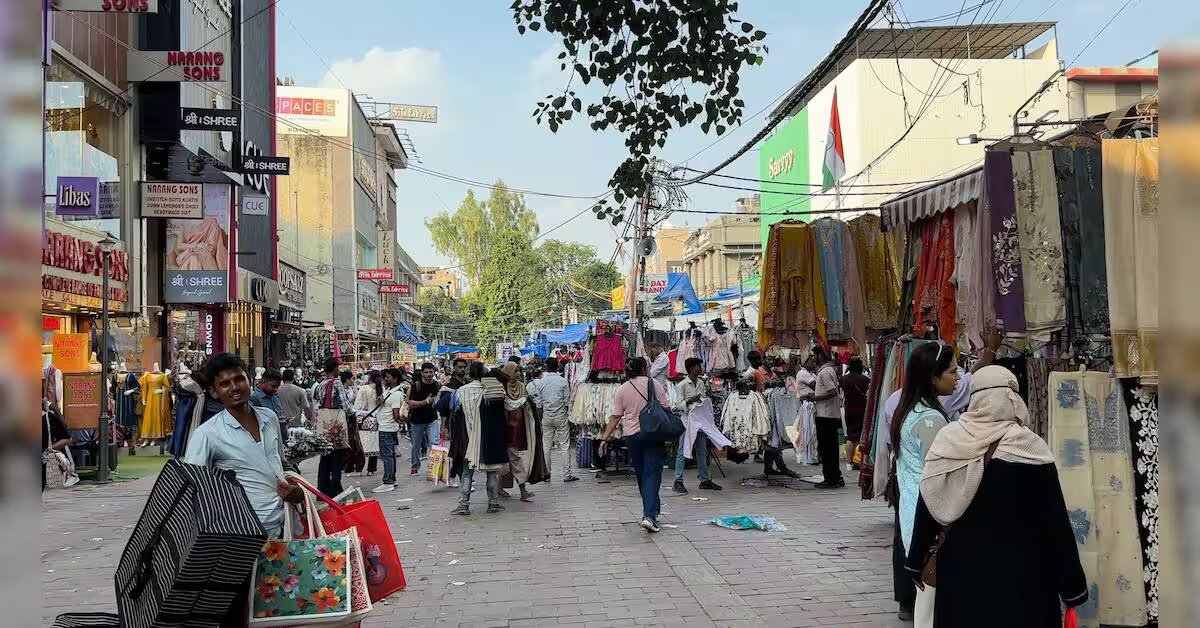
The imposition of a merchant discount rate (MDR) on select Unified Payments Interface (UPI) transactions has the retail trade in Delhi’s Lajpat Nagar Central Market on tenterhooks about the additional burden on them, with some saying they might have to resort to encouraging customers to pay in cash for big-ticket purchases.
“I think the government has cheated us. UPI has been free since Covid, so why is the government charging us now? The burden should not be on us,” complained Deepak Nagpal, 43, a garments retailer in New Delhi’s Lajpat Nagar, a major shopping hub.
UPI was free for merchants for over six years
UPI merchant transactions have been free since January 2020, when the government mandated a zero-MDR policy after an on-again, off-again MDR regime since UPI’s 2016 launch. The latest institution of charges on select merchant payments comes after more than six years, which allowed the UPI platform to entrench itself as a leader in the digital payments architecture of the economy.
The move, though, has unsettled shopkeepers who have transitioned in a significant way to the now-ubiquitous UPI payment system.
“Around 30-40 per cent of our payments come through Paytm or UPI,” said Arjun Rawat, 40, a crockery shop owner, pointing out that most of his sales are above the ₹2,000 cut-off for MDR charges.
“Our products are relatively expensive, so most transactions cross ₹2,000. That means a large share of our UPI payments could attract the MDR,” he said.
While small vendors whose monthly UPI transactions are below ₹1 lakh will also be exempt from MDR on individual bills above ₹2,000, merchants selling higher-value products will likely be affected disproportionately.
Certain industries, too, will have differential rates. Railways, telecom, insurance, and fuel transactions will attract a flat ₹5 fee above the applicable threshold, while capital-market transactions will carry an MDR of 0.02 per cent, capped at ₹300.
‘This is an additional cost’
Vijay Gupta, a jewellery shop owner, said merchants were already facing multiple costs and that the MDR will only add to their expenses.
“This is an additional cost for us. We already pay 18 per cent GST, and there are charges on credit and debit card transactions. Now UPI will also have a charge,” he said, demanding the decision be rolled back.
Others fear the 0.4 per cent MDR is only a first step.
“Today the charge is 0.4 per cent. Tomorrow, they could increase it further,” said Anil Katharia, a cosmetics seller.
Will merchants push customers towards cash?
Most merchants Business Standard spoke to said they did not want to pass the cost on to customers, but pointed out that absorbing the MDR would put pressure on already-tight margins.
“We will have to ask customers to pay in cash. We can’t help it, but we will encourage them to pay in cash,” said Lalit Kalra, owner of Dayal Opticals.
Consumers, however, said a return to cash would be an inconvenience they had already sidestepped.