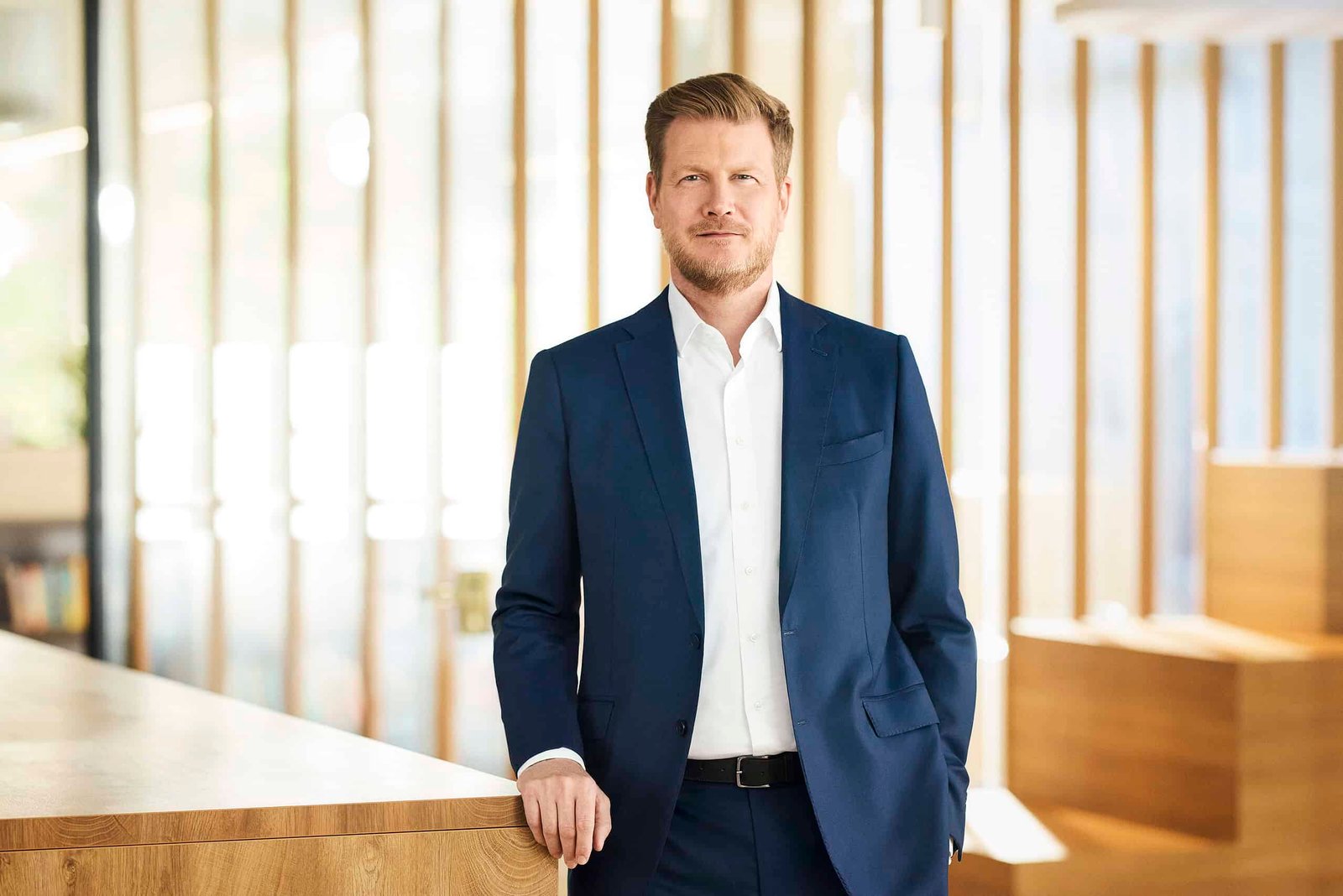
CFO Corner: Steffen Baetjer, Fielmann Group
Fielmann Group CFO Steffen Baetjer discusses global growth, digital transformation, and AI.
This article appears in the September 2026 issue of Global Finance Magazine.
Steffen Baetjer joined Fielmann Group in 2023. He previously worked as a strategy consultant at McKinsey and as CFO at several private equity-backed companies.
At Fielmann, he is helping lead the eye-care services and hearing aid provider’s global expansion, building scalable finance structures to drive operational performance and support long-term strategic growth.
Global Finance: In your view, what is your main achievement since joining Fielmann?
Steffen Baetjer: If I had to name one, it would be helping transform finance so it can support a business that is becoming more international and more complex. Our group’s strategy was to modernize, internationalize, and digitalize Fielmann, and finance had to evolve in that exact same way — from an organization built for a market leader in German-speaking Europe to a fully integrated global finance function, with new structures, upskilled people, and new processes and technologies.
In that way, we created a finance organization that supports an international business across different markets, systems, and regulatory environments.
At the same time, of course, we had to deliver on the core CFO agenda: keeping a tight grip on costs to rebuild margins and speeding up processes so the business can make better decisions faster. In addition, we established Fielmann in the debt capital markets — when we made our U.S. acquisition three years ago, it was the largest transaction of its kind in Fielmann’s history.
So, the achievement I am most proud of is really that combination: transformation and operational delivery, but never one at the expense of the other.
GF: What do you focus on most?
Baetjer: A large part of my time goes into building organizations, processes, and capabilities, so that finance can help the business make better decisions and thus help it grow.
That means, first of all, building one finance organization across all our countries. We are no longer just a finance team serving one market. We are operating across multiple countries and business models. So, we need structures, processes, and capabilities that work on a global level.
A second focus is business development. I spend a lot of time making sure finance is not just reporting the past, but becoming able to actively help the business move forward by creating transparency, improving decision-making, and supporting the strategic agenda.
And then there is talent development. In the end, finance is only as strong as the people in it. So I invest quite a bit of time in developing our teams, building capabilities, and making sure we have the right people in the right roles as the organization grows.
GF: How important is it for you to have a good team? What defines a good team for you?
Baetjer: Building and developing the team is probably the most important part of my job. Without a great team, I cannot achieve anything.
One of the things I enjoy most is building organizations that can grow with the business. As Fielmann has become more international, finance has had to evolve as well. That means bringing together people from different countries, building common ways of working, and creating an environment where people continuously develop.
Something I never tire of is watching people grow. Challenges that seemed almost impossible a year ago suddenly become routine. That’s because people have learned, gained confidence, and taken on more responsibility. That is probably one of the most rewarding aspects of leadership.
GF: How do you see AI affecting your work?
Baetjer: I see AI as an important enabler, not an end in itself. The value that AI offers is not that we can automate everything, it’s that we can make better decisions.
For me, the real game changer is that AI allows us to focus our most valuable resource, our people, and on the activities where they create the greatest value. When AI supports their decision-making with faster data analysis and identification of patterns, that’s when the potential value becomes exponential. I think that is where the real opportunity lies: not in replacing people but in enabling them, so their work has even greater impact.
Tiziana Barghini is a contributing writer based in the U.S.