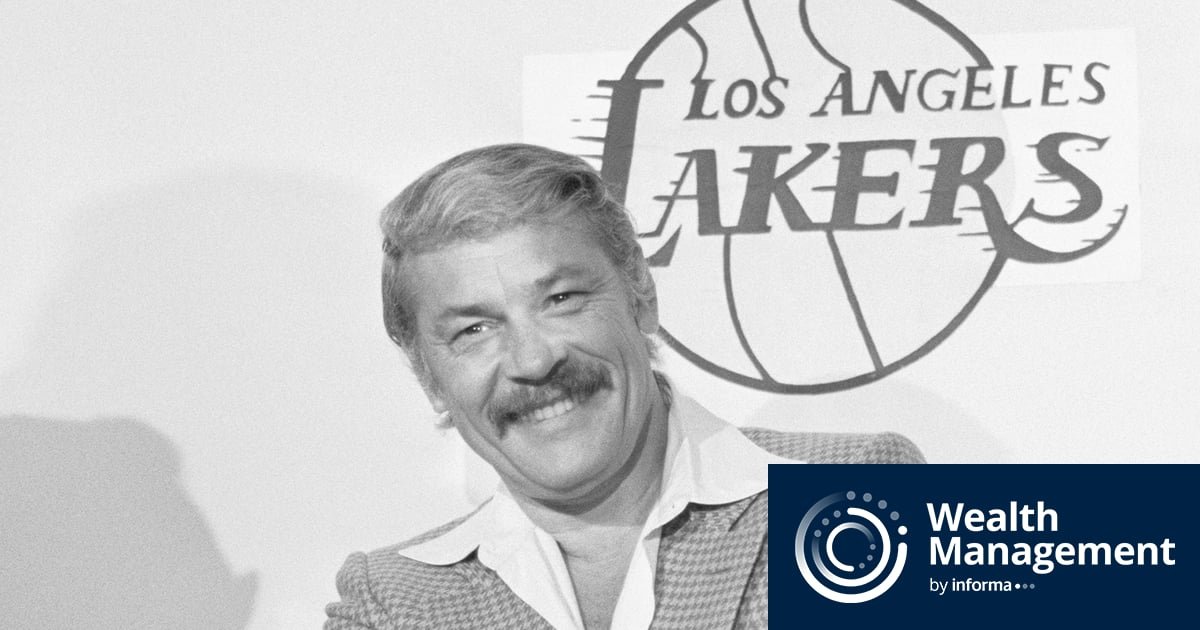
Buss Family Feud Over Lakers Ownership Brews Off Court
The Los Angeles Lakers, one of the NBA’s most storied franchises, has become the center of a bitter family dispute that reveals how even the most carefully crafted succession plans can unravel. Jeanie Buss, the Lakers’ controlling owner and team governor, is locked in a legal battle with her five siblings over the sale of the family’s remaining 17.8% stake in the team—a conflict that’s persisted for years despite their late father Jerry Buss’s meticulous planning.
Jerry’s Vision and Succession Plan
Jerry is considered one of the greatest owners in NBA history, with the Lakers winning 10 championships under his ownership. When he died in February 2013 at age 80, he left behind a carefully structured succession plan designed to keep the Lakers in the family for future generations. Jerry’s 66% controlling ownership passed through the Buss Family Trust to his six children: Johnny, Jim, Jeanie, Janie, Joey and Jesse. Each child received an equal vote, but Jeanie was designated as the Lakers’ governor and given ultimate operational authority over the franchise.
Jerry’s plan operated on three layers: collective family ownership; Jeanie as the ultimate authority; and operational roles for the other children. Jeanie would handle business operations while her brother Jim managed basketball decisions. On paper, it seemed like a perfect plan to preserve both family unity and the Lakers’ legacy.
The Cracks Emerge
The succession plan began showing cracks almost immediately. According to ESPN, Jim and Johnny expressed willingness to sell their shares shortly after their father’s death. By 2017, tensions had reached a breaking point. After four consecutive losing seasons, Jeanie fired Jim from his position as executive vice president of player personnel, along with general manager Mitch Kupchak. Jeanie was reportedly upset Jim made key trades without consulting her, despite her previous instructions to do so.
What followed was an attempted coup. In February 2017, Jim and Johnny tried to remove Jeanie as controlling owner by calling a meeting to elect a new board of directors that excluded her. Jeanie responded by filing a restraining order and successfully thwarted the power grab. The siblings eventually agreed that Jeanie would serve as controlling owner for as long as the family owns the team, with Jim surrendering his role as team trustee.
The family had already sold a majority stake in the team in 2025 to businessman Mark Walter, with Jeanie to stay on as governor for five years. However, under NBA rules, a governor must retain at least a 15% ownership stake.
The Current Battle
Fast forward to August 2026, and the family conflict has reignited. Five of the six Buss siblings want to sell the family trust’s remaining 17.8% stake to Bob Iger (former Disney CEO) and Josh Kushner (brother of Jared Kushner, President Donald Trump’s son-in-law) as part of a record $12.5 billion sale of the Lakers to their group. Jeanie is the lone holdout, arguing that the trust’s language and the 2017 court order prevent the sale without her consent.
In a letter obtained by CNBC, Jeanie’s attorney Adam Streisand argued that “no sale of the JAB Trust’s 17.8% ownership interest in the Los Angeles Lakers, Inc. can be effectuated without approval by the current co-trustees.” He further stated that any attempt to sell would constitute “a breach of trust, breach of fiduciary duty and be in contempt of court.”
Adam also challenged reports that all six siblings had voted to sell, calling them “false, defamatory and pernicious” and part of a “years-long pattern” by Joey and Jesse Buss to harm the Lakers while Jeanie carries out their father’s wishes.
Where Did It Go Wrong?
Jeanie, who’s highly invested in the franchise, having worked with the team and her father for decades, is dead set on carrying out her father’s wish to keep the team in the family. However, even the most meticulous estate planning might not yield the result the testator wanted in this situation.
While Jerry likely had the best intentions when he created an equal ownership structure for his children, the plan seems not to have accounted for issues that may arise if the siblings don’t see eye to eye on the future of the business, leading to this very public feud playing out off the court.
“Jerry Buss chose Jeanie to lead. That choice also committed family capital to sustaining her authority. It raises a question succession plans often leave to the next generation: who finances the founder’s legacy after the founder is gone? As a trophy asset appreciates, the opportunity cost of preserving the founder’s structure rises with it, placing greater pressure on the family,” explained Ryan Austin, CEO of Arondight Advisors.
How can a grantor avoid a similar situation? According to John Abbuhl, Director of Trust Business Development at National Advisors Trust, “A grantor can feel like they have constructed an iron-clad estate plan and set of trusts, yet still find the heirs in a contentious and costly legal battle. The more discussion a grantor has with heirs together at one time (family meeting) prior to one’s passing, the greater chance of clearer expectations and the less likely arguments will ensue over control and last wishes. An independent trustee outside of the family may bring more objective decision-making to a situation.”
Who Will Prevail?
If the siblings aren’t able to agree, it will be up to a court to rule on the terms of the trust, including a 2017 court order that reaffirmed that the trust instructs that the co-trustees take all reasonable actions available to ensure that Jeanie remains the controlling owner of the team during her lifetime, which prevents the siblings from acting by majority vote to sell their shares.