Tata Capital’s revolving credit exposure below 5% of loan book: Sabharwal | Finance News
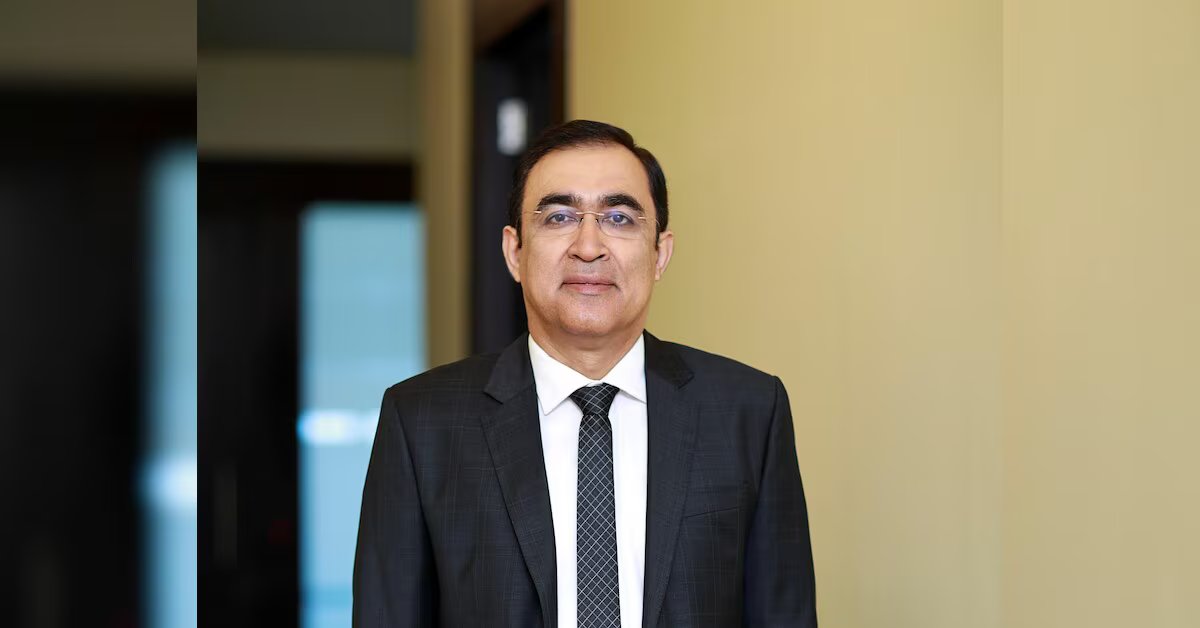
Tata Capital’s exposure to revolving credit, which the Reserve Bank of India (RBI) has proposed to bar non-bank lenders from offering, accounts for less than 5 per cent of its loan book, said Rajiv Sabharwal, managing director and chief executive officer of the third-largest private-sector non-banking financial company (NBFC) on Tuesday.
The lender will submit its feedback on the proposal, while industry forums are also likely to respond to the central bank, Sabharwal said. “I think they have given out a paper, and have asked for feedback, so we will give feedback. Whatever the final regulation is, we will comply. It (revolving credit) is a small percentage for us — below 5 per cent. We are also collating all data and will give our feedback to the regulator,” he said on the sidelines of a banking conference organised by the Federation of Indian Chambers of Commerce & Industry (Ficci) and the Indian Banks’ Association (IBA).
As of end-June, Tata Capital’s gross loan book stood at ₹2.86 trillion, while its assets under management (AUM) were ₹2.90 trillion.
The Finance Industry Development Council (FIDC), the self-regulatory organisation for the NBFC sector, is also meeting this week and is likely to discuss the issue, said a source aware of the development.
Last week, the RBI proposed that NBFCs should offer only term loans with a pre-determined repayment schedule, under which sanctioned limits cannot be restored once repaid. The proposal would effectively bar flexi-credit products that allow borrowers to repeatedly draw down and repay the same credit line.
Credit cards issued by RBI-authorised issuers and bullet repayment loans have been excluded from the proposal. The central bank has invited comments until August 28.
Only two non-bank entities currently issue credit cards in India — SBI Cards and Payment Services, the credit card arm of State Bank of India, and BOBCARD, a subsidiary of Bank of Baroda.
The proposal seeks to curb the risk of evergreening, where borrowers service loans through fresh drawdowns rather than genuine cash flows, analysts said. Unlike banks, NBFCs generally lack visibility into borrowers’ operating cash flows, making such practices harder to detect.
Brokerages expect Bajaj Finance to be the most affected by the move. Flexi-credit products account for about 15 per cent of its consolidated AUM and nearly 20 per cent of its standalone loan book, according to estimates by IIFL Capital. Cholamandalam Investment and Finance has less than 1 per cent exposure, while L&T Finance and Poonawalla Fincorp have negligible exposure.