Withholding CDFI funds harms the nation’s most vulnerable communities
- Key insight: The Trump administration’s refusal to release funds appropriated by Congress for community development financial institutions is actively damaging programs that serve low-income Americans.
- What’s at stake: Financially challenged populations are turning to high-cost solutions including earned wage access loans, auto title loans, high-cost check-cashing services and buy now/pay later loans. This exacerbates the problem.
- Forward look: Funding America’s financial lending and counseling nonprofits is the fiscally prudent thing to do. It will cost less than the alternative.
America’s
Processing Content
Nonprofit lenders (i.e., community development financial institutions) and financial counseling organizations assist low- and moderate-income individuals in communities across the country, most of whom are excluded from mainstream credit systems.
Financial inclusion work is critical to expanding access to financial services that enable homeownership, small-business creation and economic mobility — all fundamental drivers of economic growth. This work is analogous to what training wheels are to a bike. Without them, the rider may never succeed in learning how to balance. Similarly, without nonprofits that are working to help consumers build credit, a borrower may never succeed in obtaining mainstream financing.
Financial institutions have been great supporters of this work and they continue to be. However, all the dollars supplied through private philanthropy cannot match what federal grants have contributed to this ecosystem. Understandably, when taxpayer dollars are spent, it is important to prove results. Luckily, there are ample studies that prove the value. For example, the results of the Credit Builders Alliance
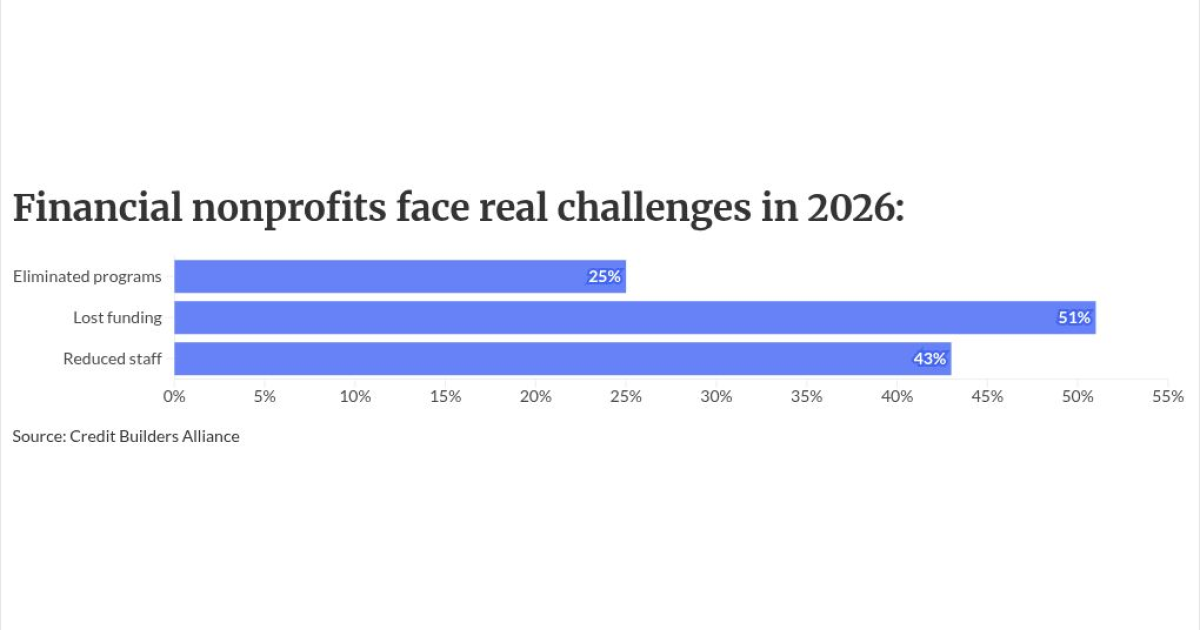
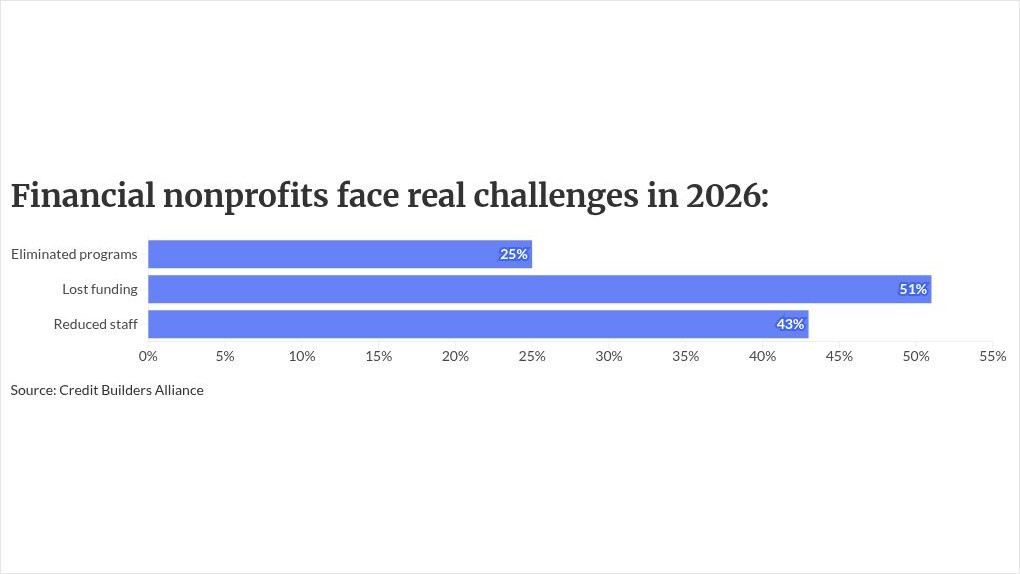
Despite the evidence of the value of these
Read more:
More and more of these invaluable programs will be eliminated, if the once reliable federal funding disappears. The irony is that the demand for these programs and services is heightened while their fiscal support is being reduced. Removing these programs will not be without consequence.
Already, financially challenged populations are turning in ever increasing numbers to high-cost financial solutions. They are often the only options for which they qualify. They include earned wage access loans (money received in advance of payday), auto title loans, high-cost check-cashing services, and buy now/pay later loans. Borrowing money at a high cost is exacerbating the problem and not alleviating it.
Conversely, homeownership counseling and credit building services will strengthen community development in underserved areas. It becomes a choice between homeownership vs. eviction, small-business formation vs. out-of-business signs and financial stability vs. bankruptcy. On a macroscale, it becomes a choice between government tax receipts increasing or the need for government social services increasing. The latter will put a strain on the government, which will be compounded by the reduction in nonprofits whose work complements that of the government.
Funding America’s financial lending and counseling nonprofits is the fiscally prudent thing to do. It will cost less than the alternative. We must unfreeze federal funding across the many agencies that support this work and allow financially vulnerable Americans to prosper.