Florida’s ‘High-Beta’ Housing Market May Be Poised for a Rebound
While the national housing market remains deeply challenged, Florida and its cities show tentative signs of bucking the trend.
The Sunshine State, which led the national market downward as high interest rates put the brakes on home sales three years ago, might now be poised for an early rebound.
In July, Florida showed a “strong increase in home sales along with price recovering,” National Association of Realtors® Chief Economist Lawrence Yun told reporters last week.
That’s in stark contrast to a year ago, when the Florida market was in decline, he said.
The Florida market still has its share of challenges. The upcoming governor’s race will determine how the state responds to its property insurance crisis and handles property tax reform. But there are surprising green shoots.
“Florida’s housing market is showing more resilience than the national market,” says Hannah Jones, a Realtor.com® senior economist. “The clearest strength, though, is at the top of the market.”
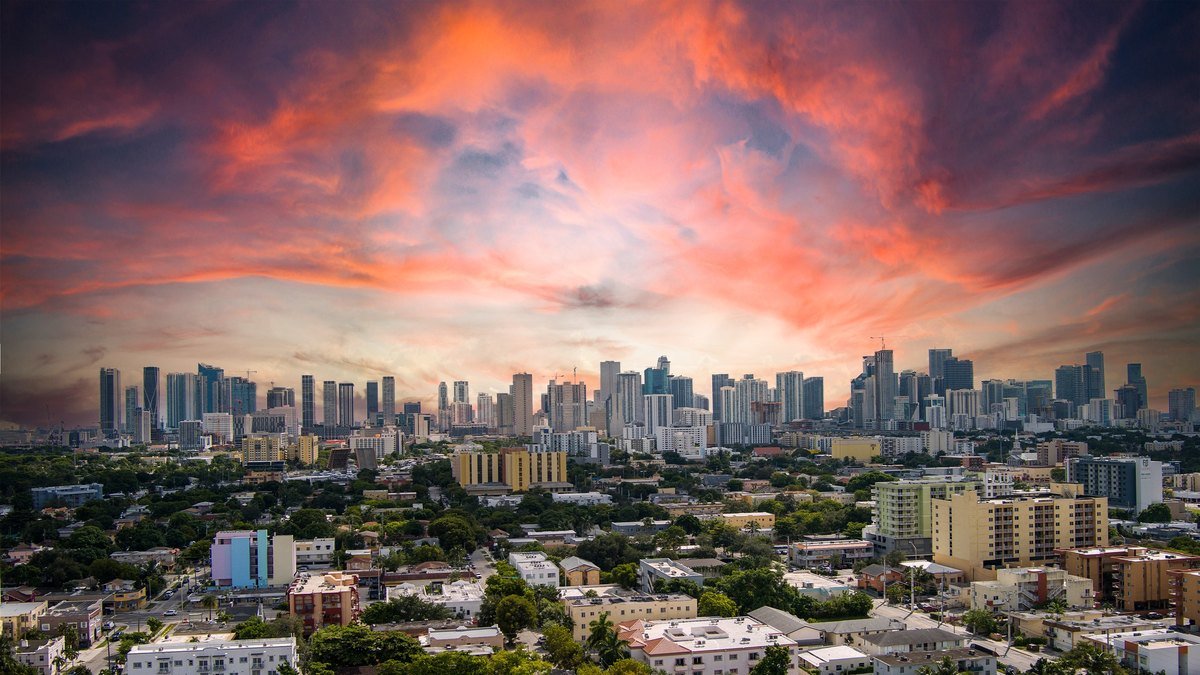
Home sales over $1 million are up 9.6% year over year in the state. They’re now 11.4% of all Florida transactions, versus 8.4% to 9.0% nationwide. And those numbers are even more pronounced in Miami, where the entire $1 million-plus market is more stable.
Overall, home sales in Florida are down 6.1% year over year so far in 2026, according to a Realtor.com analysis of deed data. However, that’s less than the 8.2% decline seen nationwide.
As well, the median days on the market has also dropped 6.4% year over year in Florida, among the best improvements of any state, Realtor.com data shows.
Florida’s volatile housing market
“Florida is a high-beta market,” says Mike Simonsen, chief economist of real estate brokerage Compass. “Like a high-beta stock, it goes up faster in boom markets and can fall faster during slowdown periods.”
Now, Compass is also tracking positive numbers in the state’s luxury market. Pending sales of luxury single-family homes and condos are up 22.1% and 24.1%, respectively, year over year. Listing prices of luxury units are up about 1% statewide, and in Miami, prices have jumped 20.9%. Meanwhile, single-family inventory has fallen 17.1% year over year.
Simonsen notes a severe hurricane season in 2024 meant the state took three bad wallops. But no severe hurricane followed in 2025, which might have given buyers more appetite to resume their searches in the state.
The trends are less pronounced at the bottom end of the market. List price appreciation is just 3.3% for the lowest-priced quartile of single-family homes, for instance. But the state’s “wealth effect” draws unique concentrated demand from international buyers and retirees.
“We had, obviously, a big accelerated moving and migration pattern during COVID, and those trends have slowed down,” Simonsen tells Realtor.com. “Now, we’re four years later and so people who didn’t move during the pandemic, retirees, are picking up the pace.”
George Samarjian, managing partner of Florida developer IGEQ, tells Realtor.com he’s seen activity pick up in the rental market, too. His firm just broke ground on a 181-unit luxury apartment development in West Palm Beach.
New office construction in the region, which has encouraged new corporate relocations, is also driving young people to the state, he says. While buying costs may prevent some from buying in the short term, they’ve been able to find opportunity to stay in Florida.
“This is just one of the best markets for multifamily. There has been a lot of growth based on demand and companies relocating,” Samarjian said.
Weakness persists at the bottom end
While the numbers seem good, Jones cautions the housing strength isn’t evenly distributed by price tier.
“Nearly all of the state’s relative resilience is coming from the top of the market,” Jones says. “Luxury sales are up nearly 10% in Florida while the broader, sub-$1 million market is estimated to be down closer to 8%.”
Years of population growth gave way to a persistent housing crunch. Florida State University’s DeVoe L. Moore Institute estimates the state needs 121,000 new housing units to restore its market to where it was before the 2008 subprime mortgage crisis.
The state has made some effort to increase its housing stock, including a proposal this year to reduce local zoning powers in order to allow smaller homes to be built. But that bill didn’t make it out of the state Legislature amid worries it would preempt local zoning.
The two candidates for governor, Republican Byron Donalds and Democrat David Jolly, have both called for more home construction. But they have different solutions, with the former favoring deregulation and the latter investments in affordable and workforce housing.
Stephen Schoen, director of Walton County Development Services, tells Realtor.com that the speed of the state’s population surge has exacerbated its housing issues. The county’s population has more than doubled since 2000 to 93,000.
While money pours in at Walton County’s beachfront properties, more and more people who serve those properties must find more affordable housing inland, or else commute from Alabama.
“All that influx of population has led to a need for housing, but it also amplifies all our other shortcomings,” Schoen says. “Utilities, transportation, infrastructure, recreational opportunities, all of that is tied into the housing shortage.”