Battery Storage Is Real Estate’s Supercharged New Asset Class
As anxiety builds over whether there will be enough electricity available to power the data center construction boom, investors have started to pour billions into properties where they can hoard energy.
Brookfield reached a $7B deal last week to acquire the country’s biggest standalone battery storage developer from Blackstone, the latest and largest sign that the seemingly unquenchable thirst for more power across the U.S. economy is driving investment into new frontiers.
The latest beneficiary is battery energy storage systems, or BESS, which are expected to grow by 250% over the next five years, according to a report by the American Clean Power Association and Wood Mackenzie.
“It’s a ripe opportunity,” said Alexander Davis, a lawyer with Mayer Brown who works on data center development. “This is a potential new way to deploy that capital.”

Courtesy of esVolta
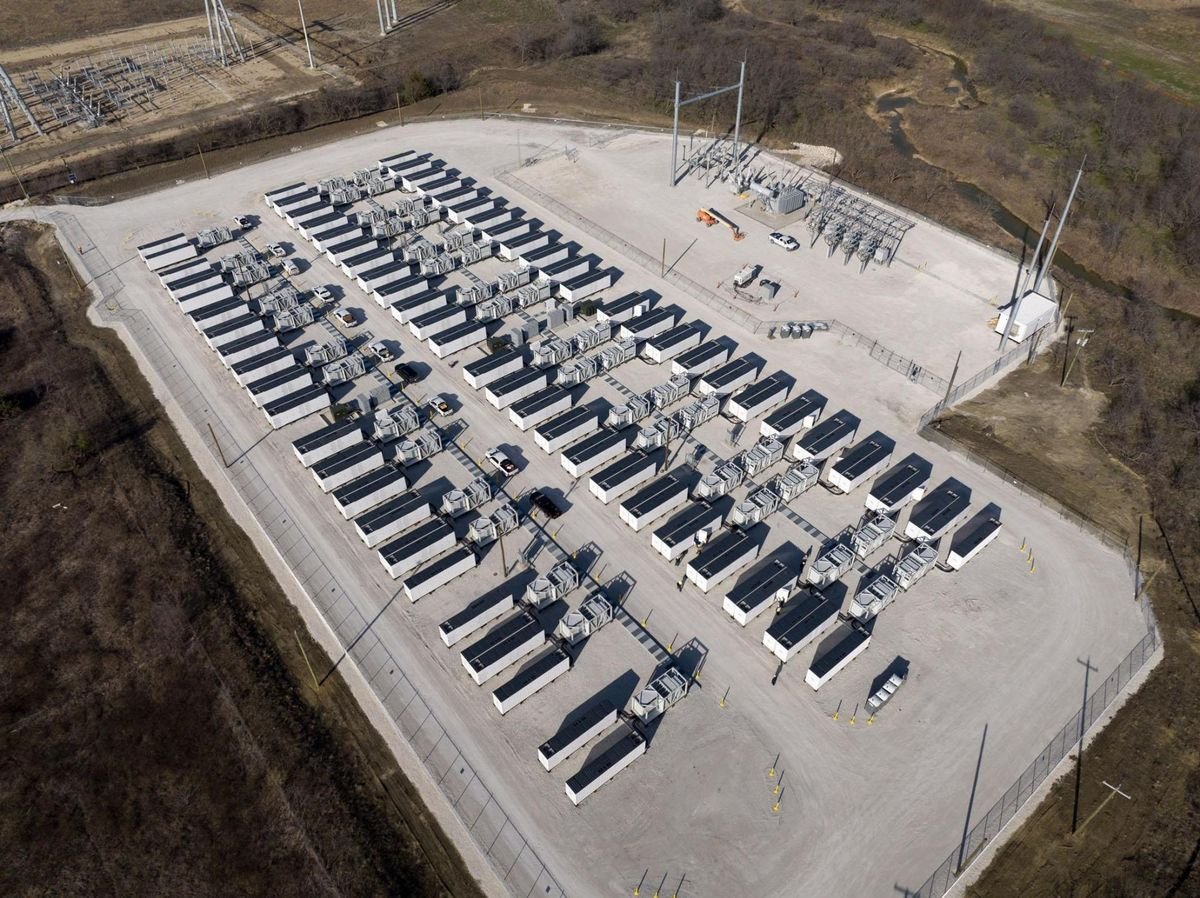
The Desert Willow battery energy storage project owned and operated by esVolta in Midlothian, Texas
BESS sites tend to be just a parcel of land spanning an acre or two with rows of truck-trailer-size batteries. They can be located on-site with the property they serve or remotely.
Sectors including industrial, hospitals and universities are expected to see storage installations grow by 39% by 2030, the report says.
The nation’s total battery storage capacity rose 30% last year to 57.6 gigawatt-hours. States from Arizona to Virginia are rolling out incentive programs, and firms new and old are considering ways to turn battery sites into a real estate niche.
“There’s very significant demand growth across all of the markets that we’re in, orders of magnitude more over the next five years than we saw over the last five years,” said esVolta CEO Randolph Mann, whose firm installs and operates utility-scale batteries in California, Texas and a number of other states.
Brookfield’s purchase of Aypa and its 26.5 GW of projects in various states of development bolsters the asset manager’s presence in the BESS market, executives said in a filing announcing the acquisition.
Engineering and development firm Clayco in March launched a subsidiary that includes a focus on industrial-scale batteries. The company predicts that the new division will bring in $300M in annual revenue by next year.
Commercial real estate owners see multiple benefits from on-site battery storage, said Brian Rappaport, managing director of commercial energy solutions for JLL. Adding batteries reduces load demand during peak hours, helps augment the power supply available to an increasingly constrained grid, and can even help projects get connected faster in interconnection queues. It also significantly lowers energy costs during peak hours.
Cost savings, revenue generation and resiliency are attracting a lot of attention. Many big industrial landlords, REITs and owners of logistics sites and advanced manufacturing plants are exploring how to install batteries on their properties to provide resiliency and a new revenue stream, Rappaport said.
Hospitals are also making a big investment in batteries, pushed by rules in many states mandating certain amounts of backup power. Kaiser Permanente’s Ontario Medical Center in Southern California boasts 2 megawatts of solar and a 9-megawatt-hour battery system.
“Commercial and industrial real estate are perfectly positioned at the grid edge,” Rappaport said.
Data center projects are increasingly adding on-site batteries as part of their behind-the-meter energy options — generation on the customer’s side of the utility meter — because it helps smooth out supply disruptions, adding resilience and frequency regulation to massive data center build-outs, he said.
Data center developer Aligned announced that it was building a large-scale battery at its campus in Hillsboro, Oregon, explicitly noting that the BESS system will help it become operational a year earlier than anticipated.
The massive investment in the data center space, and demand from more investors to get involved in the space, might turn BESS into an alternate way to invest in the sector, Davis said.
While Rappaport said “there’s really no technology risk” for batteries, there have been concerns about the safety of battery installations due to fires such as the Moss Landing blaze last January.
Some anti-data center sentiment has begun to target battery installations, and while it hasn’t yet slowed down the sector’s growth, there have been pockets of community resistance to increased installations due to fire risks, with some communities even enacting development moratoriums.

The Reid Gardner Battery Energy Storage facility in Nevada
There’s also increasingly more investment in the real estate around utility-scale battery installations. Companies like SolaREIT, which started in 2020, are investing in the real estate below solar and battery installations as well as standalone battery projects.
The REIT was designed to finance the land under solar and battery installations across the country and works with battery developers on projects such as large utility-scale projects in Texas and installations on small slivers of land in New York City.
A lot of the places where batteries are going aren’t places where you’re going to place a residential project, said Laura Pagliarulo, CEO and co-founder of SolaREIT, making them lucrative opportunities for landowners. Some owners have even started using data center demand as a means to demand higher payments, she said.
“The market is booming,” Pagliarulo said. “The country needs batteries, hard stop.”
In New York City, the company NineDot has built 1 GW worth of battery storage sites in the city since 2020 and has attracted $1B in investment, tapping into the demand from local utilities to expand power capacity without building peaker plants and other forms of emission-generating electricity. According to Sam McGarvey, director of origination, the company is looking to expand to other cities with new state and local battery incentives to replicate this growth.
In 2019, the state passed the Climate Leadership & Community Protection Act, or CLCPA, which directed state funds and incentives toward battery storage plants in disadvantaged neighborhoods, as a means to increase investment in under-resourced communities, replace emissive peaker plants and add clean energy capacity.
McGarvey compares the benefits of owning land under batteries to the cell tower land boom, which eventually spawned massive REITs. Companies like his pay triple-net leases and basically take care of everything, including utility installation, permitting, and overseeing and operating the batteries.
He’s increasingly seeing more landowners express interest in turning old parking lots or industrial outdoor storage space into battery sites. The owners he works with, who get roughly $10 to $30 per SF per month, just want to be hands off.
“You’re basically buying a long-term annuity,” McGarvey said. “They pay a fixed rent, with zero cost to the owner of the dirt.”
Larger-scale investment in these spaces can be tricky, McGarvey said. It requires assembling portfolios from lots of smaller deals, so setting up investment vehicles might be akin to assembling portfolios in IOS properties. But the demand, especially aided by utility expansion, is massive.
“The narrative has shifted from, ‘Is this clean energy?’ to ‘Is this affordable energy?’” he said