
If you do not have a credit score, it does not mean you are financially irresponsible or have a poor repayment history. Such a situation simply means that you have never used formal credit products, such as personal loans, credit cards, or home loans, enough for lending institutions to analyse and check your repayment behaviour.
Therefore, it is important to first keep in mind that not having a credit history is not a negative mark in itself. Even then, it can still create challenges when an individual applies for their first loan or credit card.
This can happen because lending institutions depend on ‘data’; i.e. a borrower’s repayment habits, creditworthiness, and financial accountability determine the risk that is involved in extending credit.
This write-up focuses on these aspects in detail, including the implications of having no credit history and ways to overcome the challenges associated with a poor credit history. Not only that, but it will also touch on the difference between the two: a poor credit history and having no credit history at all.
No credit history versus poor credit score
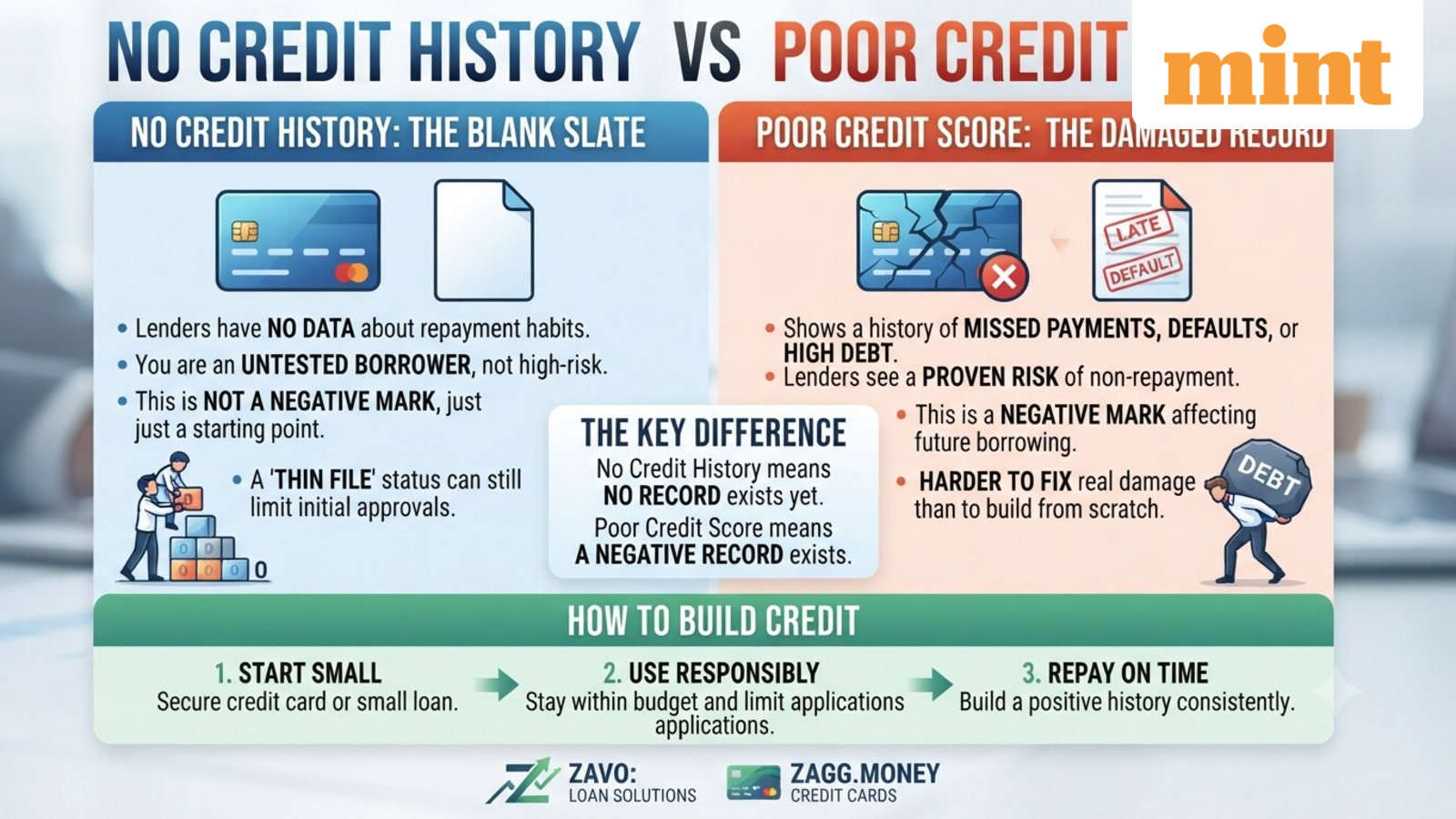
Kundan Shahi, Founder, Zavo (a loan repayment and settlement platform), explained the distinction, stating, “Having no credit history is different from having a poor credit score. A poor credit score shows a record of missed payments, defaults or high debt. No credit history simply means lenders have no data about how you handle credit. You become a risk, not a proven high-risk borrower. This thin file status can still limit approvals. It is much easier to build from zero than to fix real damage.”
Therefore, in simpler terms, a borrower with a poor credit score has a repayment history that raises concerns, complicates future borrowing and can also result in loan application rejection. On the other hand, someone who has no credit history to rely upon, has not yet established a borrowing record. The latter is essentially an ‘untested borrower’ and will require work, patience and consistent repayment of dues to build his credit profile.
How can first-time borrowers build a credit history?
For individuals without a credit score, the most reasonable approach is to understand how credit works, start small, demonstrate responsible credit behaviour, and build trustworthiness with lenders in a constructive manner.
On this aspect, Raj P. Narayanam, Founder & Executive Chairman, Zaggle, added, “Having no credit history is not the same as having a poor score. A poor score reflects past missed payments, while no history simply means lenders have nothing to assess yet. It is a blank slate, not a black mark. The way forward is to build a record gradually: start with a first credit card, spend within your budget and repay on time every month. As a retail credit card issuer through zagg.money, we see many first-time users build a strong profile within a year of regular use.”
Therefore, it is clear that first-time borrowers can focus on and consider a secured credit card, i.e., a credit card backed by a fixed deposit, if they cannot qualify for a regular credit card or a premium offering.
Furthermore, it is prudent to keep one’s spending in check, well within one’s repayment capacity, and pay bills in full and on time. Not only this, but avoid applying for multiple credit products on a simultaneous basis in order to avoid getting portrayed as a credit-hungry individual.
In summary, building a credit score is about establishing a consistent repayment record and starting without a credit history is not a financial setback, it is an opportunity to build a healthy credit profile through devoted and disciplined borrowing.
Disclaimer: This article is for general information only. Credit eligibility and approval depend on individual financial circumstances and the lender’s assessment criteria.