This country has among the most ambitious targets in the world when it comes to cutting greenhouse-gas emissions. The Climate Change Act 2008 established the statutory framework (under Ed Miliband as energy secretary). Then, in 2019, as Theresa May’s last gasp as PM, the Tory government enacted a legally binding commitment to net-zero emissions by 2050, rather than the previous target of an 80% reduction from 1990 levels. We’ve also committed to a range of milestone targets, cutting emissions by 68% by 2030 under a series of “carbon budgets”. And compared with many other nations we’re doing pretty well. In 2024, the UK became the first big economy to pass the 50% reduction – thanks largely to switching its electricity generation away from fossil fuels and towards renewables.
Is the UK on course to achieve net zero?
We’re a bit more than halfway, but the second half will be far harder than the first, and the political consensus around both the target and the means of getting there has evaporated. According to the Climate Change Committee, 93% of the UK’s remaining emissions are now outside the electricity-supply sector, meaning further progress depends far more heavily on behavioural change at the level of households and businesses. Currently, roughly three-quarters of a typical household’s driving and home energy bills are from the direct use of fossil fuels in cars and gas boilers. Following the increase in fossil-fuel prices this spring, household bills rose almost four times more for a typical UK household with a gas boiler and a petrol car compared with a household with a heat pump and an EV. For a rural household with an oil boiler and a diesel car, the increase was ten times more.
Start your trial of MoneyWeek today
Get unparalleled financial insight, analysis and expert opinion you can profit from.
Start your trial
Sign up for MoneyWeek’s free twice-daily newsletter.
Join more than 165,000 subscribers and keep yourself informed with latest financial news, insights and expert analysis to help you understand what really matters when it comes to your finances.
Join more than 165,000 subscribers and keep yourself informed with latest financial news, insights and expert analysis to help you understand what really matters when it comes to your finances.
Does it matter?
It shows the scale and cost of the challenges ahead. Decarbonising electricity is one thing; transforming the way people heat their homes, drive their cars and manufacture industrial goods is quite another. Making changes will be more visible and intrusive and far more politically contentious, especially in a country with high exposure to global supply shocks and a relative lack of storage capacity. Meanwhile, the archaic grid infrastructure leaves us unable to take full advantage of renewables by getting energy easily from the north to south. All of that has led to rapidly deepening political division over the issue. Labour’s promise remains that clean energy will ultimately reduce bills and make Britain less vulnerable to international energy shocks. But consumers are not currently seeing those benefits and the mood has shifted against “net zero” across the political spectrum.
What’s Labour position on net zero?
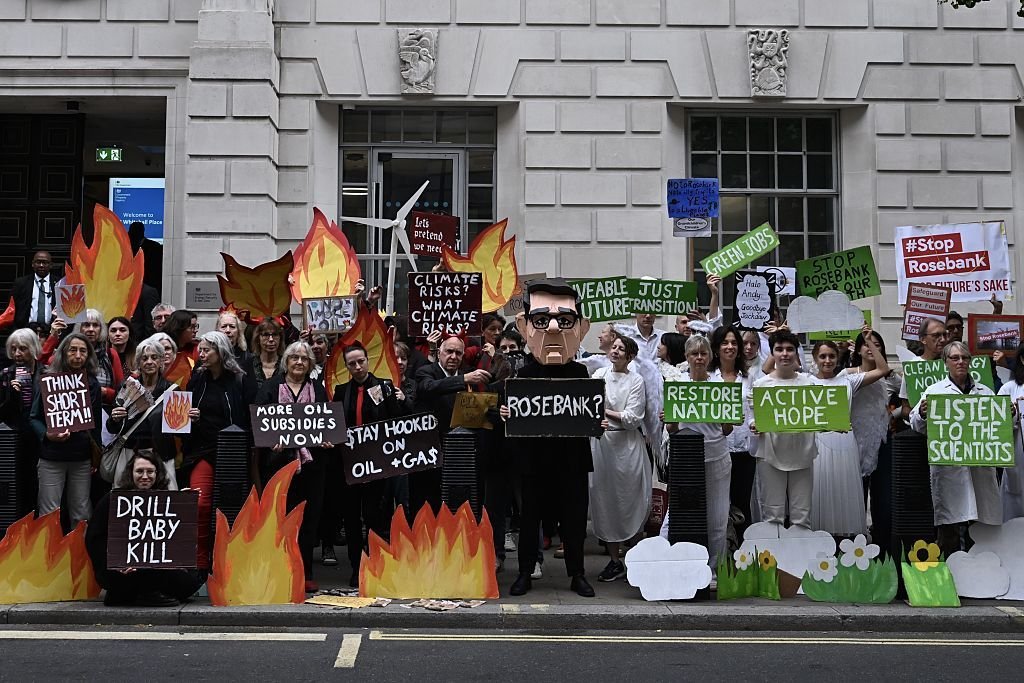
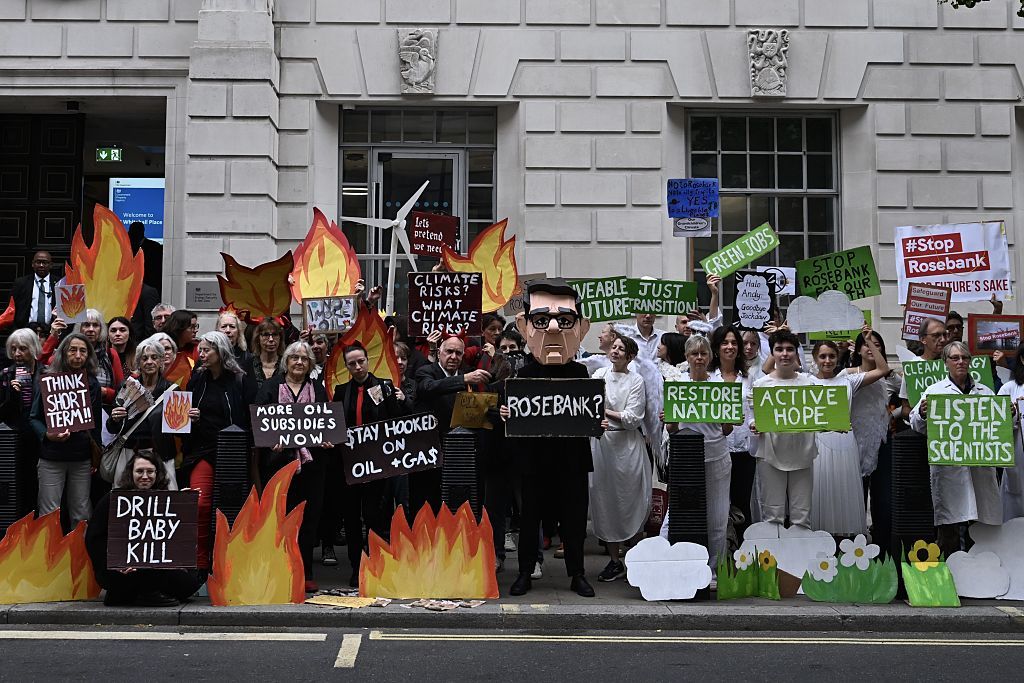
Under Andy Burnham, the government is far clearer that the cost of living is the political priority, but it has not changed the core target of net zero by 2050. That’s still government policy, underlined by Burnham on his very fleeting trip to the Cop31 climate summit in Istanbul. Still, there has been a definite shift, says Ailbhe Rea in The New Statesman. The recent Budget cut £700 million from funding for carbon-capture and storage, and hydrogen projects, and reallocated it to defence. Chancellor John Healey also announced the removal of green levies from household bills, albeit shifting the cost to general taxation. Heathrow expansion is back on the agenda. Last month the government approved production at the Jackdaw gas field in the North Sea. And now Miatta Fahnbulleh, the energy secretary, is coming under pressure to approve drilling at Rosebank, the oilfield north of Scotland that has become totemic for climate activists. A decision is due soon.
Are net zero targets are being dropped?
There are definitely signs of a pull-back. The government is widely expected to relax legally binding targets for sales of electric vehicles. Indeed, “virtually every interim target on the way to the government’s overall, legally binding 2050 net-zero target is being abandoned, or relaxed, as it flies headlong into reality”, says Ross Clark on CapX. New oil-fired boilers were due to be banned from 2026, gas-fired boilers by 2035, and there were going to be 600,000 heat pump installations a year by 2028. “All these targets have gone, once it became clear that they could not be met.” Another target likely to go soon is the one requiring 10% of aircraft jet fuel to be sustainable aviation fuel (SAF) by 2030. Moreover, the target of fully decarbonising the electricity grid by 2030 has already been subtly downgraded to 95% carbon-free, and is coming under constant pressure. Last week, Fahnbulleh refused to say whether the government would meet its promise on clean energy – to generate at least 95% of the country’s electricity from clean sources, including renewables and nuclear, by 2030 – reducing it to something more like an ambition.
Isn’t this a good thing?
Yes, says Ambrose Evans-Pritchard in The Telegraph. Labour’s ban on new North Sea licences made no sense from an economic, geopolitical or environmental point of view, given advances in technology. The UK will reduce carbon emissions by “beating oil and gas with better technology and ending the current fuel addiction, not by shifting supply to Texas, Qatar or Brazil”. Renewables are a great British success story, but “shrewd environmentalists should welcome Labour’s retreat from a religious anathema that has done nothing but damage to the cause of ecology in this country”. Britain should be proud of its progress in decarbonising faster than many peer nations, says The Times. In 2004, renewables made up just 4% of our energy mix; by 2024 they were more than half. But at the same time, more pragmatism from Labour is a thoroughly welcome development. “Making the transition to net zero as manageable and affordable as possible is not a retreat from a net-zero future, but simply a realistic way of getting there.”
This article was first published in MoneyWeek’s magazine. Enjoy exclusive early access to news, opinion and analysis from our team of financial experts with a MoneyWeek subscription.
As the largest financial institution in the Dominican Republic, Banreservas has built its business around supporting the domestic economy. It has decades of experience financing key sectors, helping SMEs expand, and bringing more Dominicans into the financial system. Now, as AI transforms banking operations worldwide, Banreservas is working on the responsible application of new technologies…
Penalties and broader implications Gentile entered his guilty plea on September 14, agreeing to forfeit at least $750,000 and pay a minimum of $1.5 million in restitution, and was released on a $100,000 bond. Pitcher pleaded guilty the following day, agreeing to forfeit at least $635,629 and pay restitution of no less than $2.5 million….
The housing crisis in America has justifiably been attributed to insufficient supply. Recently, inflation has been identified as a key factor contributing to this issue, according to a new report from The Hill with commentary from Valerie White, Opinion Contributor for the newspaper. There is some evidence that appears to corroborate this idea. Home prices…
Alley noted the deal will be held within PSP’s High Inflation Correlated Infrastructure (HICI) portfolio and will rank among the fund’s most significant direct infrastructure investments in Canada. A long-standing partnership with Brookfield PSP Investments is not new to Enercare. The fund co-invested alongside Brookfield when the company was taken private in 2018, in a…
A former Democratic congressman will serve as vice president of wholesale banking at Truist Financial; Bank of America’s $72.5 million settlement with sex trafficking victims of the late financier Jeffrey Epstein is approved by a New York federal judge; HDFC plans to challenge the bankruptcy resolution involving a personal guarantee by media tycoon Subhash Chandra;…