Schwab’s Liz Ann Sonders Warns Advisors to Look Beyond 2027 Gains
Looking ahead to 2027, financial advisors face an increasingly complex investment environment where headline index performance doesn’t always tell the full story.
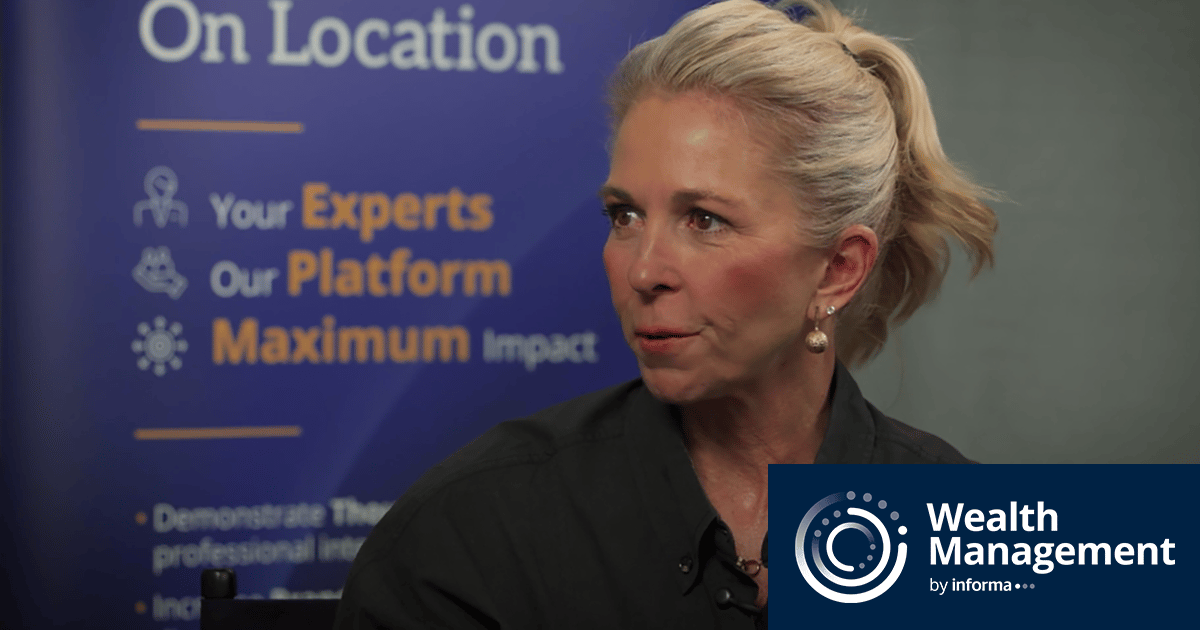
Liz Ann Sonders, chief investment strategist at Charles Schwab, discusses the risks of fear-driven investing and FOMO, why portfolio rebalancing remains critical, and where opportunities may be hiding beneath the market’s surface. She also examines the growing connection between stocks and bonds and why company fundamentals deserve renewed attention.
Read the full raw transcript below:
Shannon Rosic: What’s driving markets as we head into 2027? I’m joined by none other than Liz Ann Sonders to break it all down for us. Liz, thanks so much for joining me.
Liz Ann Sonders: Thanks for having me as usual.
Shannon Rosic: So this is the million dollar question. Every year we have to do the outlook, especially when markets get volatile. Investors usually swing between that fear of losing money and that fear of missing out, right? So which of those do you think poses a bigger risk to investors today and why?
Liz Ann Sonders: I think market behavior recently has taught an important lesson to investors about FOMO is not a strategy and sometimes the the chasing of strong returns. Ends up developing a concentration problem in your own portfolio. So some of this subsurface volatility, lower correlations, more dispersion, wild rotations happening, I think has sent a valuable lesson about the need for discipline in approaching portfolios and not chasing either chasing. You know, the fear side and making poor decisions or chasing the greed side and also making poor decisions.
Shannon Rosic: So don’t be reactive is what you’re saying.
Liz Ann Sonders: Yeah. Although, you know, a rebalancing strategy is to some degree a reactive strategy. So rebalancing, which is a beautiful discipline is you are trimming into strength and you’re adding into weakness to keep your overall portfolio structure in line with what your plan is. And that is a little bit of a reaction strategy. You know, so as, as certain asset classes or cohorts or individual stocks have greater than average appreciation, that becomes a bigger piece of your portfolio. So you’re reacting to that by trimming and staying in gear via rebalancing as opposed to trying to anticipate, OK, what’s the next rotation going to be? What’s the next narrative change going to be, because the shelf life of those changes has collapsed. So instead of trying to get ahead of those, let those guide you in terms of decision making, and that’s why rebalancing is such a beautiful strategy.
Shannon Rosic: Well, and the reality is too, so much of the market’s performance depends on a very small group of large companies, right? So what should advisors focus on when it comes to client portfolios right now?
Liz Ann Sonders: So, the under the surface of the market, you get to see what’s actually happening as it relates to the connectivity between whether it’s Fed policy or geopolitics and market behavior. So you are seeing much more dispersion, so you still mathematically have the mega cap stocks defining the action of a cap weighted index like the S&P 500, but the fuller story is told under the surface of the indexes. So here’s a couple of examples and and putting some numbers behind that.
At the index level, the S&P hasn’t even had a correction this year, defined as a 10% drop or more. It was limited to about 9% in that February, March period of time. But if you go member by member within the S&P and look at what their individual maximum drawdowns were at any point this year and take an average, it’s -27%. If you do that from the NASDAQ, it’s -48%, just year to date. It’s just happened through churn and rotation. But looking under the hood is where you find opportunities.
So people often talk about, well, small caps haven’t been doing well again relative to large caps, except profitable small caps are up about 20% this year. That’s better than the S&P 500. Non-profitable small caps are about flat this year, so a 20% point spread just based on profitability. So that’s the way we think you want to approach the market now, especially if you’re a stock picker, if you’re your own active manager, is focus on attribution, focused on factors that profitability strength, that profit margin resilience, low debt to equity, high interest coverage. That’s the way to think about finding success in the market. is not just a blanket monolithic, I like the market, I don’t, or I’ll just buy tech or I won’t, or I’ll just be in the mega caps or I won’t. Focus on the actual underlying fundamentals, which would always seem like to be the right thing to do, but there are times where the market is very monolithic. Cohort or sector-driven. Not these days.
Shannon Rosic: Well, and as you know, it was a pretty eventful year for both stocks and bonds. So when you look back at this year, what stood out to you the most and what are you maybe watching going into 2027?
Liz Ann Sonders: Uh, the move up in yields, I think, has been incredibly influential on how we’re rethinking the reaction function of the Fed, what’s driving that, how much of that is inflation, how much of that is growth, how much is that is concerns about our deficit and debt problem, which has only gotten worse this year. But what we’ve also seen is that there’s a much tighter relationship between what’s happening in the bond market and what’s happening in the equity market. So until very recently, most of this year, bond yields and stock prices moved in the opposite direction because bond yields were keying off what was going on with inflation. So higher yields. Because of higher inflation, not good for equity, so that’s where you saw weakness, particularly under the hood, the interest sensitive segments of the market doing more poorly that only recently changed because now there’s been a flight to safety. In bonds that’s brought yields down, but you’ve also seen that within the equity part of the portfolio. This flight to safety has led to some outperformance in areas like health care, consumer staples. So understanding the why behind what’s happening in the bond market can also provide color on what should work. And what’s not working on the equity side of the portfolio. So we can’t, as an equity investor, just put a, turn a blind eye to the fixed income markets. There’s always been connectivity, but particularly now.
Shannon Rosic: Well, you’ve certainly given advisors a lot to think about, Liz Ann. As always, I appreciate your insight. Thank you. For wealth management. I’m Shannon Rosic.