Bank of Canada says April scenario analysis telegraphed hike

By Erik Hertzberg
(Bloomberg) — A Bank of Canada official says policymakers are publishing scenario analyses more frequently to guide market participants along the potential path for interest rates amid more frequent shocks.
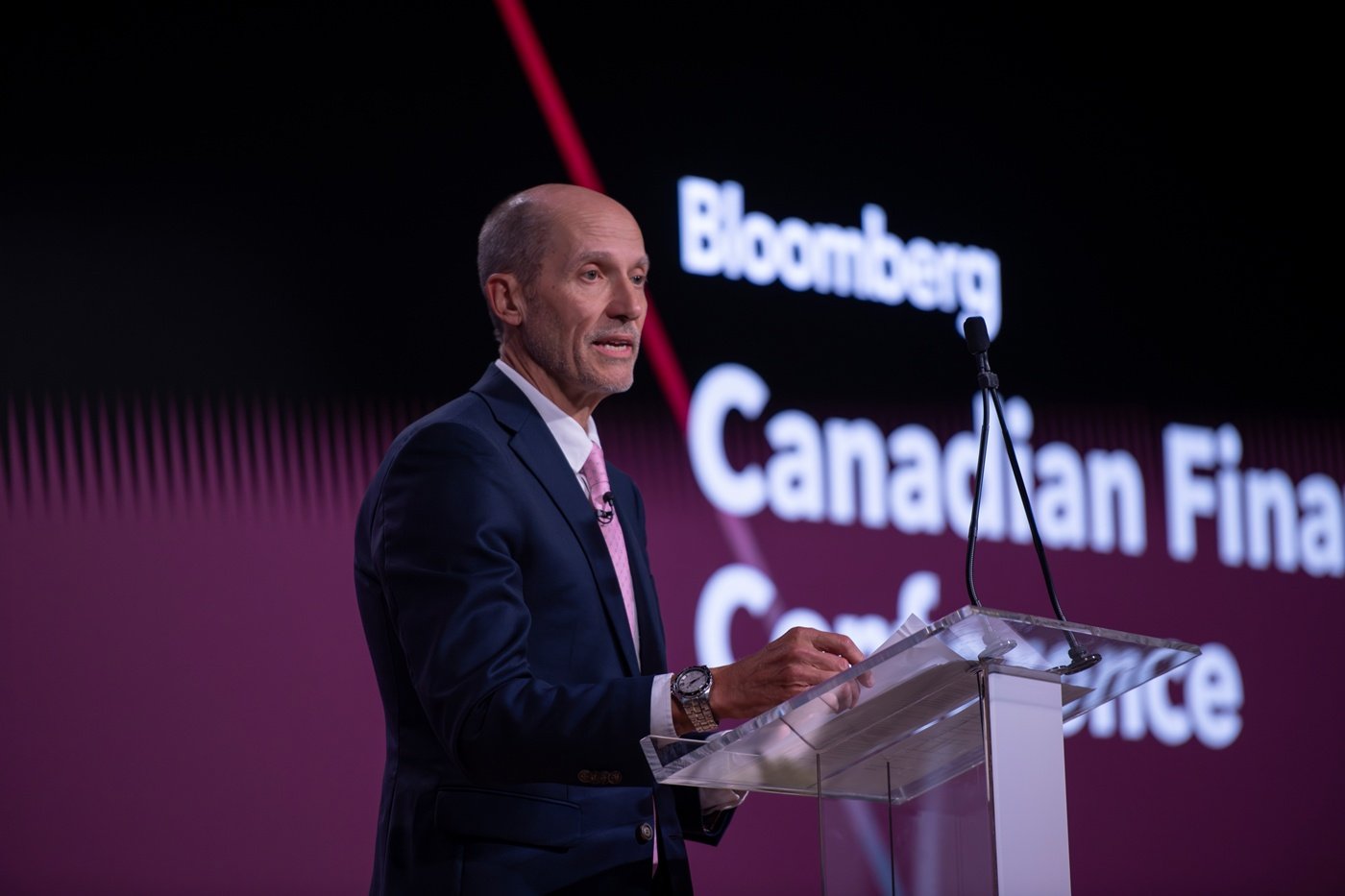
Speaking in Edmonton, Deputy Governor Toni Gravelle pointed to scenarios outlined by the bank in its April monetary report, months before the governing council hiked interest rates to 2.5% in October. In one potential outcome, oil prices remained elevated for months as the war in the Middle East escalated.
Though it wasn’t the base case, the bank expected in that instance that inflation would stay close to 3% for more than a year, which would require “consecutive policy rate increases” to get inflation back to the 2% target. By October, officials had seen that scenario come to pass, and the “upside risk to inflation we had identified in April had largely materialized,” Gravelle said in prepared remarks published Wednesday.
“The war had not ended and oil prices were still near $100 per barrel. Refinery margins were also above historical norms, adding to pressures on fuel prices,” he said. New US tariffs were adding to uncertainty, but the economy was “doing better than we had expected.”
At the October meeting, policymakers said they may need to make further interest rate increases, but decisions would be taken one meeting at a time. The bank next sets rates Dec. 9, and traders in overnight swaps put the odds of a hike at about 60%, despite slightly weaker-than-expected inflation data released earlier this week.
Gravelle said the bank aims to “shape policy rate expectations” by publishing forecasts, identifying risks and potential shocks, and explaining the data the central bank is watching.
“All this helps market participants understand what drives the evolution of our outlook and how we might react with our policy rate–what economists call our reaction function,” he said. “In a sense, we want market participants to be able to interpret new information much like we do and, in turn, anticipate how monetary policy might react.”
Gravelle also offered a defence for why the central bank doesn’t publish its specific policy path, arguing that doing so leads markets to “stop doing their homework.”
“If markets focus too much on what central banks are signaling, they may pay less attention to incoming data and how that data could affect policy decisions.” Gravelle argued. “If this happens, markets become less of an independent source of information for central banks and more of a reflection of what they are saying.”
©2026 Bloomberg L.P.
Visited 1 times, 1 visit(s) today
Bank of Canada bloomberg BoC BoC speech Dashboard inflation speech Toni Gravelle
Last modified: November 18, 2026