
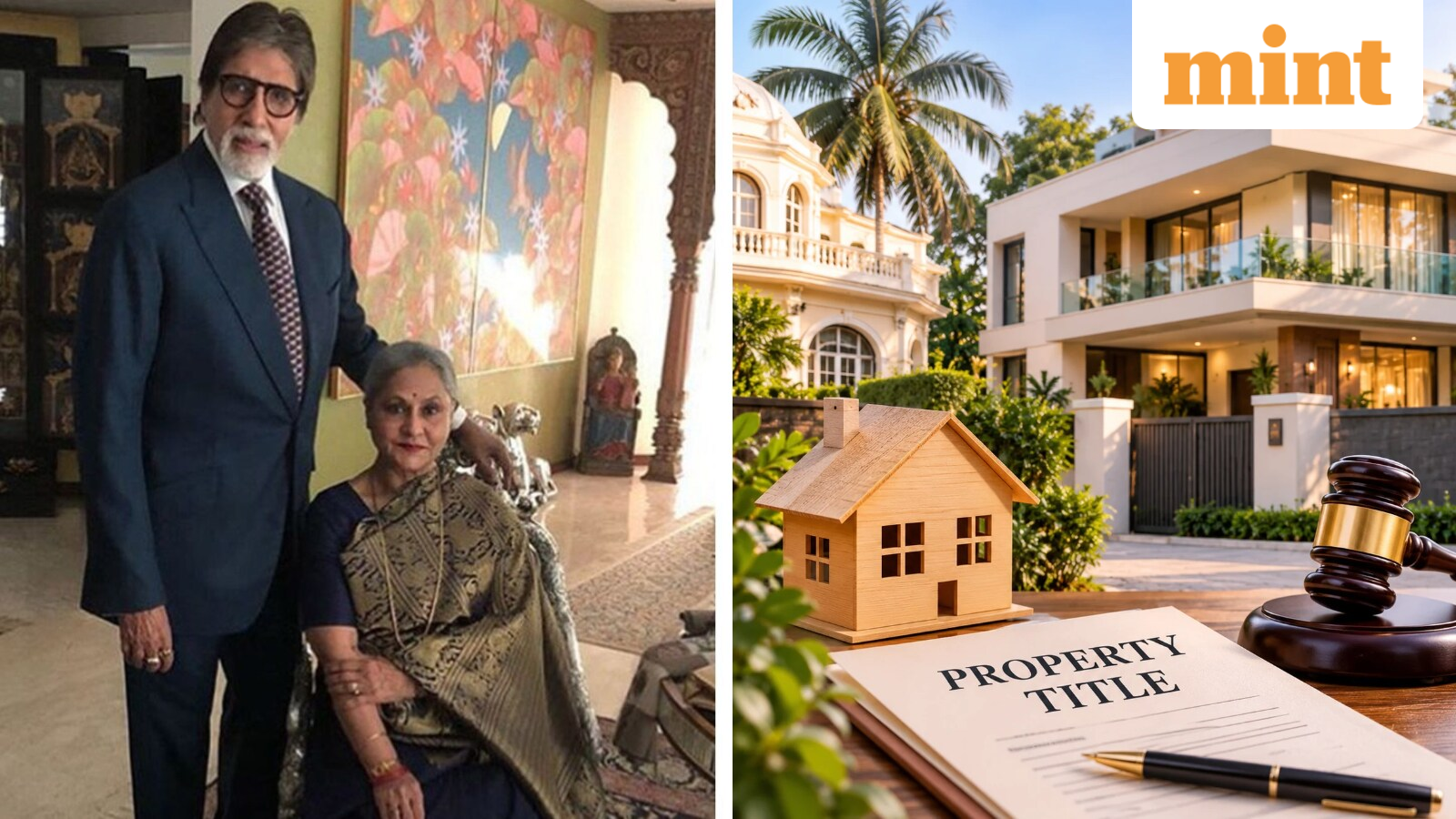
Even some of Bollywood’s biggest families are not immune to property disputes. The latest case involving Bollywood megastar Amitabh Bachchan’s family has brought the issue into focus, with his sister-in-law, Ramola Bachchan, reportedly raising questions over the ownership of the iconic Juhu bungalow, Jalsa, and a gift deed involving his wife, Jaya Bachchan.
The dispute offers important lessons for homebuyers on property ownership, documentation, and the legal validity of transfer deeds.
What is the Jalsa bungalow property dispute all about?
According to multiple media reports, Amitabh Bachchan’s Juhu bungalow, Jalsa, has a history dating back to 1982. Originally known as Mansa, the approximately 10,000-square-foot property reportedly belonged to film producer N.C. Sippy. It was given to Amitabh Bachchan as remuneration for his role in the 1982 film Satte Pe Satta. The actor later sold the property but bought it back at a considerably higher price at Jaya Bachchan’s suggestion, subsequently renaming it Jalsa.
The property was later associated with a 1993 gift deed through which its ownership was transferred to Jaya Bachchan. The matter resurfaced in November 2026 after Ramola challenged the 1993 gift deed. She reportedly filed multiple complaints with registration authorities over the preceding seven months, alleging that the transfer took place without her knowledge or consent.
She alleges that the deed was prepared on plain paper without stamp duty or witnesses’ signatures and subsequently regularised under Maharashtra’s Abhay Yojana scheme. It was registered 13 years after its execution.
There is also a discrepancy between ownership records. While Kapol Housing Society records identify Jaya as the owner, the Maharashtra government’s Property Card continues to carry Ramola’s name.
The dispute has reached the Deputy Registrar of Co-operative Societies in Andheri, Mumbai. No final decision has been reported on the validity of the gift deed or the competing ownership claims.
What is the key issue?
Amitraj Kaushal, Advocate at the Supreme Court of India, said Ramola Bachchan alleges that the gift deed was executed on plain paper, without stamp duty or witness signatures. While the Maharashtra government’s property card continues to carry her name, the housing society’s records identify Jaya Bachchan as the owner. Media reports do not explain how Ramola’s name was entered in the government records.
Kaushal clarified that a property card is a revenue record and does not, by itself, establish ownership. The final decision on the property‘s title rests with a civil court, not the society’s registrar.
Alay Razvi, Managing Partner, Accord Juris, said the crucial question is whether the 1993 transfer was validly executed, stamped and registered, with clear consent and a complete chain of ownership documents.
What key checks should homebuyers make?
Razvi suggested the following checks for homebuyers:
- Verify the seller’s title: Check the latest sale deed, gift deed, partition deed or inheritance documents and ensure the ownership chain is complete.
- Cross-check property records: Obtain and reconcile the government property card, land records, society share certificate and municipal records. Resolve any conflicting entries before transfer.
- Inspect original documents: Ensure the title deed is properly stamped, signed, witnessed wherever required, and registered.
- Check encumbrances: Look for mortgages, loans, liens, pending cases and other liabilities through a title search and encumbrance certificate.
- Verify building approvals: Obtain the approved plan and completion or occupancy certificate, and ensure the property matches the sanctioned plans.
- Check family transfers: Execute a properly stamped and registered gift deed or transfer deed, with clear consent from all persons having an interest.
- Update ownership records: After registration, update the Property Card, society records, tax records and utility accounts, and retain all original documents safely.
Additionally, Suman Kumar Jha, Founding & Managing Partner at Corp Legex, advised buyers to examine inheritance rights, wills and succession documents, and verify sanctioned building plans, occupancy certificates and applicable RERA registration.
Kaushal also advised existing homeowners to trace their title chain back at least 30 years, ensure transfer deeds are registered, and stamp duty is paid.
While executing or receiving a gift deed, buyers should check its registration, the presence of two attesting witnesses, and the donee’s acceptance. They should also match names across the property card, society records and tax receipts, he added.
Disclaimer: The case details are based on media reports. Homebuyers should consult qualified legal advisers before making property-related decisions.