Texas Democrats’ victory to tamp down attacks on local debt, taxes

Bloomberg News
The stunning sweep by Texas Democrats for the key offices of governor, attorney general, comptroller, and lieutenant governor in the Nov. 3 election, which also put the party in control of the state House, is expected to put the brakes on a Republican crusade against local spending and debt.
Processing Content
Bills to limit public school bonding and local government spending will die, said Randall Erben, adjunct professor at the University of Texas at Austin School of Law.
“They’re going to get filed and they may even get a hearing in the Senate, but they’ll get absolutely no traction in the House,” he said.
Among pre-filed Republican-sponsored legislation for the 2027 session, one
Another measure
Hinojosa’s refund plan
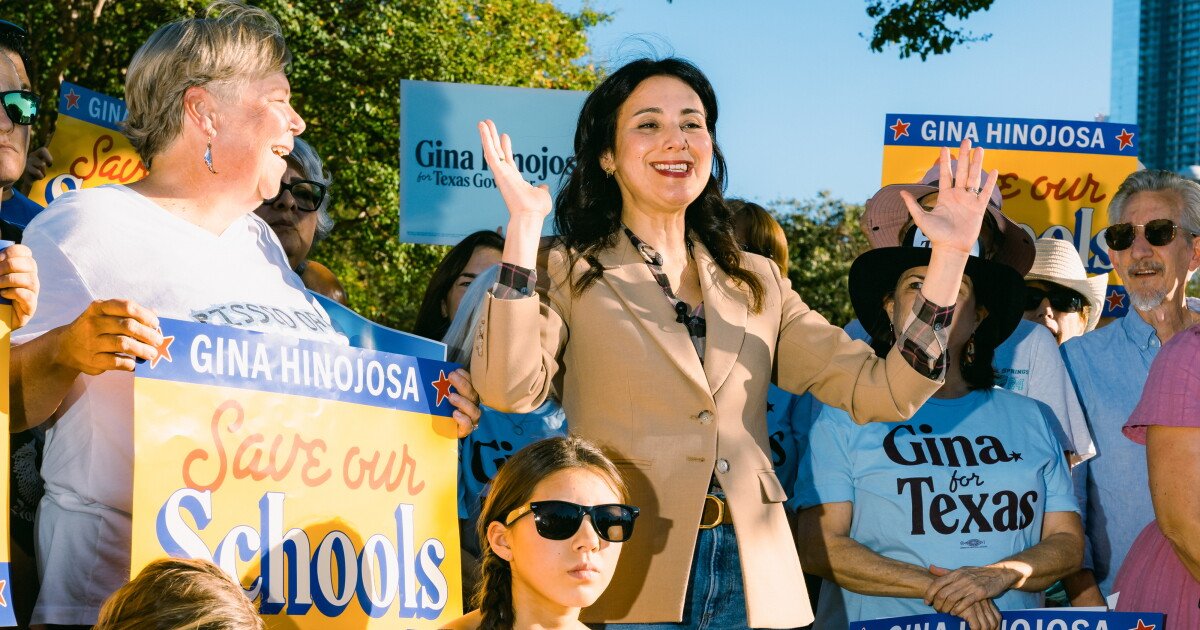
Democratic State Rep. Gina Hinojosa won a startling victory over three-term Republican Gov. Greg Abbott whose campaign featured “The
Hinojosa’s winning campaign included a plan to tap the state’s $27 billion rainy day fund to deliver a $1,500 “corruption tax refund” to every Texas household.
Senate Bill 297,
At a Nov. 5 press conference, Hinojosa pointed to “a new way forward.”
“People are tired of the divisions, of the fighting, tired of the culture wars,” she said. “This is a time to come together in a way that is about just delivering for the people of Texas.”
The state under Republican leadership has targeted
School vouchers
In her victory speech, Hinojosa, a former Austin school board member, decried state takeovers of school districts and vowed to repair damage from the “Texas vouchers scam,” the $1 billion
Comptroller-elect Sarah Eckhardt, a state senator, campaigned on auditing the voucher program, which is on rating agencies’ radar screens. Moody’s Ratings warned earlier this year that vouchers will increase competition and pressure Texas schools’ operating revenue.
Eckhardt and Nathan Johnson, a Democratic state senator who won the attorney general’s race,
Litigation control
Johnson can determine whether or not to continue ongoing litigation, including an appeal
There is also a
The office under Republican Ken Paxton has been
Erben said that in Texas, the attorney general is in control.
“Whatever position he takes is the state’s position,” Erben explained. “So he could come in and say, ‘Well, I quit, and so I’m going to concede the unconstitutionality of that provision.'”
The office under Johnson will also play a huge role as the legal gatekeeper for state and local municipal bond issues, which all require its stamp of approval.
The election will bring new members to the Texas Bond Review Board, which is made up of the governor, lieutenant governor, comptroller, and House speaker or their alternates who determine whether to approve certain state bond issues.
As lieutenant governor, Democrat Vicki Goodwin will head the Senate where her substantial powers are derived from rules that could be changed by Republicans who will have a 19-12 majority, according to Erben.
Bipartisan potential
Despite the split legislature, there is room for bipartisan buy-ins when it comes to issues such as water, energy, and healthcare, said John Hryhorchuk, senior vice president of policy and advocacy at Texas 2036, a nonpartisan
For example, he noted a portion of a $7.5 billion
“Texas leaders have the resources to make big investments this session and to bring Texans together around those areas where there is agreement,” Hryhorchuk said. “I am hopeful that we are able to look back at the end of this legislative session and say that there were meaningful investments made in our infrastructure and human capital.”