L.A. Port hits record volume as it preps for Olympic events

Port of Los Angeles
The Port of Los Angeles saw record traffic in October as it prepares for the 2028 Olympic and Paralympic games with $70 million in waterfront improvements.
Processing Content
Tariffs introduced in the second quarter of 2026 drove a sustained import surge from May through mid-October 2026 as retailers rushed to bring in merchandise ahead of higher duties.
Tom Kozlik of Hilltop Securities
By the spring and summer of 2026, tariffs were largely eclipsed as the primary fixed-income market catalyst by intensifying Middle East tensions, the closure of the Strait of Hormuz and surging oil prices.
U.S. container ports
In October, the Port of Los Angeles set a record for the month handling 1.02 million TEUs . The totals for the month also rank as the second-highest monthly total ever at the nation’s busiest container port, Executive Director Gene Seroka said during the port’s monthly media briefing.
Ongoing disruptions at the Suez and Panama canals, along with robust U.S. consumer spending, helped boost port traffic, Seroka said.
He credited retailers replenishing inventories, changes in trade policy and ongoing challenges along other global shipping routes for the jump.
Following September’s all-time monthly record, October marked the first time the port has surpassed 1 million TEUs in consecutive months. The port has now reached the million-TEU mark three times in 2026, another first. No other U.S. port has handled 1 million TEUs in a single month.
From June through October, the port processed nearly 5 million TEUs, the strongest five-month stretch in its history.
“What’s remarkable isn’t just the record volume but our ability to sustain this level of activity month after month,” Seroka said.
He added that shippers are choosing the L.A. port for “the speed, reliability and reach of our supply chain.”
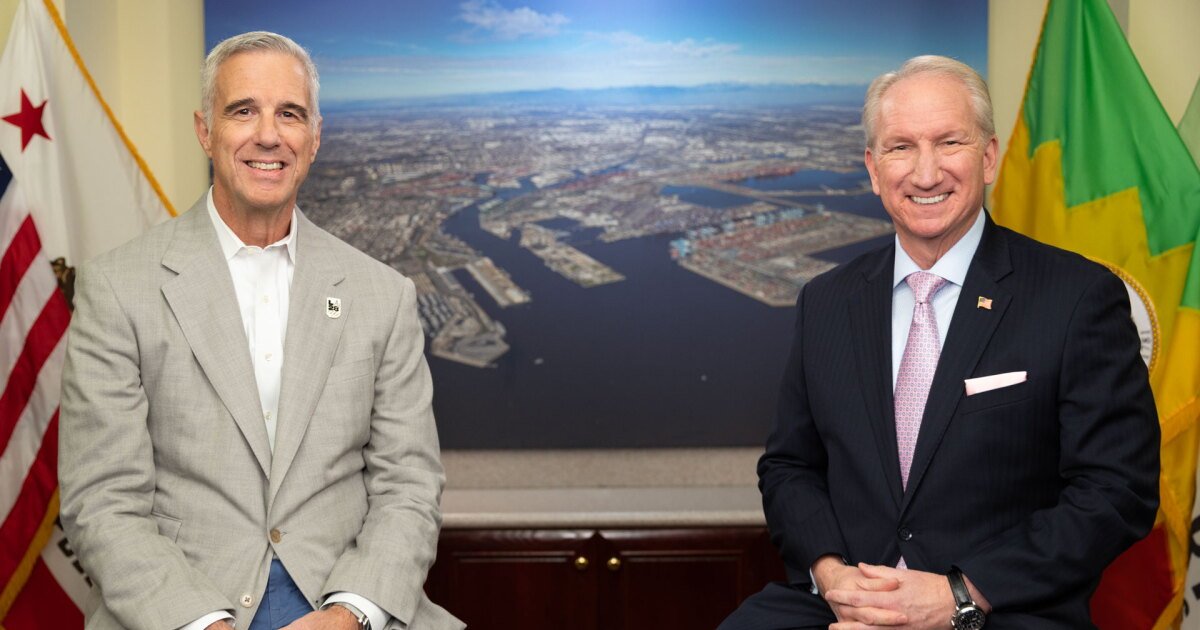
Seroka was joined at the briefing by LA28 Chief Executive Officer Reynold Hoover, who discussed preparations for the 2028 Olympic and Paralympic Games, including the port’s role as the Olympic sailing venue, and ongoing investments along the L.A. Waterfront.
Hoover said he’s “grateful” to the port and Seroka for undertaking the “planning efforts required to integrate the games into an active commercial port.”
The $70 million in waterfront improvements include projects along Harbor Boulevard and 22nd Street in San Pedro that will enhance access, connectivity and public spaces, Seroka said. The port will also spend $10 million on improvements to the “Cabrillo Beach Aquatic Community Center, unlocking new opportunities for recreation and water sports,” Seroka said.
California Assemblymember Mike Gipson and State Senator Laura Richardson secured $5 million of that money from the Legislature, he said.
“These investments are about more than getting ready for a few weeks in 2028,” Seroka said. “They’re about creating a meaningful legacy for our communities.”
Hosting the sailing competition in the port’s outer harbor represents a return to that venue, as the event was held at the port’s outer harbor in 1932 — the first time the city hosted the Olympics.
“Nearly a century later, Olympic sailing is coming home to the Port of Los Angeles,” Seroka said.