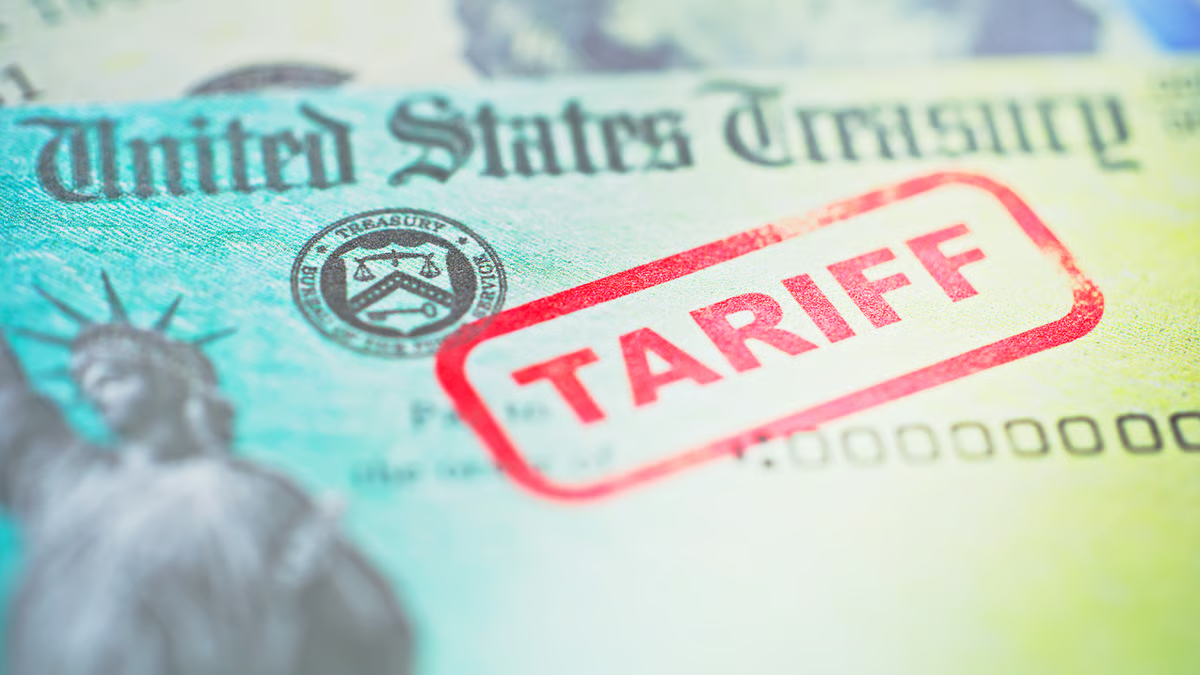
Tariffs Pushed Prices Up. Why Retail and Industrial Investors Shouldn’t Expect a Quick Reversal
U.S. tariff policy has been unpredictable, which is a big problem for companies and consumers alike. Given the uncertainty, it is difficult for a manufacturer to make long-term plans. That, in turn, is likely to lead to price increases caused by tariffs being sticky. But the truth is, inflation is generally sticky, and companies and consumers shouldn’t expect a quick reversal of the impacts of tariffs. Here’s what you need to know.
Caterpillar highlights the issue
In the third quarter of 2026, industrial giant Caterpillar (CAT -0.84%) reported that tariff costs amounted to $600 million. That was roughly in line with the impact in the third quarter of 2025. At the same time, the company recognized $128 million in tariff recoveries in the third quarter of 2026. There are a lot of moving parts, but the big picture is that tariffs are still a big issue for the heavy equipment manufacturer.

Image source: Getty Images.
Meanwhile, the company has been facing higher manufacturing costs, driven partly by freight costs. There’s a lot that goes into freight costs, notably including today’s high energy prices. So there’s more going on than just tariffs on the cost front, which is important to consider when you think about the tariff situation reversing.
Notably, consumer staples companies like PepsiCo (PEP +2.23%) have been dealing with input cost inflation, which this snack and soda giant highlighted as an issue in its third-quarter 2026 earnings update. The impact of tariffs and broader inflation is working through the entire supply chain, which is a process that is hard to reverse. Add in the uncertainty around the implementation of tariffs, and companies aren’t likely to rush to roll back any price increases they’ve pushed through.
The tariff situation is unusual, but the impact isn’t so strange
If you look at tariffs as just another form of inflation, the impact isn’t all that difficult to understand. Rising prices flow through the economy, starting with raw materials, moving on to manufacturers, then to retailers, and finally hitting end consumers. At each step along the way, rising costs are passed on to the next entity until they hit your pocketbook.
CAT Caterpillar
$600.20-$5.08 (-0.84%)
NYSE · As of 4:00 PM ET 11/13/26
The costs get passed along because companies are attempting to protect their profit margins. As Cat shows, even with the tariff rebates it collected, it still had to bear significant tariff costs. And, not knowing what to expect next, it makes business sense to continue passing its higher costs on to its customers as best it can. The same is true for PepsiCo or any other company that directly touches consumers. For example, Target (TGT +0.34%) isn’t likely to lower prices on products bought overseas if it can’t be sure it can maintain that lower price and still make a profit.
Meanwhile, these companies are still facing inflation in other areas. As those costs work through the system, too, protecting margins becomes an even more difficult task. Rolling prices back simply isn’t something that companies do quickly, if they do it at all.
PEP PepsiCo
$145.44+$3.18 (+2.23%)
NASDAQ · As of 4:00 PM ET 11/13/26
Adjusting supply chains isn’t a complete solution, either. While that may help companies avoid tariffs, relocating production or sourcing from a different region often entails higher costs. Those costs are baked in and can’t be easily reduced, so prices end up permanently higher.
Tariffs and inflation are structural issues
It isn’t easy for companies to raise prices. They face pushback throughout the supply chain because nobody wants to pay more for the same thing they bought before. This is why companies like PepsiCo change package sizes while keeping the price the same, which is a way to raise prices without actually announcing a price increase. But once a price increase is implemented and accepted by customers, there is great reluctance to roll it back. Add in the uncertainty around tariffs, and the reluctance to roll back price increases is likely to be even higher. In other words, don’t expect a quick reversal of the tariff impact.
Where to invest $1,000 right now
When our analyst team has a stock tip, it can pay to listen. After all, Stock Advisor’s total average return is 831%* — a market-crushing outperformance compared to 209% for the S&P 500.
They just revealed what they believe are the 10 best stocks for investors to buy right now, available when you join Stock Advisor.
*Stock Advisor returns as of November 13, 2026.