Panel Touts Family Office Services, But ‘How to’ Remains Tricky
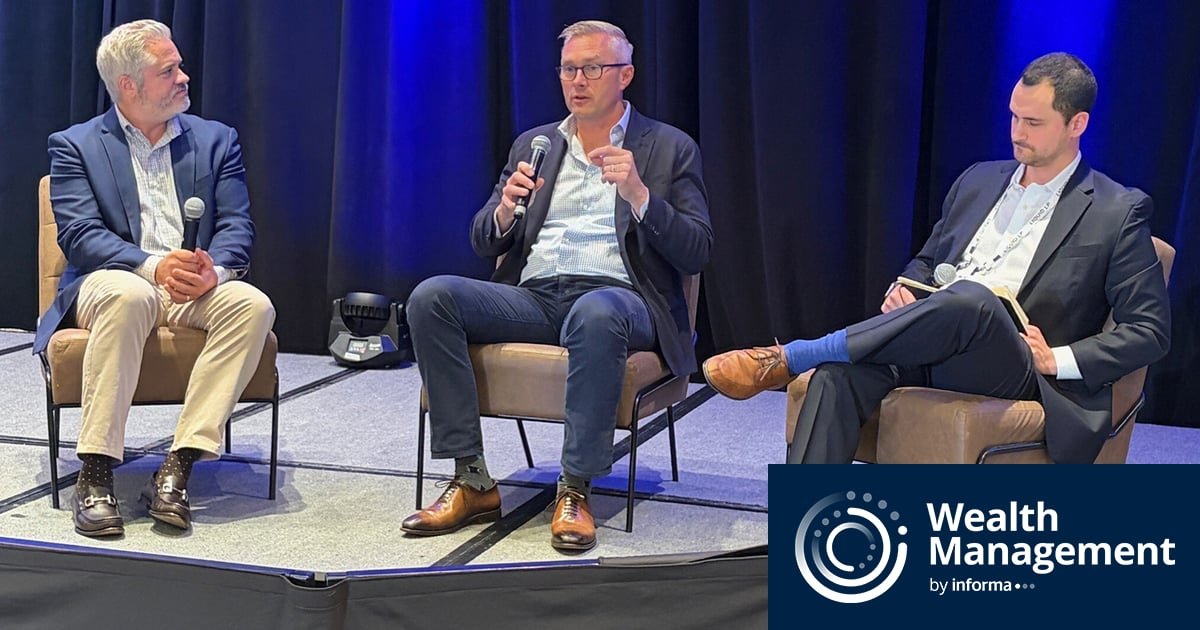
Panelists at RIA Edge Austin this week made a case for family office service offerings—think everything from estate planning to private jet booking—to expand client wallet share and generate leads. The trick is figuring out how to do that for smaller registered investment advisors without the budget to bring in and maintain in-house expertise.
“Those are expensive hires, right?” said Chad Tischer, head of family office for the $660 billion RIA Wealthspire. “Saying, ‘I’m going to hire a CPA in-house, or I’m going to hire a JD in-house.’ That is uneconomical for many firms.”
Tischer and co-panelist Mark DeLotto of the $22 billion Simon Quick Advisors admitted to the challenges many firms face in offering family office services while detailing the benefits to their practices.
The panelists agreed that the biggest obstacle to providing family office services to clients is that the core disciplines—tax, trust and estate planning—require paying experts $150,000 to $250,000 or more to service what may be only a handful of clients with balance sheets large and complex enough to justify the overhead.
To get around this barrier, Tischer argued that advisors should “partner” rather than “build,” but stressed that one strong partner may be better than 20 separate referrals.
“A partnership is a real partnership, not a crapshoot,” he said. “It should be like I’m investing in a relationship, you’re investing in a relationship, and the combination of one plus one gives us more than two.”
The head of Wealthspire Family Office, which officially launched with a new brand name in March, referred to a billion-dollar RIA in the Midwest he came across recently. Those advisors, he said, work with one accounting firm for all their clients who come into their offices for a couple of days during tax season, which is not only useful to the RIA’s clients but also leads to referrals from the CPAs.
“The growth rate that that firm is getting through that strategic partnership in place, from what I’ve seen, far outweighs the 20 accounting firms I can refer out to,” Tischer said.
He added that smaller firms should focus on the basics of family office work before getting into more “shiny” areas such as bill pay or private aviation concierge services.
“If you’re not helping on the estate planning, investment, and tax side … you shouldn’t even be talking about the third-level tertiary things,” he said.
DeLotto, who is the corporate development officer for Simon Quick, said when the Morristown, N.J.-based RIA was looking to add family office services, it found an advisor in its region who needed a succession plan.
“We were as much needing them as they were needing us, and that’s when great partnerships come together,” he said.
DeLotto said such partnerships are best developed out of a “mutual need” rather than just a vendor relationship.
Despite the challenges, Tischer and DeLotto both advocated for family office services as important offerings to compete in today’s market, noting that the larger RIAs can not only afford to staff family offices but also absorb people leaving without experiencing a major hiccup in client services.
Tischer said New York-based Wealthspire built its family office over a 10- to 15-year period, moving from strategic partnerships to building in-house capabilities as the firm scaled. The firm now works with more than 1,000 families with over $10 million in assets, including a top tier of 300 families averaging more than $100 million, and a half dozen families exceeding $1 billion.
Offerings span in-house bill pay, income statement reporting, tax services, a recently launched trust company, an internal wealth strategy team with estate-planning capabilities, and lifestyle and health services, including partnerships with providers such as the Mayo Clinic.
Simon Quick, while smaller, has built off a single-family office integration about nine years ago to serve about 35 family-office-level clients, defined internally as those with $25 million or more in investable assets.
DeLotto and Tischer did identify one area where smaller firms aren’t necessarily disadvantaged: pricing.
Rather than staying rigid on AUM pricing, RIAs should consider offering flat or project-based fees to help families address complex issues as they arise. For a smaller RIA, Tischer said, this is a way to profitably serve a complex family “for the big picture issues,” rather than just the managed assets.