Osaic To Test Claude AI Tool for Advisors
Osaic will launch a pilot program with Claude for Financial Advisors, Anthropic’s suite of artificial intelligence tools specifically designed for the financial advisory industry, according to the firm’s new AI head.
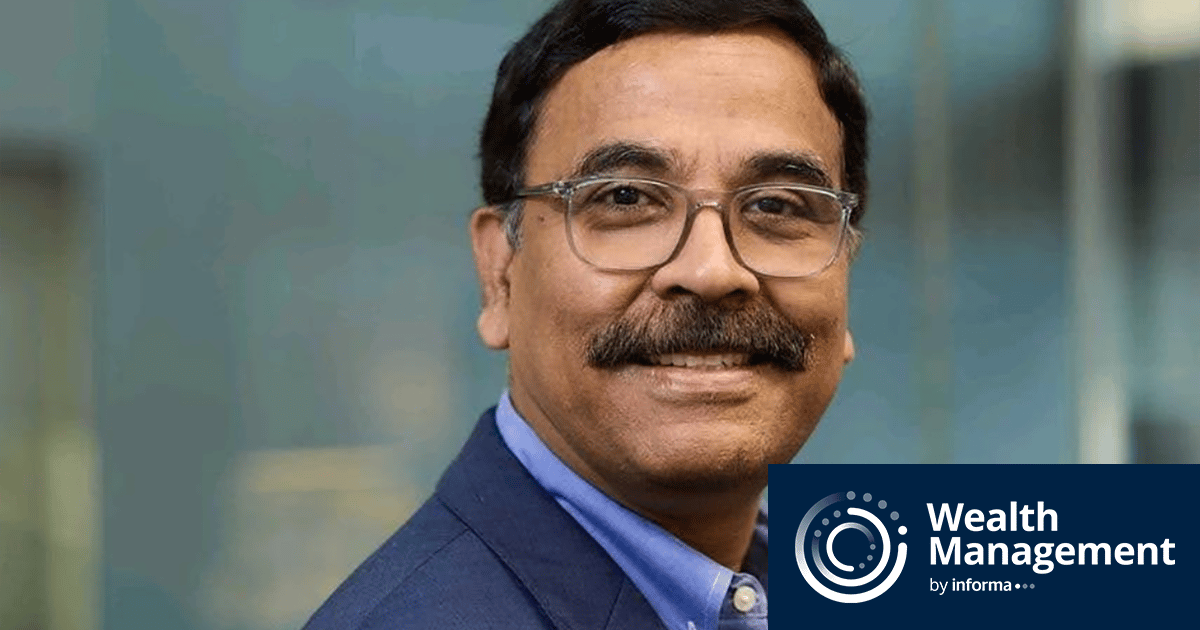
In an interview with Wealth Management at Osaic’s annual ConnectED conference in Atlanta this week, Chief AI and Technology Officer Sayee Bellamkonda said Osaic had been working with Anthropic to explore how the suite of workflow services could aid advisors.
“Their point is, there are CRMs, and many note-taking applications,” Bellamkonda said. “They’re saying, ‘you need not build connectors to all of them. We will build the connectors and all. We can be the front gate for your advisors.’”
Anthropic unveiled Claude for Financial Advisors in September; according to the AI firm, the suite connects to custodians, asset managers and wealth providers, such as Schwab, BlackRock and Envestnet, as well as AI tools like Zocks and Microsoft 365. It builds on Claude CoWork’s capabilities, with advisor-specific tools to aid onboarding, alternative investments briefing, compliance and AI policy review, estate and tax briefing, portfolio rebalance review, post-meeting notes and follow-up.
In a prior interview with Wealth Management, Anthropic Asset and Wealth Management Head Peter Nolan stressed the suite was not meant to replace tools but to act as “a symphony conductor,” making “things sing and better talk to the other parts of the symphony.”
During a separate discussion at the Osaic conference, Chris Penny, a member of Osaic’s digital solutions team, echoed Nolan, describing it as “an orchestration layer that sits on top of integrations.”
Additionally, Mike Palumbo, who heads Osaic’s Advisor AI Fintech team, hoped that within several months, advisors would be able to use Claude for Financial Advisors (and Microsoft Copilot) with clients’ personally identifiable information.
While advisors are currently allowed to use Claude CoWork, they’re not able to input private client data, which can limit their ability to exploit the tools to their full potential.
According to Penny, advisors were worried about how integrated systems will work with PII, and he stressed that Osaic has “no interest” in adding an additional tool that would cause friction. Whatever additions (including Claude’s Financial Advisor suite) wouldn’t require additional tasks, he claimed.
“It would give you full access, give your AI assistant or chat full access to all the data that you have access to with no additional layers in between,” he said. “And so, we really are inches away from being able to deliver that experience.”
Industry response to Claude for Financial Advisors has been mixed, but most wealthtech providers have been enthusiastic. Will Trout, the director of securities and investment practices at Datos Insights, told Wealth Management in September that proof of its success would be whether the platform actually reduces advisors’ time spent on administrative tasks and increases time spent in client meetings.
“If State Street, Schwab and Fidelity all plug into Claude in the next 18 months, that becomes the standard integration layer, and whoever is slow to connect starts looking like they’re not serious about advisor productivity,” Trout told Wealth Management in September.
The Claude discussions came amid a conference that (like many this year) was inundated with discussions about AI’s impact on the industry, as well as conversations about post-election market dips and the fate of Nvidia CEO Jensen Huang. As speaker Tony Kim, the head of Fundamental Equities Global Technology team at BlackRock, noted, AI feels like “dog years” where “every couple of weeks feels like a new world.”
It was also a whirlwind for Bellamkonda, who marked his 70th day with Osaic during the conference. He joined the firm from Vialto Partners, a global provider of tax solutions, and had previous stints at Ameriprise and American Express. Bellamkonda succeeded Ed Obuchowski, who was Osaic’s chief technology officer before retiring last year.
In an interview, CEO Jamie Price said he’d been reticent to fill the CTO role when Osaic was in the middle of the integration of the prior Advisor Group broker/dealer subsidiaries (dubbed Osaic’s “Journey to One”), but said Bellamkonda had been the firm’s “No. 1 pick” after an extensive search.
When assessing Claude for Financial Advisors, Bellamkonda said that everyone was “laser-focused” on functionality, but he also weighed the data question (who is storing what data in the model), as well as cybersecurity; if, for example, the suite is connected to multiple third parties, and one of them suffers a breach, is the third party, Anthropic or Osaic accountable?
“The third thing is cost implications,” he noted. “I don’t want my advisors getting surprised at the end of the month, getting a huge bill on tokens. We need to see how the token consumption is going.”
AI tokens (the fundamental units of data processed by AI models and the way frontier firms monetize their customers’ use of them) also weighed on Price’s mind. He told Wealth Management that the pace of the firm’s AI investments will be affected by how much token costs increase in the next several years.
To Bellamkonda, AI governance would also play a role in assessing whether the token cost is worthwhile.
To illustrate, he described building an AI tool for use in the home office. There could be a scenario in which several hires with a “little less sophisticated automation” could be less expensive at accomplishing some of the work than an AI tool (fueled by costly tokens). He also cautioned that firms can save on token costs by not opting for the latest model for every task simply because it is available.
“The highest [level] one is going to cost you a lot; the same thing you could have accomplished in one model [level] less,” he said. “Maybe with some specific models, I do understand; maybe they need the high-end one, but why do you need the high-end model for every single use case?”
In considering Osaic’s cybersecurity protections, Bellamkonda echoed wealthtech executives at this week’s RIA Edge Austin conference, saying that built agents need to be treated “almost like an alternate workforce” within the company.
To Bellamkonda, the firm needed to catalog all its agents, contain them by instilling agent-specific guardrails, monitor their actions, and, finally, revoke access immediately if necessary (the oft-discussed “kill switch”).
“When Sayee joins a company, there is an HR system, [like] Workday, single sign-on and all the wonderful things that tell what access Sayee should have, which system and what Sayee can do and should not do. Now, when building all these agents, I need to have security for them on what they can do and not do,” he said. “If I’m not ring-fencing them, they are going to go a little naughty, and they can do things that you don’t want them to do.”