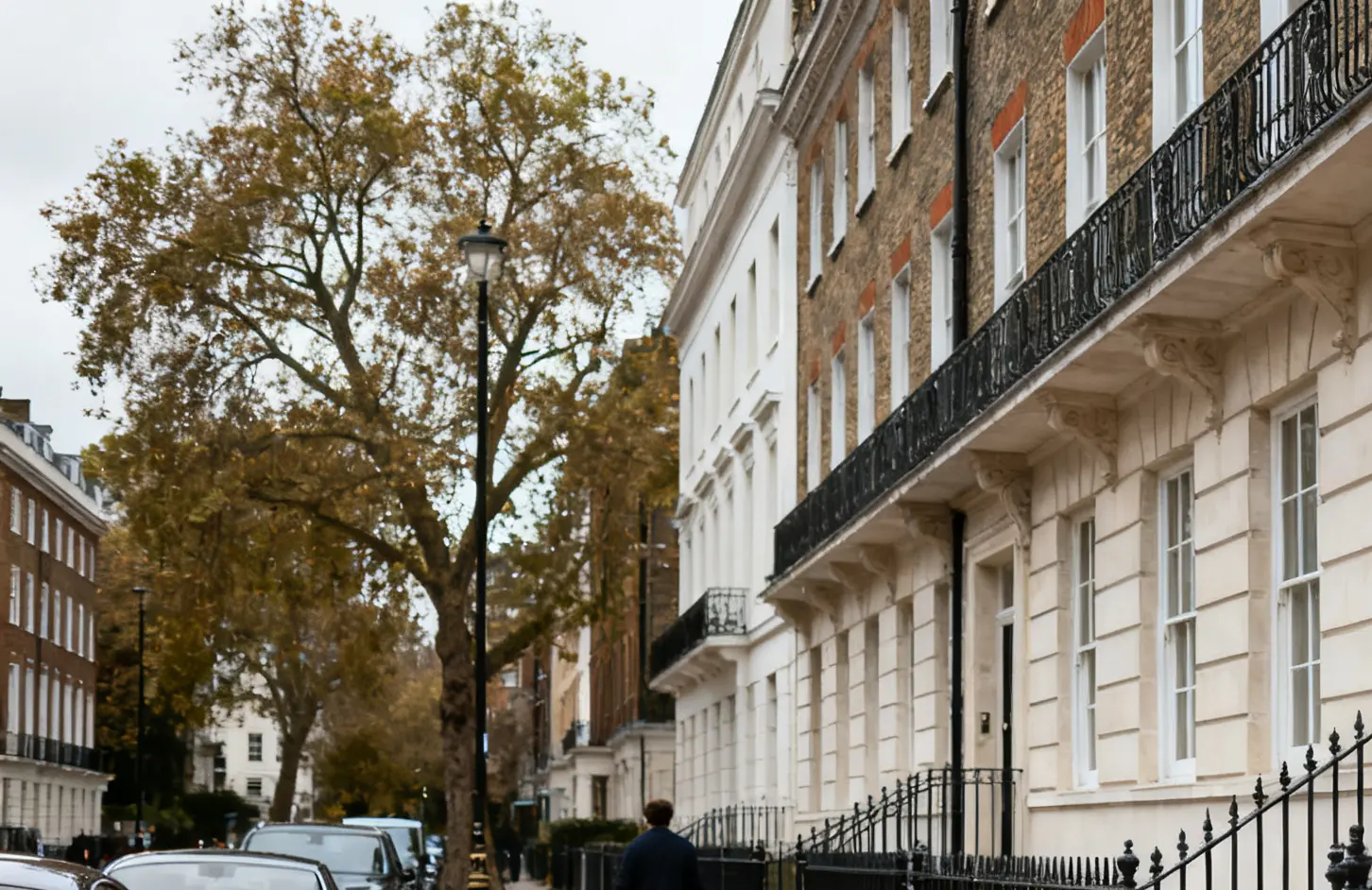
London property market forecast shows price stability for 2027
A veteran London estate agent has forecast that residential property values across the capital will remain relatively stable in 2027, with potential fluctuations of no more than 3% in either direction, as the market adjusts to higher interest rates and reduced international demand.
Trevor Abrahmsohn, drawing on 52 years of experience in the residential property sector, outlined his expectations for different market segments in London, noting that the £1 million to £3 million bracket has already experienced price corrections of approximately 10% from 2024 peak levels.
Interest rates and market conditions
The Bank of England has raised the base rate to 4%, with Abrahmsohn anticipating one further increase to 4.25% during 2027. Mortgage rates, currently ranging between 5.5% and 6%, are expected to remain within this band for the next 12 months. Inflation is running at approximately 3.5% and may peak at 3.75% before returning to the Bank’s 2% target in 2028.
The mid-market segment, covering properties priced between £1 million and £3 million, is experiencing extended sale periods of three to six months. Viewing numbers have declined from 40 to 15 per property, and competitive bidding situations have become less common, according to the analysis.
Prime and super-prime segments
In the £5 million to £10 million range, the market has become more selective. Properties requiring renovation or redevelopment face value discounts of up to 20%, reflecting the costs of refurbishment and associated VAT implications. Sale timescales in this segment can extend to six to 12 months or longer.
The market above £10 million has been significantly affected by changes to non-domiciled tax status. According to data from Henley & Partners cited in the analysis, 16,000 high-net-worth individuals have relocated from the UK to other jurisdictions. The number of serious buyers in this segment has reportedly declined by 60-70% compared to previous years.
Stamp Duty Land Tax, which can reach 21% at the highest levels, continues to influence purchasing decisions. Some wealthy buyers have opted to rent rather than purchase, using the savings from avoided stamp duty to cover rental costs for approximately four to five years.
Rental market dynamics
The rental market below £1,000 per week remains constrained, with supply pressures emerging as some buy-to-let landlords exit the market in response to tax changes and increased regulation under the Renters’ Rights reforms. This supply constraint is creating upward pressure on rents, mirroring broader trends in investment property across the UK.
At the upper end of the rental market, weekly rates exceeding £40,000 have been recorded for high-specification properties, with demand coming from international tenants, particularly from Eastern Europe, Scandinavia, Hong Kong, and China.
Market outlook
The analysis suggests that the London property market will not experience dramatic shifts during 2027, provided economic conditions remain stable. Geopolitical factors, including ongoing conflicts in Ukraine and Iran, remain variables that could influence inflation and interest rates.
Properties with outdoor space continue to attract premium interest, a trend attributed to changing preferences following the Covid-19 pandemic. The analysis emphasises that pricing discipline remains critical, with overpriced properties experiencing extended marketing periods regardless of location.
The political environment is considered largely settled, with a snap election deemed unlikely. However, recent volatility in technology stocks in US markets presents a potential risk factor, given that approximately 30% of FTSE 100 revenues are derived from American operations.
The forecast contrasts with concerns about potential market collapse, noting that no significant oversupply exists across London’s residential sectors. Negotiations between buyers and sellers are described as orderly, without evidence of widespread capitulation on pricing.