Fed’s Bowman says ‘there is still work to do’ on inflation
- Key insight: The Federal Reserve vice chair for supervision stopped just short of endorsing a rate hike in December, but noted that price pressures are broadening beyond imports, energy and data center components.
- Expert quote: “Today, I am seeing signs that inflation pressures are persisting, while labor market conditions appear to be firming. This indicates that there is still work to do to bring inflation closer to 2%.” — Fed Vice Chair for Supervision Michelle Bowman
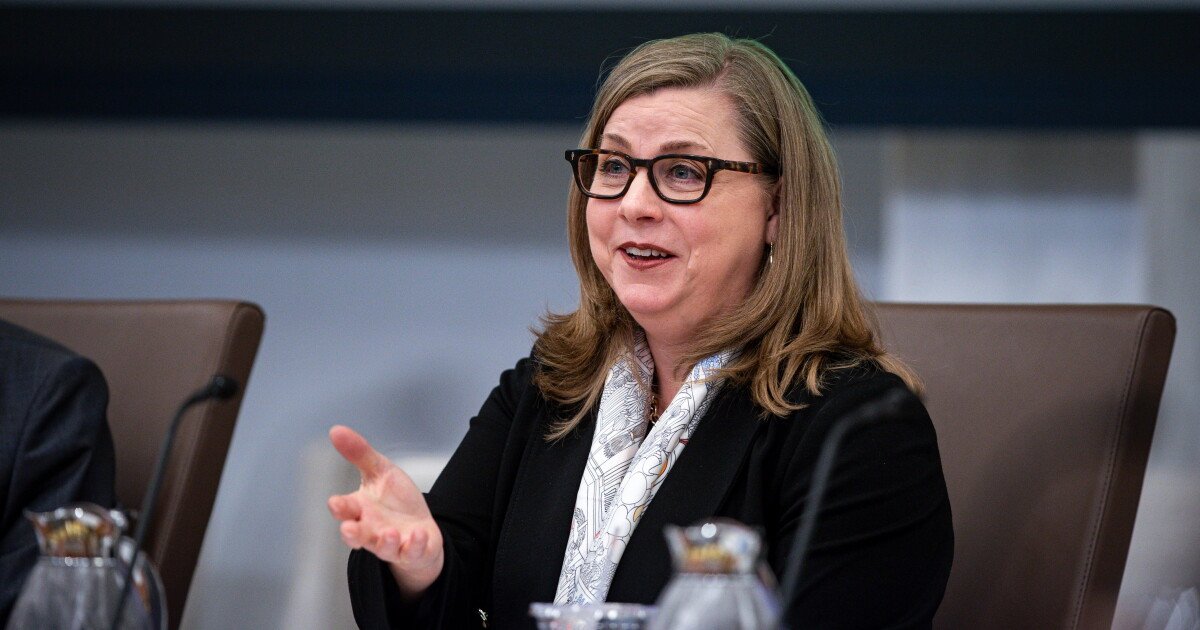
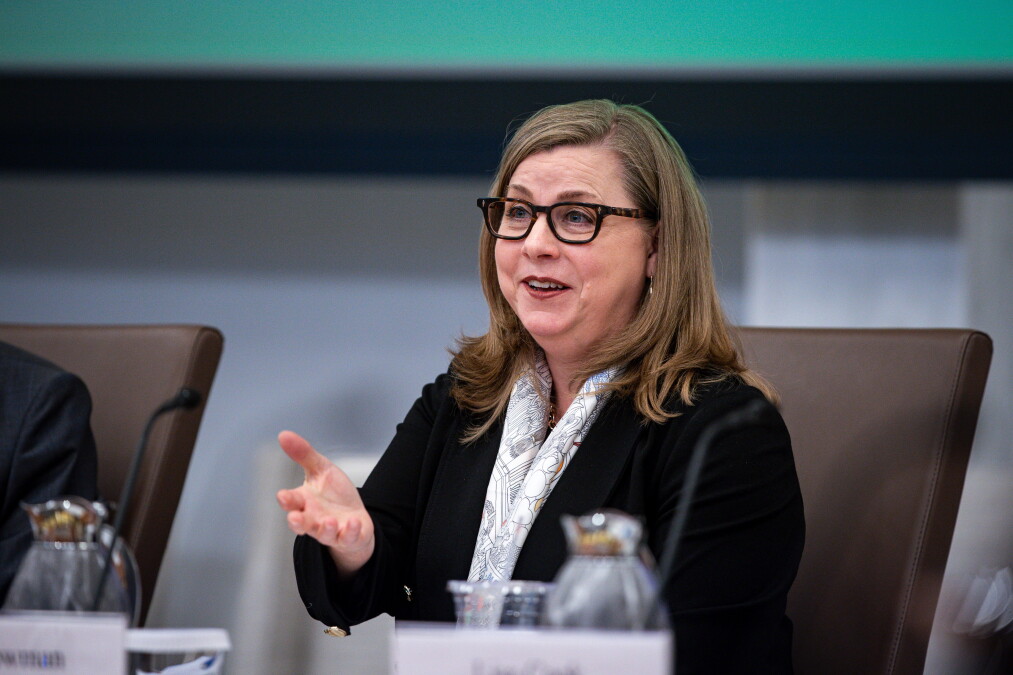
Federal Reserve Vice Chair for Supervision Michelle Bowman said the central bank has more work to do to bring down inflation, but stopped short of explicitly endorsing a December rate hike.
Processing Content
In a speech at an event hosted by the Council on Foreign Relations on Tuesday, Bowman said inflation has been “more persistent” than she anticipated and has “shown recent signs of broadening.” She also noted that tighter monetary policy could prove ineffective in stifling price growth in this environment and could weaken the parts of the economy that are already under stress.
Bowman said she wants to see more data about how the economy develops and responds to the Federal Open Market Committee’s 25 basis point increase to the federal funds rate in September.
“Today, I am seeing signs that inflation pressures are persisting, while labor market conditions appear to be firming. This indicates that there is still work to do to bring inflation closer to 2%,” she said. “Given the recent market volatility, I will also continue to closely monitor how developments in financial conditions influence the economic outlook.”
Bowman’s remarks came hours after the Bureau of Labor Statistics released its consumer price index inflation
In her remarks, Bowman divided the contributing factors behind this price growth into four categories: high energy costs, tariffs,
“It is important to ensure that those inflationary pressures do not intensify, further broaden, or become embedded in consumer and business expectations,” she said. “But today’s consumer price index data suggest that inflation pressures may persist for longer.”
While Bowman stopped short of calling for a rate hike next month, she said that her “focus” has shifted from the employment side of the Fed’s dual mandate to the price stability side — a notable shift for Bowman, who has been among the FOMC’s most public skeptic of the wisdom of further rate hikes in recent months.
Bowman’s comments come as two other FOMC voters endorsed increasing their benchmark interest rate by at least a quarter percentage point at their meeting next month.
Fed Gov. Christopher Waller, who delivered a speech in London on Tuesday morning before the CPI report was released, signaled a
“Hiking only 25 basis points would put our credibility at risk, a risk I am not eager to take,” Waller said.
Read more:
In a
Logan said she believes the Fed should tighten its policy rate by 50 basis points to make it restrictive enough to begin curbing inflation. She said the FOMC does not need to make that adjustment all in one shot at its next meeting, but argued that it must start moving in that direction.
“It remains clear to me, given the current outlook, that the FOMC needs to implement at least two more 25-basis-point rate increases,” she said. “The exact pace of increases could depend on the near-term economic and financial environment. It may be possible to move more rapidly this winter than the FOMC has moved so far this fall.”
Bowman does not seem to share the sense of urgency expressed by Logan and Waller, noting repeatedly that she wants to give the situation time and assess the data on market developments before adjusting policy.
Instead, Bowman is weighing the potential costs of increasing interest rates at a time when private interest rates are already on the rise and equity prices are trending down. She said these forces could serve as a natural corrective to an overexuberant market and suggested that further action by the Fed could cause major disruptions in the economy.
“Lower equity prices could undermine the resilience in consumer spending and higher interest rates could further strain interest-rate-sensitive sectors of the economy, like housing and small business investment,” she said. “I will continue to closely monitor developments in credit and equity markets to assess risks to economic growth and financial stability.”
Bowman also noted that disruptions to the AI sector could reverberate back to the banking system. While the biggest lenders to data center developers and AI firms — including banks as well as life insurance companies, mutual funds, pension funds and private credit firms — appear well positioned to absorb potential losses, she said it is difficult to map out the risks in this part of the economy precisely.
“Most of these entities are well capitalized and have stable funding,” she said. “But the complex nature of the financing structures makes it difficult to properly assess counterparty risk.”