Can anyone really stop the AI data center boom? What could happen next now that voters have spoken
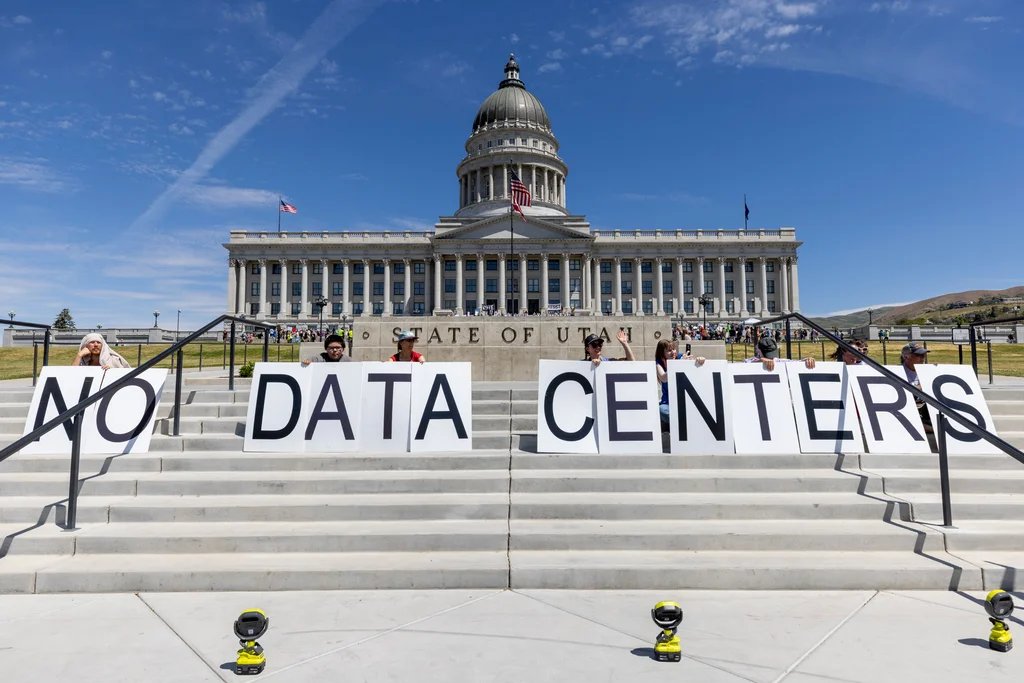
On Election Day, Americans made their opinions about the AI data center boom clear.
Now, it’s up to those newly elected legislators to rein in the country’s high-speed data center development. And there’s a lot they can actually do—particularly on the local level.
Data centers were “dealt a resounding blow in the midterm elections,” Mandy DeRoche, director of emerging issues at Earthjustice, said in a press event on Wednesday.
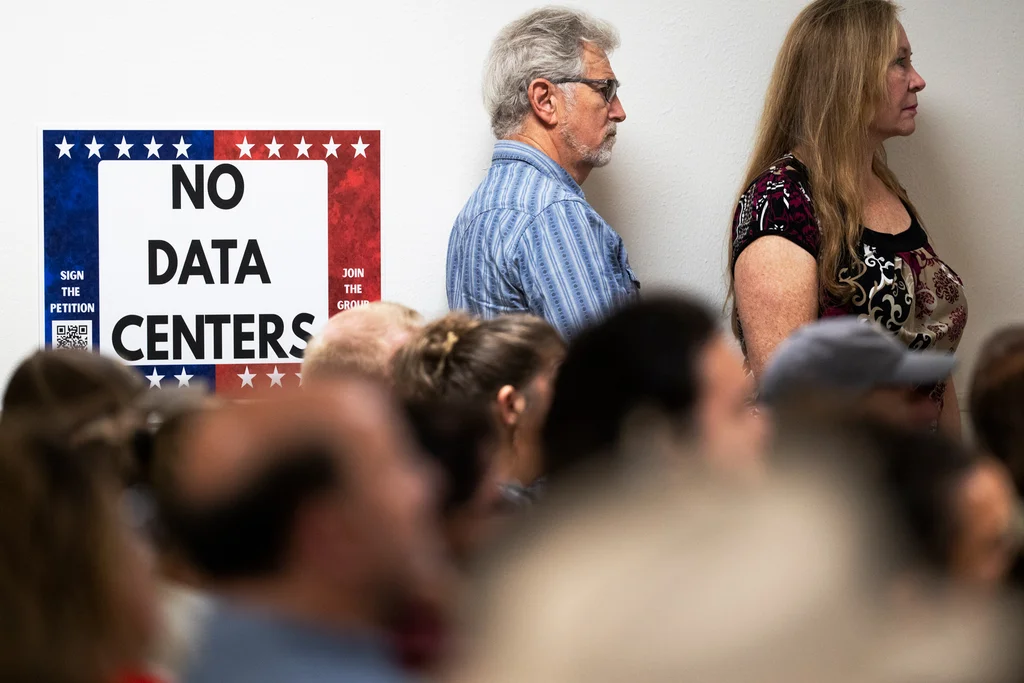
Across 10 states, residents overwhelmingly voted for ballot measures to pause development, require public approval for projects, restrict data center electricity use, and link financial assurances to tax incentives.
Congressional and state-level candidates who promised to address AI data center development also won in large numbers. The total number of governors supporting moratoria will now represent states with 41% of the country’s planned data center developments, according to Earthjustice.
How developers fast-tracked data center projects
The data center industry has a history of limiting public information around its projects and a track record of skirting regulations and oversight.
Developers have demanded that government officials sign non-disclosure agreements, denying the public information—and a chance to weigh in.

They’ve also split their projects into smaller permits, sometimes applying for one project’s permits under multiple corporations. That strategy, called “segmentation,” can fasttrack approval and conceal the true scope of a project, allowing developers to sidestep more rigorous environmental reviews.
Still, activists who have been working to protect communities from the harms of data centers are hopeful.
“I’ve never been part of a movement like this before,” said Sarah Friedman, co-founder of Better Data Center Project, an advocacy group that works with communities facing data center development.
The effort to push back on rampant data center development has “created new alliances, new support, and I think new awareness of big tech and the role it plays,” she said.
It’s also been a bipartisan issue, DeRoche notes, and there’s precedent for action.
“Harmful data center development has been reined in when a state regulator acts, and acts in its community’s interest,” she said. “And I’m optimistic that that will increasingly happen after last week, with new agency heads, with new governors.”
What can actually be done?
So what can the midterm winners actually do about data centers?
On the state level, lawmakers can ensure that project info is public and accessible by banning NDAs and allowing for community engagement. For projects that are building their own power, lawmakers can require clean energy that meets “new, near, and now standards.”
“That means that they’re building new clean energy resources, not taking existing clean energy resources that would otherwise benefit the grid,” said Callie Rabinovitz, research and policy analyst with Earthjustice’s Clean Energy Program. “They must be online when the data center comes online to ensure there’s no fossil fuel bridge power, and they should match the data center’s load 24/7.”
State legislators can require “meaningful” environmental reviews, she added, that look at the cumulative impact of these data centers and their electricity generation. That means considering what pollution already exists in a region, and ensuring that a data center’s base power is not reviewed separately from its backup generators.
State legislators can repeal tax incentives for data centers that have cost municipalities hundreds of millions of dollars. They can require that data center developers cover decommissioning costs, as well as the costs for any new grid infrastructure that may be needed if an off-grid data center eventually does connect to the grid, “which we expect most of them will,” Rabinovitz said.
And they can make sure data center moratoria are actually effective.
“Not all moratoria are created equal,” DeRoche said.
When outgoing Texas Governor Greg Abbott issued a data center pause, for example, state regulators at the Texas Commission on Environmental Quality (TCEQ) still moved forward with 35 permitting actions for data center projects.
Now, Governor-elect Gina Hinojosa, who campaigned on a data center pause, could appoint at least two new commissioners to TCEQ. The state also has a new Democratic commissioner for its Texas Railroad Commission, which regulates the state’s oil and gas industry, after the midterm elections.
That commissioner “was not the oil and gas industry’s pick to win the seat,” Commission Shift, a nonprofit watchdog group, told local outlet KERA News. Texas also elected a new District Attorney who has spoken out against data centers and in support of more local involvement in those projects.
Much of the permitting decisions for data center projects is made at the state and local level, so those legislators have lots of opportunities to regulate this industry. Congress can still take action, too.
In the House and Senate, there’s room to establish guardrails around data center development on public lands, and require more transparency around energy and water use, and overall emissions from these projects. Congress can also pass enforceable ratepayer protections that do not incentive more gas development, and therefore more pollution.
With Democrats controlling both chambers, they can establish stronger oversight of agencies like the Environmental Protection Agency (EPA), to ensure that they’re protecting communities from harmful environmental impacts with laws that are already on the books.
And because so much of the permitting happens at the local level, Congress can make sure that those local rights to regulate are protected.
With all these changes in legislation, it could create an opportunity, Meg Slattery, staff scientist at Earthjustice said, to reframe the entire data center conversation.
“We are hoping that this creates an opportunity to refocus on addressing the climate crisis and building a just clean energy transition,” she said, “rather than orienting the government towards accommodating a hyperscale data center buildout at any cost.”