Will the midterms trigger an RIA M&A rush? It’s complicated
Processing Content
- Key insight: As 2026 winds down, firms looking to close deals will be taking steps to protect themselves from market fluctuations.
- Expert quote: “There will still be M&A activity, but it causes them to be more selective in the deals they’re willing to look at.” — Jacqueline Martinez, managing partner at Alaris Acquisitions
The Democrats’ looming takeover of Congress, along with other macroeconomic trends, could drive a rush to secure M&A deals before the end of the year.
Whether due to a desire to complete negotiations before Jan. 1 or other factors including interest rates, stock and bond value cycles, and political changes, wealth management dealmakers tend to reach and close deals at a faster clip in the fourth quarter.
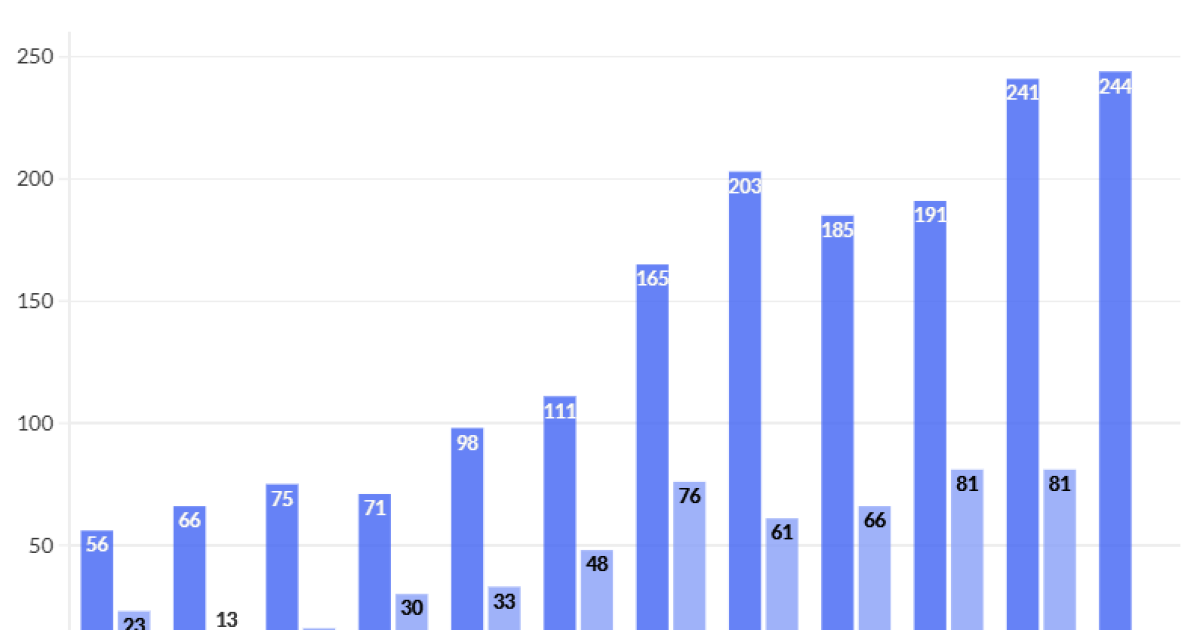
In five of the past eight years, the fourth quarter has recorded the highest volume of registered investment advisory firm M&A transactions for any period, according to tracking reports from industry dealmaking consultant DeVoe & Company. Deal volume surpassed that of other quarters in the periods that included the 2018 midterms and the general elections in 2020 and 2024. However, the number in the fourth quarter of 2022 around the last midterm elections fell below the other three periods of that year.
Over the past decade, RIAs have completed more deals in the fourth quarter than in the same period of the previous year seven times.
But a shift to Democrats’ control next year may not accelerate transactions as quickly as downward momentum for stocks that correlate closely with industry profits or interest-rate hikes from the Fed that affect the cost of dealmaking capital, according to Jacqueline Martinez, managing partner at wealth management M&A seller advisory firm Alaris Acquisitions. In addition, industry challenges including succession planning, technology, compliance and administrative expenses continue to induce RIAs to pursue scale via M&A, “regardless of which way things are swinging in the midterms,” Martinez said.
Last week’s AI sell-off reflected the risk of shorter-term volatility, though in wealth management, any political impact could take until the next presidential election in 2028 to shake out.
“Most of our clients are coming to us well in advance of wanting to do a deal,” Martinez said. “There’s a fair amount of time, but if we think there could be tax changes in 2029, let’s say, it doesn’t leave much time to get started, get educated and really start in earnest on the M&A process.”
To understand deal flow, check the VIX
The strategic implications around so many forces that affect M&A deals
After seven straight quarters of year-over-year growth in deal volume, RIA M&A volume fell 17% in the third quarter of 2026, which the report described as more of a “retreat” than a “slowdown.” And the VIX provides “a useful proxy for these moments,” as higher market volatility frequently causes business owners to delay strategic decisions like selling the firm, the report said.
The VIX spiked during last Thursday’s sell-off, exceeding its level during the last period of concern about overheated AI valuations in November 2025. But it remained below the levels reached a month after the start of the war in Iran this year and around President Donald Trump’s “liberation day” tariffs in April 2025.
“The transactions announced on a given day are the result of a decision to sell, which came six to 18 months ago,” DeVoe founder David DeVoe said in a prepared statement in the report. “The volatility and distraction created by tariffs, the war with Iran, gasoline price surges and other economic shocks caused some advisors to pause before moving forward with a sale. That hesitation is now emerging in our transaction data.”
In other words, even if Democrats’ midterm victory over the Republican Party alters taxes or other policies in the near term, any ramifications to industry dealmaking probably won’t emerge quickly. That contrasts with the likely conditions for the types of transactions large enough to shape the entire economy, according to experts who spoke with Bloomberg News about how
“If you have a major transaction that is going to take time to put together and get through the process, you really have to start working on it now and probably announce it by the middle of 2027,” Paul Nary, an assistant professor of management at the University of Pennsylvania’s Wharton School, told the news outlet. “There isn’t that much time left.”
That kind of rush to get deals done could emerge in wealth management circles, too, and no one can say for sure when or if a so-called AI bubble in stocks could burst.
In a note following last week’s sell-off, Franklin Templeton Institute Head Market Strategist Chris Galipeau
“We expect the rotation to continue, as we have expected for the past two years,” Galipeau wrote. “The midterm election results amplified the rotation. Rotation is not a bad thing, and if you are running a diversified equity portfolio, you should be in good shape. The VIX is on the move, and we think it makes sense to use heightened levels of volatility to add exposure. A VIX close above 30 would be a good mark to consider beginning to accumulate, while a close above 50 would open the throttles.”

Alaris Acquisitions
How macro factors affect industry M&A
While the VIX last closed above 30 in March and topped 50 following the administration’s reciprocal tariffs announcement in April 2025, RIA sellers have already been taking steps in deal negotiations to protect against the risks of a sustained downturn for stocks, according to Martinez.
Because client assets under management and recurring revenue from advisory fees shift with stock and bond values, RIA buyers and sellers must agree on a valuation linked to a specific level of AUM and other metrics. For instance, deals that will close in the next six months likely rely on a Sept. 30 valuation, she noted.
That means that Alaris and the firms it represents are spending much of their time “trying to shift market-risk to the buyer, effectively, through deal terms,” Martinez said. “You’re effectively ignoring the market activity and just looking at the inflows and outflows, or the organic growth of the client base.”
Regardless, she suggested the midterms may have answered stock investors’ questions to the point that it removed some uncertainty about which party would control Congress, AI valuations, the federal government’s debt and the political momentum heading into 2028. Martinez and other dealmakers have already detected some effects of rising interest rates on M&A deals that hinge on buyers’ view of RIAs with aging ownership or clients and lack of succession plans.
“There will still be M&A activity, but it causes them to be more selective in the deals they’re willing to look at,” she said. “Those elements will always be there, but, as buyers are facing more financing costs, they’ll have a sharper eye on which firms they’re able to bid on and still be competitive with those bids.”