Better says AI replaced managers, 39 brokerages join Tinman
- Key Insight: Learn how a bitter executive leadership battle cost Better Home & Finance millions of dollars, and lost productivity, in the third quarter.
- Forward Look: Better says it will cut expenses by 40% by the end of the fourth quarter.
Overview bullets generated by AI with editorial review.
Better Home & Finance is pulling brokerages onto its Tinman AI platform while replacing layers of its own management with AI agents, a pair of moves that could reshape how rivals staff and compete.
Processing Content
The lender has signed 39 brokerages to its platform, initially focused on home equity line of credit offerings, executives said on Monday’s earnings call. The multichannel lender is also committing further to retail, even as its direct-to-consumer volume has shrunk every quarter.
Tinman is already central to Better’s business: 57% of its loan volume came through the AI platform.
On staffing, founder Vishal Garg said the company has terminated traditional vice president, director and senior manager roles in favor of AI agents.
“Those management responsibilities are now performed by AI agents and dashboards, and delivered directly to the most senior people in each part of our organization,” Garg said.
Better hasn’t described its
The leadership fight and the numbers
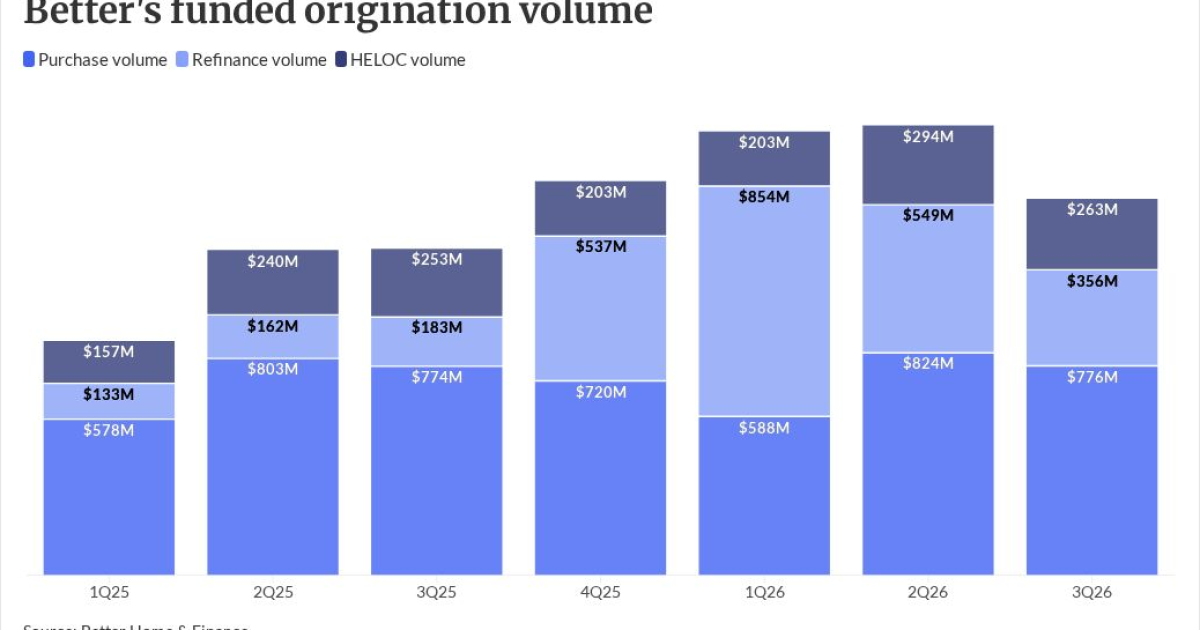
The cost push comes after a leadership battle that took a big bite out of earnings. Garg blamed the people who ousted him, and macroeconomic factors, for the lender’s slip in productivity this summer as Better posted another eight-figure loss. Origination volume of $1.4 billion was up annually but represented
“The fact is, the amount of effort and therefore productivity, and that reflected in our results, suffered,” Garg said on the call, referring to the period he was away from the firm.
The earnings were the first helmed by Garg
Better’s adjusted EBITDA loss of $29.7 million included $12.8 million of proxy-related legal, public relations and other expenses. Excluding those, the $16.8 million negative EBITDA was still far from the company’s goal earlier this year of reaching breakeven by this reporting period.
Garg, who has said the company is searching for a permanent CEO, blamed Lewis for stalling partnership deals and causing waning productivity. Better published metrics showing fading monthly origination volume during Lewis’ August-to-September tenure, and a 20% decline in email correspondences by salespersons.
Inside the numbers
Better’s net loss of $36.5 million was an improvement over the $39.1 million loss
Revenues slipped 17% quarterly, from $54.7 million over the spring to $45.1 million ending September. The company retains $77.5 million in cash and cash equivalents.