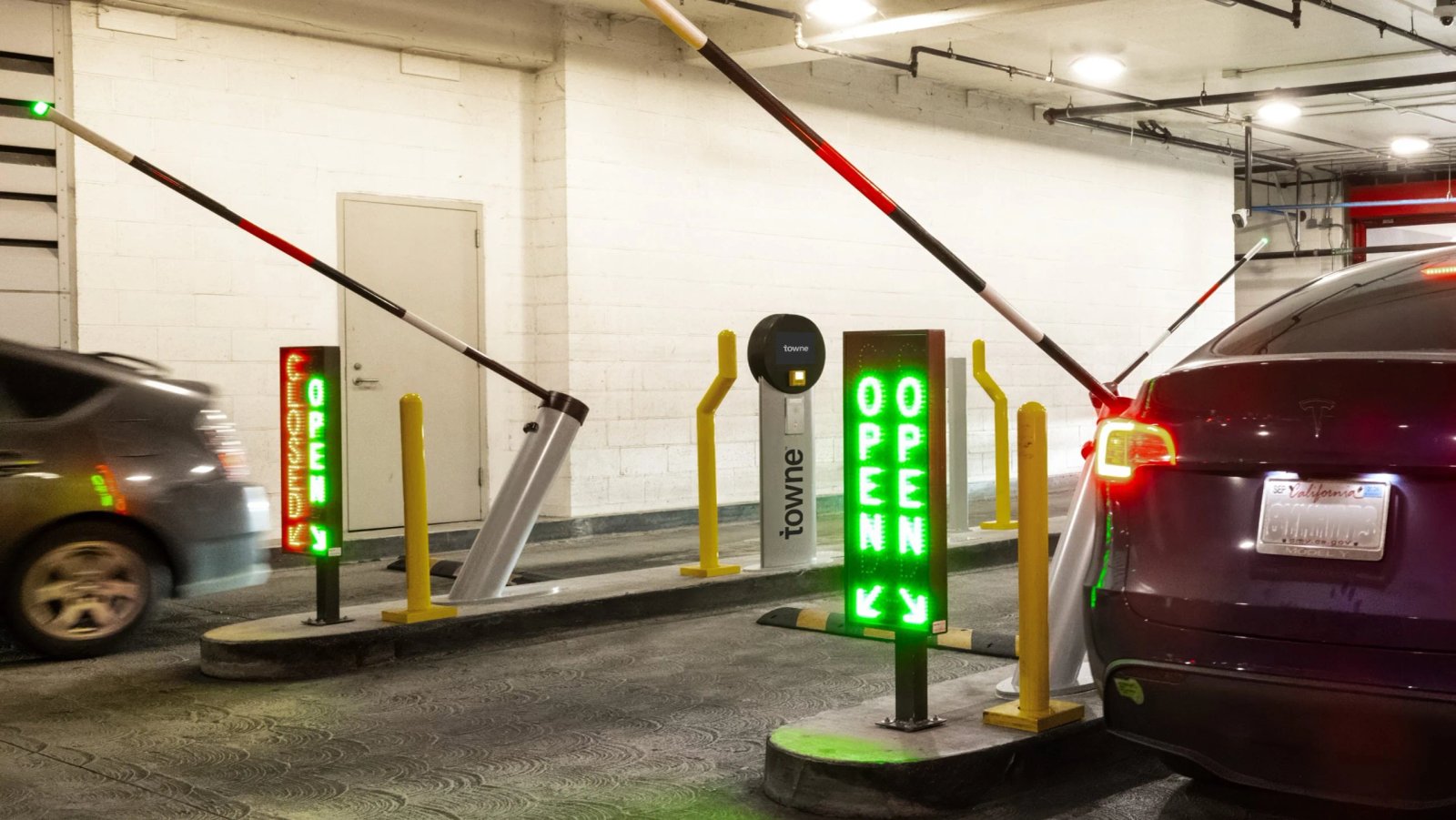
Connect CRE Q&A with Towne CEO: Making First and Last Impressions at Properties
Founded nearly 40 years ago with a single stand for valet parking, Towne has expanded and evolved its services, its technology and its customer base. At the same time, customers’ requirements and priorities have also evolved. Here, CEO Andrew Kerin discusses how his company assists property owners in making positive impressions as tenants and visitors enter and exit the properties.
How would you describe Towne today, and how the company has evolved from parking operator to arrival-to-departure experience parking and mobility partner?

Towne started nearly 40 years ago with a single valet stand. Our clients’ needs have evolved and so have we. Today, we’re a multi-service parking, hospitality and mobility partner helping owners improve the arrival-to-departure experience, operate more efficiently and grow net operating income (NOI).
We’re often responsible for a property’s first and last impressions. Whether that means convenient self-parking or high-touch valet service, those moments shape how people feel about a property and whether they want to return. We bring together experienced people, consistent operations and technology to deliver an exceptional experience while improving performance for owners.
Our technology platform, Nexity by Towne, can work alongside our operating services or as a standalone solution. It connects capabilities such as parking access and revenue control, guidance, digital payments, analytics, revenue optimization and valet management, giving owners better visibility into performance.
We see parking as more than a transaction. It can strengthen a property’s brand, create revenue and contribute to long-term asset performance. The arrival experience influences how residents, visitors and employees feel about the property, which influences renewal behavior, retention rates and rents.
How does Towne work with the CRE industry and what have you learned about what CRE owners need right now?
We work with owners across asset classes and industries, and we know that customer expectations are higher, operating costs are increasing, and owners are looking for ways to drive value for tenants and identify new revenue opportunities while managing their properties more efficiently.
We look at the entire arrival-to-departure journey, including what happens before someone enters a building until they leave. What experience do guests, customers, residents, employees and tenants expect? What level of service suits the property? Which technology will make the operation easier to manage? Are rates responding to market dynamics and demand? Do teams have the data they need to understand parking and asset performance?
A mixed-use development, hospital, retail center and office building serve different people, but owners want the same fundamentals: a dependable operation; a positive customer experience, greater efficiency; and stronger financial performance.
When the arrival-to-departure experience is treated as a competitive differentiator, what does it look like?
The connection between the arrival experience and financial performance is direct. When people can find parking, enter a property and reach their destination without unnecessary friction, they’re more likely to enjoy the visit and return. With retail properties, a better arrival can encourage people to stay longer and spend more. In offices and multifamily communities, the everyday experience can influence tenant satisfaction, renewals and retention.
Those experiences have operational and financial implications. Stronger tenant satisfaction and retention supports occupancy, while fewer complaints and smoother operations reduce the burden on property teams. Each of these factors can contribute to NOI. On the other hand, a confusing or frustrating parking experience can shape someone’s opinion of a property before they even walk inside.
Technology can remove many of those pain points. Digital payments, ticketless entry and exit, license plate recognition and parking guidance can reduce confusion, minimize delays and make it easier for people to get where they need to go. These tools also give operators better visibility into parking activity and revenue. When technology works alongside well-trained teams and consistent service standards, owners can deliver a smoother experience, capture revenue more effectively and run operations with less complexity.
With elevated borrowing costs, uneven office occupancy and tighter underwriting, owners are looking for income they can unlock without major capital expenditures. Where does parking fit in that conversation?
Parking is an opportunity to unlock income without major capital investment. Many first need to understand whether they’re capturing all the revenue their parking generates. Manual processes, unreliable technology and static pricing can leave money on the table. Reliable systems, demand-based pricing and options such as event or premium parking can improve revenue capture and yield.
Technology can also lower operating costs by automating payments, permits and validations, while giving teams better visibility into maintenance needs and performance across locations. Working with one integrated partner can reduce the cost and complexity of managing multiple systems and vendors.
Data helps owners make better capital decisions, too. In many cases, a property doesn’t have a capacity problem – it has a distribution problem. One corporate campus we work with was preparing for a major parking expansion because it believed capacity was insufficient. Guidance technology and occupancy sensors showed that significant capacity was already available. The owner deferred the expansion and used the technology to direct people to existing spaces. The result was roughly $15 million in capital redirected to other priorities, a 15% increase in peak utilization and $1.25 million in annual productivity gains.
At a premier Southern California shopping center, integrated guidance technology reduced time spent searching for parking by 27%, increased peak utilization by 15% and improved customer satisfaction by 112%. The data also showed that the existing footprint could support a 31% increase in retail square footage without building additional parking.
The same solutions that protect revenue and defer capital can make arrival and departure easier. For owners, the opportunity is improved financial performance and a better experience at the same time.
Mixed-use is becoming a dominant development model. What does it take to deliver a seamless arrival experience across office, retail, entertainment, residential and hospitality users on one site?
Mixed-use properties bring another layer of complexity because different audiences use the same site in different ways. An office tenant wants a predictable morning arrival. A resident may need access late at night. A hotel guest may expect valet service, while a shopper wants to park quickly and get on with their day.
The experience should reflect those needs rather than treating every parking visit the same way. Consistent operating standards matter, but owners also need flexibility for each audience. Parking shouldn’t be treated as a transaction. It needs to be managed intentionally as part of the overall customer experience.
Technology helps manage those differences on shared infrastructure. Owners can tailor permits, validations, reservations and pricing by user group and time of day. Office demand may fall in the evening just as restaurant, retail or event demand rises. When owners can see those patterns, they can make better use of available capacity and adjust their approach to demand.
Parking also represents a significant revenue opportunity. A deliberate revenue optimization strategy can improve utilization, create new revenue streams and control operating costs while preserving the experience each audience expects. In some retail and mixed-use environments, optimized parking and guidance solutions have generated revenue increases of 30% or more, with operating cost reductions exceeding 50% in certain cases.
Every property is different, so there isn’t one solution that works everywhere. The opportunity is to understand how people use the property, identify where the experience or operation can improve, and connect the right service, technology and data to measurable goals. When owners take that broader view, parking becomes more than infrastructure. It becomes a practical way to improve the experience and the performance of the asset.