One American town out of dozens voted yes to data centers

Bloomberg News
Voters in dozens of towns across the U.S. sent a clear message against data centers in Tuesday’s elections — with one notable exception.
Processing Content
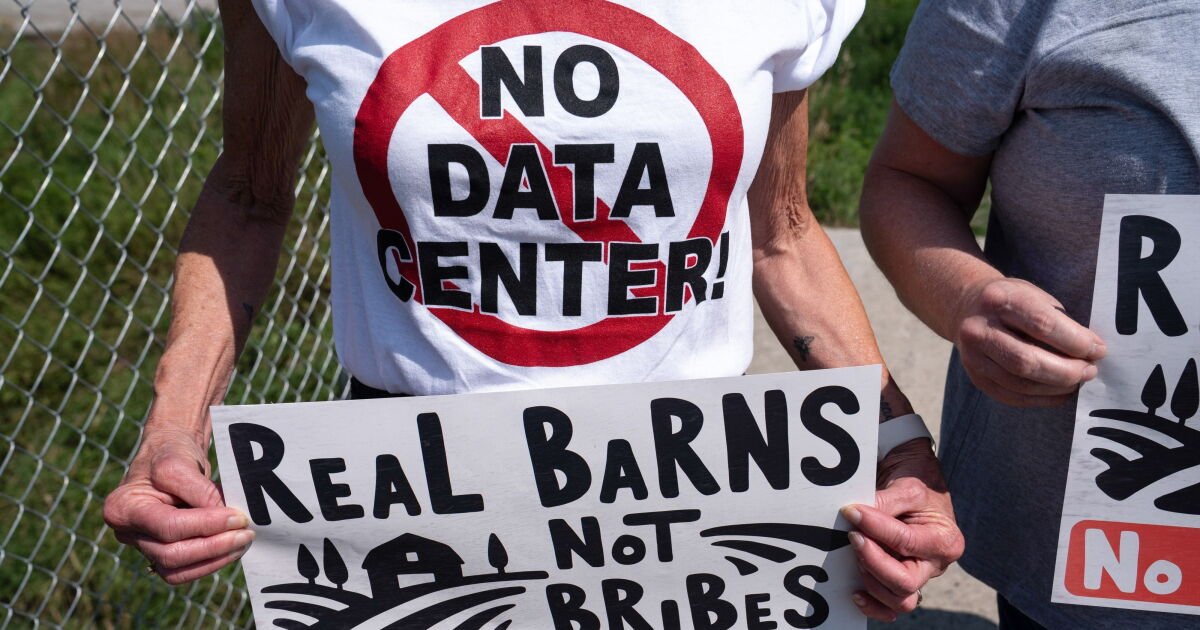
In Harwood, North Dakota, residents blocked a measure aimed at slowing industrial developments like data centers. About three-fourths of the town’s voters — around 430 in total — went against the proposal.
The ballot initiative was in response to a plan for Applied Digital Corp. to build a large
Construction began less than a month after residents in the town of roughly 800 found out about the project in September 2025, said Michael Swartz, who led efforts to get the proposal added to the ballot. His group, Voices of Harwood, gathered 91 signatures in three days, more than twice the 40 needed to qualify. Still, their initial enthusiasm failed to manifest at the polls on Tuesday, after the town’s mayor and local chamber of commerce urged voters to reject the measure.
If the initiative had passed, it could have prompted Applied Digital to seek to de-annex its project from Harwood, potentially imperiling the city’s tax revenue, Councilman Chris Higgins said in an interview. “If this project was going to happen, we want to make sure the city benefits,” he said, adding that the proposal could have hurt other businesses trying to expand in the town.
Given the level of official opposition, Swartz isn’t surprised the measure failed. With the language the town used on the ballot to describe his measure, “even I would’ve voted no,” he said. “You’ve got all those things working against you, but as a grassroots movement we don’t have the capital,” he said, noting that he used his own money for organizing and advertising the initiative.
The results in Harwood were an outlier in a U.S. election where voter
Data center developers are now grappling with a worst-case scenario of possible new restrictions on their business after Tuesday’s vote. In addition to the local measures, Democrats won gubernatorial races in several states including Texas, Georgia and Ohio after campaigning for tougher oversight of tech infrastructure. Gina Hinojosa, the Democratic governor-elect in Texas, has called for an immediate moratorium on data center projects until more thorough regulation is developed.
Backlash at the ballot box to data centers reflected how artificial intelligence has emerged as a hot-button political issue, with voters concerned that the facilities drive up local utility bills and are often constructed with little transparency. A Quinnipiac University poll in September found that 72% of voters would oppose a new data center in their community.
Some of the ballot measures across the country sought outright bans on data centers, while others took a more measured approach, pushing for local residents to have more input in the planning process or restricting where the data centers can be built.
In Harwood, outside Fargo along the Minnesota border, the ballot initiative pushed by Swartz turned into a yearlong tit-for-tat battle between supporters and opponents of the project.
Mayor Blake Hankey had opposed the measure, saying it would create barriers to development and defending the data center as a source of tax revenue, according
Swartz said that for every mailer sent by Voices of Harwood, the Fargo Moorhead West Fargo Chamber of Commerce sent one too. Applied Digital had initially eyed Fargo for its campus but abruptly shifted to the much smaller town of Harwood after balking at Fargo’s building and franchise fees, then-Mayor Tim Mahoney told
Across the country, activists are working to get special elections for data center restrictions on ballots following the midterms, but when it comes to trying again in Harwood, Swartz said, “I don’t know how much more in the tank I have.”