What AI agents can do for banks’ customer relationships
- Key insight: Some banks are using AI to improve their relationships with small businesses.
- Expert quote: “We’re not looking for it to go out and contact our customers, because that is the core of who we say we are. We’re looking for ways that we can utilize it in-house that will create efficiencies so that we can do a better job of being in front of our customer.”—Cristin Reid, CEO of Capitol National Bank
The next wave of artificial intelligence offers promises of autonomous agents for banks to deploy across different departments. For small business-focused banks, agentic AI is presenting both challenges and opportunities for relationship managers as they work to serve their business clients better.
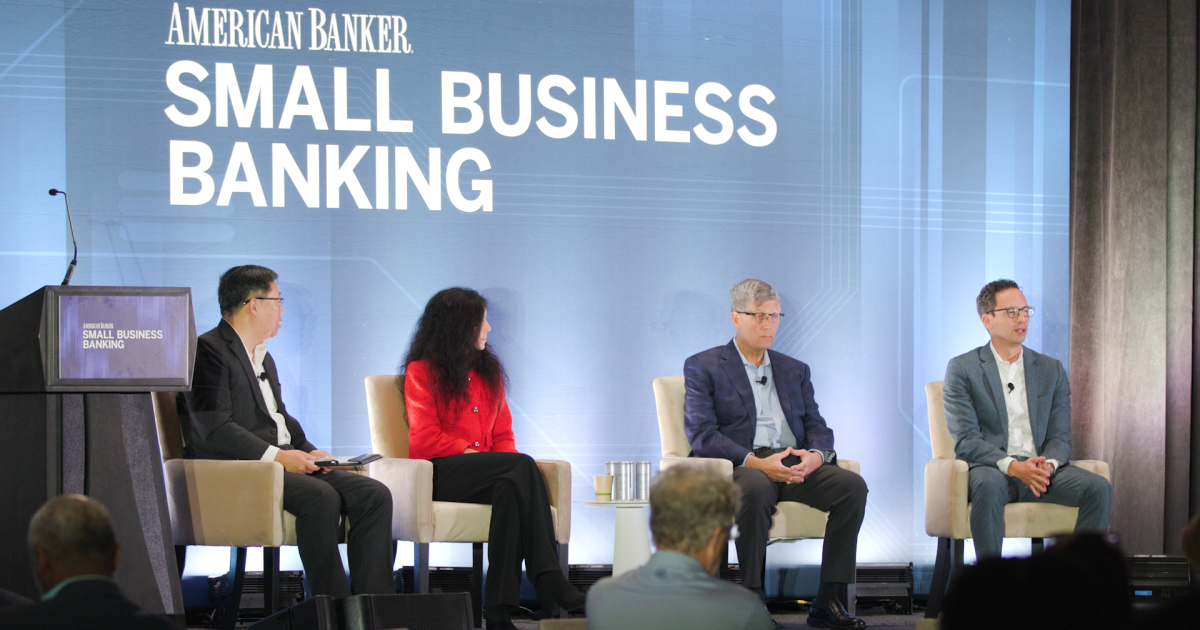
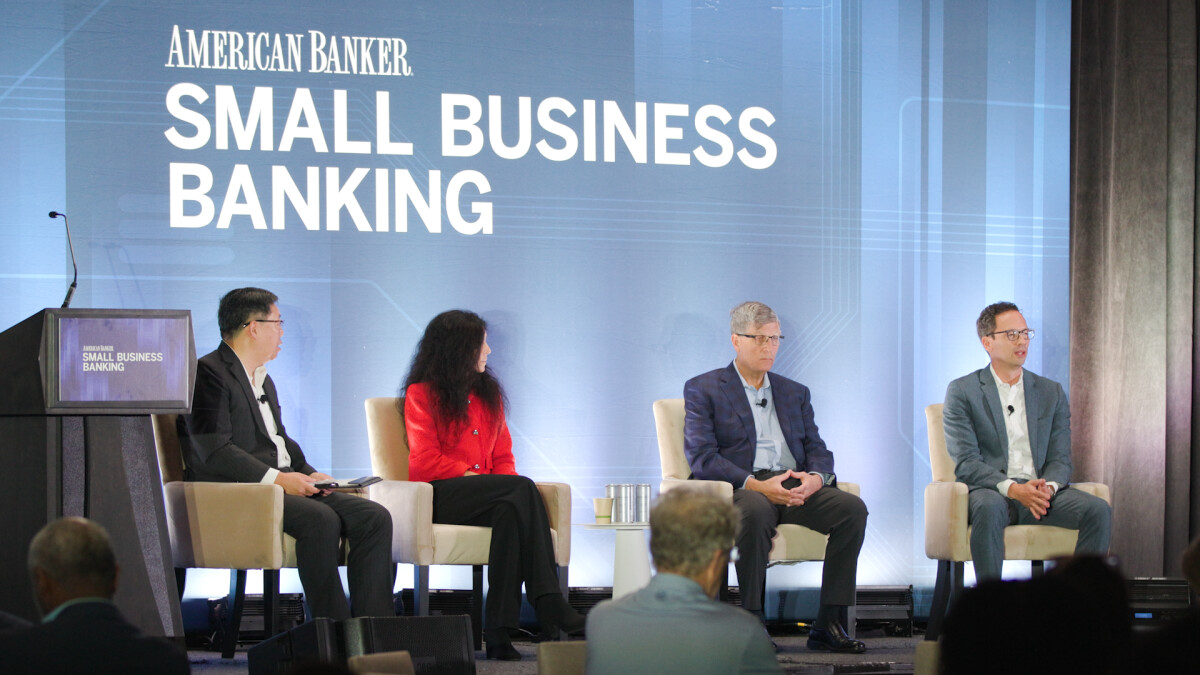
“Many of the opportunities lie around the democratization and the accessibility of data that AI creates,” Michael Desimone, chief banking and lending officer at Citadel Federal Credit Union, said during a panel at American Banker’s Small Business Banking conference last week. “It’s all out there for us, but it’s sort of unmanageable and hard to get your arms around. The ability to not spend hours pouring over research and memos to have a good, solid understanding of what a business needs, what it does and where it fits in its segment is very valuable.”
Processing Content
The raw internal data a bank typically has at its disposal often needs to be identified, sorted and curated to determine what is relevant, according to Gary Class, global industry strategist for analytics firm Teradata. Both the company and its bank customers have been using agentic AI to improve the efficiency of data clean-up, he said.
“That can be a very painful process, and that’s one thing where agentic AI has really come to the fore,” he said.
Capitol National Bank CEO Cristin Reid said that small banks, such as Capitol, aren’t necessarily looking for AI agents to take the place of interpersonal relationship building.
“We’re not looking for it to go out and contact our customers, because that is the core of who we say we are,” she said. “We’re looking for ways that we can utilize it in-house that will create efficiencies so that we can do a better job of being in front of our customer.”
Reid explained that Capitol is currently bringing agentic AI to back-office operations such as BSA and AML detection, and is developing a deposit attrition model that can flag at-risk customers to relationship managers.
“It will integrate our core system and pull information about each one of our customers and their deposit activity,” she said. “Are their transactions staying the same? Did they change their address? Did they stop a recurring deposit that’s going in? What are the key indicators that could hint to us that they’re considering going to another bank or moving? It will rank those customers based on risk, then it talks directly to the CRM model. That’s going to put the emphasis for us on maintaining that relationship.”
Desimone noted that bank regulations need to rapidly evolve around agentic AI models.
“If you think back over places where regulators have had to adapt, it’s usually after some kind of a crisis or when something material goes awry,” he said. “There’s been small instances of that but no major ones yet. We’re going to learn on the fly, and someone will be the sacrificial organization that we all learn from because things don’t go well for them. That’s harsh, but it’s reality.”
Reid emphasized that banks can also build their internal governance models with AI in mind from the outset.
“AI can be helpful in so many ways, but it’s critically important that you take the time to learn and understand and implement the governance models first,” she said. “That’s going to give you a lot of answers as to whether it’s going to work within your organization or not. We’re very excited about those opportunities, but we’re moving very cautiously so we don’t inadvertently step on a landmine [by] not understanding our risks or our partner’s guardrails.”
Reid emphasized that at her bank, employees will remain at the forefront of customer relationships.
“I don’t believe human relationships are going away, even if AI is incredibly successful,” Reid said. “What we have to work on is creating that opportunity to enhance those human relationships rather than to minimize them.”