He Moved to Korea After a Breakup and Now Runs a Farm in Seoul
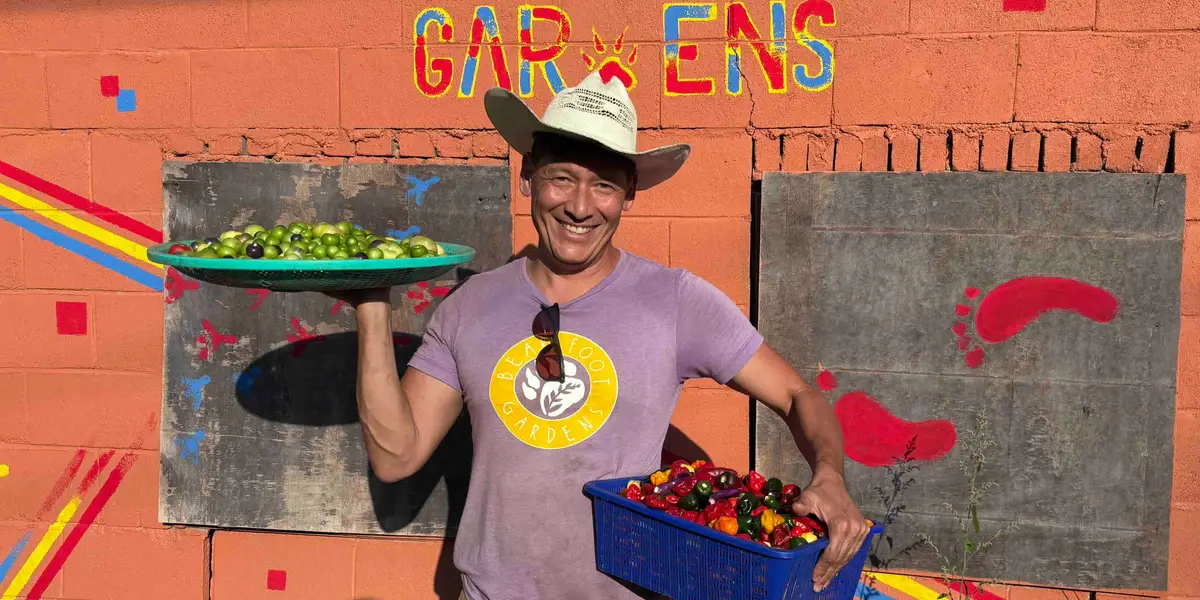
This as-told-to essay is based on a conversation with Ryan Phillips, 47, the owner of Bearfoot Gardens, a farm in Seoul. His words have been edited for length and clarity.
I moved to Seoul in 2006, the same year my relationship with the girl I thought was the one ended.
One day, I came home from my accounting job to find she’d moved out. We’d only been living together for a couple of months.
I lost it: I remember breaking the phone after we talked. But then a friend who was about to go to Korea to teach English told me, “Man, just come to Korea. We’ll find you a job.” I thought: maybe that’s what I need.
I was 27. And while I’m the son of a half-Korean adoptee, I didn’t speak Korean. I had traveled widely, but I’d never been to Korea or even Asia.
The start of a Korean odyssey
My father was born in Korea and brought over to the US when he was 3. He and my mom were high school sweethearts and prom king and queen in the ’70s. They’ve been together ever since.
Growing up, we moved around Texas a few times and eventually made our home north of Dallas.
I got a degree in international economics and finance from Austin College in 2000, but my career took an unexpected turn.
After trying accounting, I ran into the owners of a ranch where I’d done odd jobs as a teenager. They asked, “Can you cook? We need a chef.” I thought, “Let me have a shot at that,” and ended up spending about two years cooking mostly American barbecue before returning to accounting.
The first job I landed in Korea was teaching cooking classes to children at an expensive preschool.
I initially planned to do it for a year or two before returning to the US, but the department head valued my experience and persuaded me to teach in the culinary program at a small career-training college.
In 2015, I went back to school for a master’s in hospitality at Le Cordon Bleu in Seoul.
Provided by Ryan Phillips
Eventually, I thought: I’ve got to find some land
On the first plot of land I rented, I failed miserably. Four other guys and I wanted to farm organically, without herbicides, pesticides, or chemical fertilizers, and learned mostly from YouTube.
It took three years to see results. Curious local farmers would stop by, see our chilies, and shout, “Not like that! Single stalk!” in Korean. That’s where the name of our hot sauce, Han-joolgi, or “single stalk,” came from. Our hot sauces, which use ingredients from the farm, are now sold in three restaurants around Seoul.
I started renting and got set up on my present plot of land in Hwaseong, on the southwestern outskirts of Seoul, earlier this year. I named the farm Bearfoot Gardens. I don’t live on the farm but hope to move very close next year
We’re now growing 30 different varieties of chilies, as well as basil, thyme, oregano, corn, and more. Along with private catering, I hold farm-to-table events here, ranging from dozens to hundreds of people, charging between 50,000 and 150,000 Korean won, or $37 to $113 per person.
We serve American barbecue, Mexican food, and Korean food.
We try and do things you can’t do in restaurants. For a recent event, we built a whole fire pit.
I do all the cooking, with support from temp workers and volunteers. International students and US military personnel also often visit the farm. In a separate kitchen, I smoke meats and bottle hot sauces. After seven tough years, the farm is doing well now.
There’s been a lot of trial and error to get here.
Provided by Ryan Phillips
No plans to return to the US
I’ve been living in Seoul for 20 years now. I wish my Korean was better, but considering how I use it for work, I think it’s pretty darn good.
It took 10 years to feel at home here. There was the language barrier, and body language that I was less familiar with. It felt like “Don’t touch me, you’re a stranger. You’re not in my world.” But now I’ve learned to respect it as different.
I’m single again these days, and work is busy, so there’s not much time for dating. I try to spend time with friends when I can. I like to visit new restaurants and support my friends’ restaurants.
I’ve also watched the perspective on Korean food change abroad. Each year, when I go back to Texas to see family and friends, more people tell me how they are making kimchi at home or have tried a new Korean dish. It’s a pretty beautiful way to relate.
Other than family and friends living elsewhere, I have zero reasons to leave Korea.