Public banks get tepid response from California voters
- Supporting data: As of Tuesday night, 50.2% of San Francisco voters had voted “No” to a public bank, while 58% had voted against a similar measure in Berkeley.
- Expert quote: “The election results so far reflect a broader skepticism among San Franciscans about the proper role of government and whether City Hall should be in the business of running a bank.” —Alan Wong, member of San Francisco Board of Supervisors
Processing Content
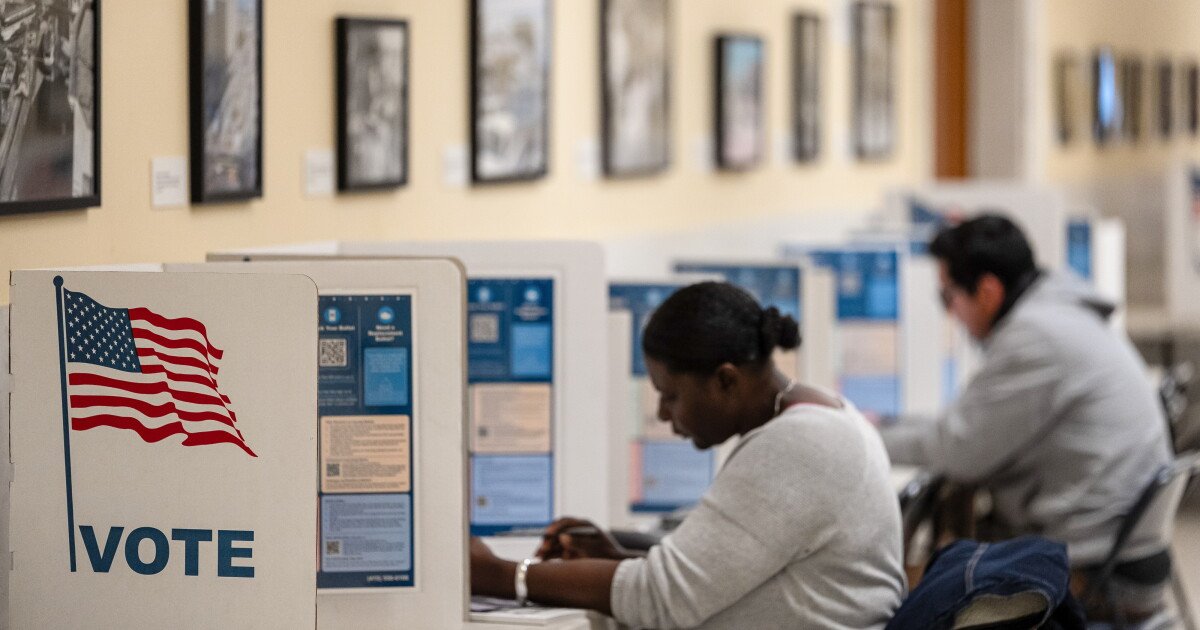
The blue wave that swept Tuesday’s midterm elections has not, so far, launched any public banks in California.
In ballot proposals in Berkeley and San Francisco, voters got the chance to support the creation of a
“The election results so far reflect a broader skepticism among San Franciscans about the proper role of government and whether City Hall should be in the business of running a bank,” Alan Wong, a member of San Francisco’s Board of Supervisors who opposed that city’s measure, told American Banker by email.
The San Francisco proposal, Proposition B, would support the creation of a public bank by creating a governance framework, but provides no mechanism to fund it. As of Tuesday night, the opposition held a razor-thin edge with 50.2% of the vote, but ballots are still being counted — a process that could take up to 30 days.
The Berkeley proposal, Measure Z, was more ambitious. It would have established a city tax to fund a local lending institution owned and controlled by the public. At the end of election night, the vote was 58% “No” to 42% “Yes.”
Supporters of public banks say the institutions would offer low-cost loans in support of local needs, including affordable housing, green energy and small businesses — all under the management of community representatives.
“Berkeley is an owner,” the Coalition to Keep Berkeley Money Local says on its
The Public Banking Institute, an advocacy group that supported both ballot measures, made a similar case for the San Francisco proposal. A public bank in the city would “protect the city’s economy,” not chase “whatever makes the highest profit,” Earl Staelin, a legal advisor to the group,
The idea does have a real-life model: the 107-year-old Bank of North Dakota, the only state-owned bank in the United States. The public bank has issued loans at times when private lenders would not, including the global financial crisis and the COVID-19 pandemic. But critics question whether a unique North Dakota state institution could be transplanted to a California city.
Read more:
In general, opponents called the proposed public banks in Berkeley and San Francisco risky experiments that might backfire on their cities.
The Berkeley measure, for example, proposed a bank that would be funded by Berkeley residents but offer loans to the whole East Bay region, potentially exposing it to excessive risk, the advocacy group Affordable Berkeley told the
And the San Francisco proposal, critics emphasized, called for setting up a bank without creating or even outlining a way to fund it. This struck Supervisor Wong as putting the cart before the horse.
“We can support greater economic opportunity and affordability without embracing costly, unproven solutions,” Wong told American Banker. “City Hall should focus on making existing programs and services work better before creating new institutions.”