From Waterfront Development To City Charters: How South Florida Voted On Local CRE Ballot Measures
South Florida voters delivered mixed rsults on commercial real estate ballot measures Tuesday, rejecting several high-profile redevelopment proposals while approving others that reshape how cities can sell, lease and manage public land.
From Miami Beach to Broward County, voters weighed in on projects and charter amendments that will influence the approval process for public-private development deals across the region.
Bisnow/Chloe Gallivan
Major CRE headlines in the state included the election of Florida’s first Black governor, with Byron Donalds now set to succeed Gov. Ron DeSantis, and the passage of Amendment 3.
More than 60% of voters gave the thumbs-up to Amendment 3, which approves raising Florida’s $50K homestead exemption to $250K by 2028 without removing tax levies on the school district.
South Florida voters, who largely voted blue for the state’s available Senate seat and governor, also weighed in on several local ballot measures affecting commercial real estate.
Most of the measures were focused in Broward and Miami-Dade counties, although Palm Beach County residents did approve up to $455M in bonds for parks and library projects.
Rejected: Deerfield Beach Amendments E, G And H
Voters denied three amendments that would have streamlined a developer’s ability to buy land from the city of Deerfield Beach, The Real Deal reported.
Amendment E would have given the City Commission the final say in selling or leasing city land valued at more than $750K, meaning deals for city properties still need voter approval. Just over 77% of voters said no.
Voters strongly disapproved of Amendment G, with nearly 71% saying no. The amendment would have removed a chunk of zoning restrictions east of the Intracoastal Waterway.
Amendment H, seeking to erase regulations banning city-owned beach-area parking spaces from being counted as part of a project’s parking requirements, was denied by nearly 74% of voters.
Passed: Fort Lauderdale Amendment 7
With 62.3% of the vote, an amendment that will allow a streamlined approach to property deals with private buyers passed, The Real Deal reported.
City commissioners can OK city-owned property sales with a 5-4 vote, removing certain city requirements.
The bill’s passage also affects long-term leasing. The amendment applies a tiered system for approval requirements for leases and similar agreements for more than a year. Leases three years and longer require a property appraisal, where the city selects the appraiser, but the tenant has to pay for it.
Passed: Hollywood Question 1
Voters approved changing rules on long-term city property leases.
The passage means leases of city property for 20 years or more need five out of seven votes of approval from the commission. Leases of 50 years and more and sales of parks and golf courses need voter approval.
Rejected: Miami Referendum 3
Voters in the city of Miami shot down Referendum 3, a controversial proposal that would have allowed 28 acres of public waterfront land to be leased to and redeveloped by Virginia Key LLC for up to 75 years, by roughly 65%.
Virginia Key LLC, a joint venture between RCI Group and Suntex Marinas, planned to spend $80M on redeveloping the site, including boat storage and restaurants. Despite the results, the group still wants to pursue the project, the venture told the South Florida Business Journal.
Bisnow/Chloe Gallivan
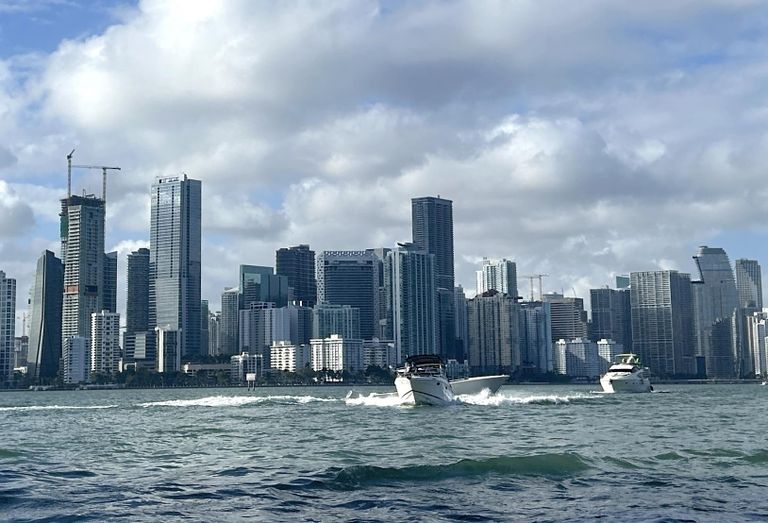
The Miami skyline
Passed: North Miami Beach Question 3
North Miami Beach voters approved amending the city charter to require the city manager or designee to make sure major developments comply.
The approval also authorizes the use of independent professional consultants at an applicant’s expense and when reasonably necessary.
Rejected: Miami Beach Question 1
Miami Beach residents voted against the proposed $50M expansion and a potential lease extension for Robert Rivani’s self-proclaimed “Class-X” luxury office building on city-owned property at 1691 Michigan Ave.
Rivani’s eponymous company wanted to develop an additional 47K SF of offices and a rooftop restaurant above the building’s parking structure.
The ballot measure also would have provided two 20-year lease extensions, which would have added to the existing two 20-year extensions the developer has. Ultimately, that would have allowed the lease to run until September 2052.
The developer has spent $100M renovating the current building, which lured the headquarters of Playboy from California, after purchasing the 119K SF building in 2024 for $62.5M.
Passed: Coral Gables Referendum 4
The city of Coral Gables will now need at least 60% of voter approval before being able to sell, exchange, convey or lease city-owned parks, recreational facilities or open park space, the Miami Herald reported.
Passed: Palmetto Bay Referendum 2
Residents in the village of Palmetto Bay, located in the southern region of Miami-Dade County, overwhelmingly approved Referendum 2.
The passage will require voter approval for any sale, transfer, lease or license of village property, excluding leases for three years or less.
The change expands current requirements, which included voter approval for sales and exchanges of park property and park leases over five years.
Rejected: South Miami Referendum 1
Referendum 1 narrowly failed by 23 votes, just missing the half-point recount threshold.
Its passage would have removed city-owned property leases from the charter’s definition of a franchise, which subjects them to two advertised public hearings and a 50-year term.
Not only would its passage have lessened the two advertised public hearings to one with no charter cap on the term, but it would have also required an ordinance passed by a four-fifths vote, Florida Politics reported.
Live Local Act Co-Sponsor Wins County District 5 Seat
County Commissioner Vicki Lopez, who was appointed to the seat last year, became an elected member of the Miami-Dade County Commission after beating out Rob Piper with 60.5% of the vote in a runoff.
Lopez, who was previously a state representative, is known in the commercial real estate community for co-sponsoring the Live Local Act.
The state law, passed in 2023, was created to incentivize more affordable and workforce housing development through tax exemptions and density and height boosts. Developers have to dedicate at least 40% of a project’s units to residents making between 80% and 120% of the area median income.
Lopez has also had a heavy hand in Senate Bill 4-D, passed in 2022 in the wake of the Surfside Champlain Towers collapse, requiring condo buildings at least 30 years old and three stories or taller to conduct structural inspections every 10 years and fully fund reserves for major repairs.
The law’s passage has crippled the state’s aging condo market as values drop, assessments rack up expensive repair bills, and insurance rises.