Democratic Congress set to push Trump abroad and cause greater investor uncertainty
With Democrats now in control of both the House and the Senate, US President Donald Trump faces tight limits on his domestic agenda and a stronger incentive to act abroad. For wealth managers, the resulting geopolitical uncertainty will deepen a divide in client behavior that is already visible. High-net-worth (HNW) clients are increasingly turning to professionals, while less wealthy investors are turning away from risk.
The midterm results leave the president with few routes to domestic policy achievements over the remaining two years of his term. A Democratic Congress can block much of the president’s legislative agenda. The House controls spending bills and the Senate controls confirmations, so flagship priorities on tax, spending, and regulation are now likely to stall or emerge heavily diluted. Executive orders remain an option, but they invite legal challenges and can easily be reversed by a future administration.
Foreign policy—where US presidents have far greater freedom to act—is likely to fill that gap. Presidents who lose control of Congress have often turned abroad to demonstrate influence, and we expect the same here. The president sets the direction on alliances, conflicts, and negotiations largely without congressional approval. Congress has also delegated broad powers over tariffs and sanctions, which this administration has shown it is willing to use. Trade deals, tariff threats, and high-profile diplomatic initiatives offer quick, visible wins that do not require a vote on Capitol Hill. However, tariffs are ultimately taxes—and taxation is Congress’s prerogative—so the larger trade disputes with Mexico and Canada are likely to be taken up by the new Congress.
If the US midterm results lead to more aggressive or unpredictable international action, investors face added uncertainty around trade relationships, currencies, supply chains, and geopolitical tensions. That is not uniformly bad news for wealth managers, but it does demand a two-speed response. This will involve scaling managed mandates and private market access at the top end, while working harder to keep lower wealth tiers invested.
GlobalData Investor Insights: Investment Drivers Analytics 2026
For investors, this matters more than ever. Wealth managers already regard geopolitics as the dominant influence on portfolios. According to GlobalData’s 2026 Global Wealth Managers Survey, 75% agree that geopolitical events are a more important factor in asset allocation decisions than economic ones. A US presidency increasingly focused on foreign policy will only strengthen that link.
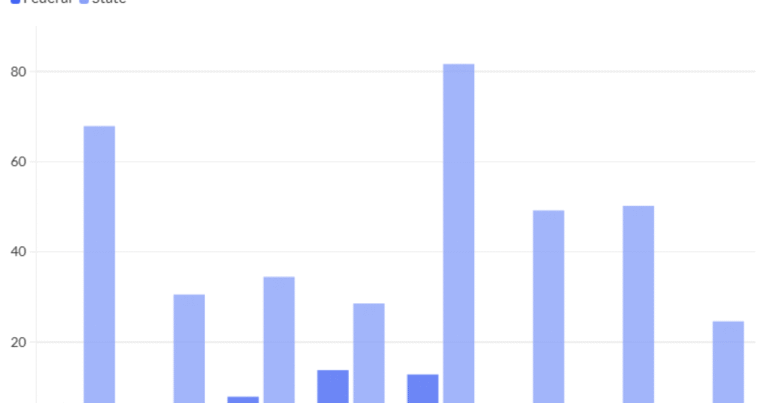
How clients respond will vary significantly. Data from GlobalData’s Investor Insights: Investment Drivers Analytics 2026 shows that investors in lower wealth tiers have already adopted a more risk-averse stance amid rising uncertainty, with equity and exchange-traded fund ownership across the total market dropping from 2025 to 2026. The retreat is sharpest further down the wealth spectrum. This shift predates the election, and further geopolitical uncertainty is likely to deepen it.
GlobalData 2026 Global Wealth Managers Survey
The HNW space tells a different story. Here, volatility tends to prompt delegation rather than withdrawal. In GlobalData’s 2026 Global Wealth Managers Survey, the majority of wealth managers agree that increased market volatility contributes to the uptake of managed mandates over self-directed ones. At the same time, we are seeing greater diversification into private markets, which offer lower correlation with listed assets and less exposure to day-to-day market swings. Most surveyed wealth managers believe that private markets offer better risk-adjusted returns in the current environment.
The result is a widening gap that wealth managers cannot afford to ignore. At the top end, greater uncertainty supports advice-led revenue, and providers should be ready to meet rising demand for discretionary mandates. Those propositions will be stronger if they include clear geopolitical scenario planning that shows clients how their portfolios are positioned for trade, currency, and conflict risk. Semi-liquid and evergreen structures make private markets easier to offer at scale, but providers must be transparent about liquidity terms to avoid disappointment when markets turn.
Lower down the wealth spectrum, the challenge is retention rather than growth. Clients who move to cash generate little fee income and may not return. Low-cost model portfolios, multi-asset funds, and hybrid advice can give mass affluent and emerging affluent investors a reason to stay invested—provided wealth managers communicate early and explain their strategy before clients act on fear. Clients who stay invested through uncertainty stay clients; the wealth managers that tailor their response to each tier will be best placed to turn a turbulent political period into growth rather than outflows.
Heike van den Hoevel is Principal Analyst, Wealth Management at GlobalData
The post Democratic Congress set to push Trump abroad and cause greater investor uncertainty appeared first on Private Banker International.