You can choose four-layer motor insurance cover from 15 December: What IRDAI’s new rules mean for car and bike owners
Car and two-wheeler owners will soon have more choice and clarity when buying motor insurance. The Insurance Regulatory and Development Authority of India (IRDAI) has introduced a four-layer structure for motor insurance policies covering private vehicles, according to a circular released on 2 November 2026.
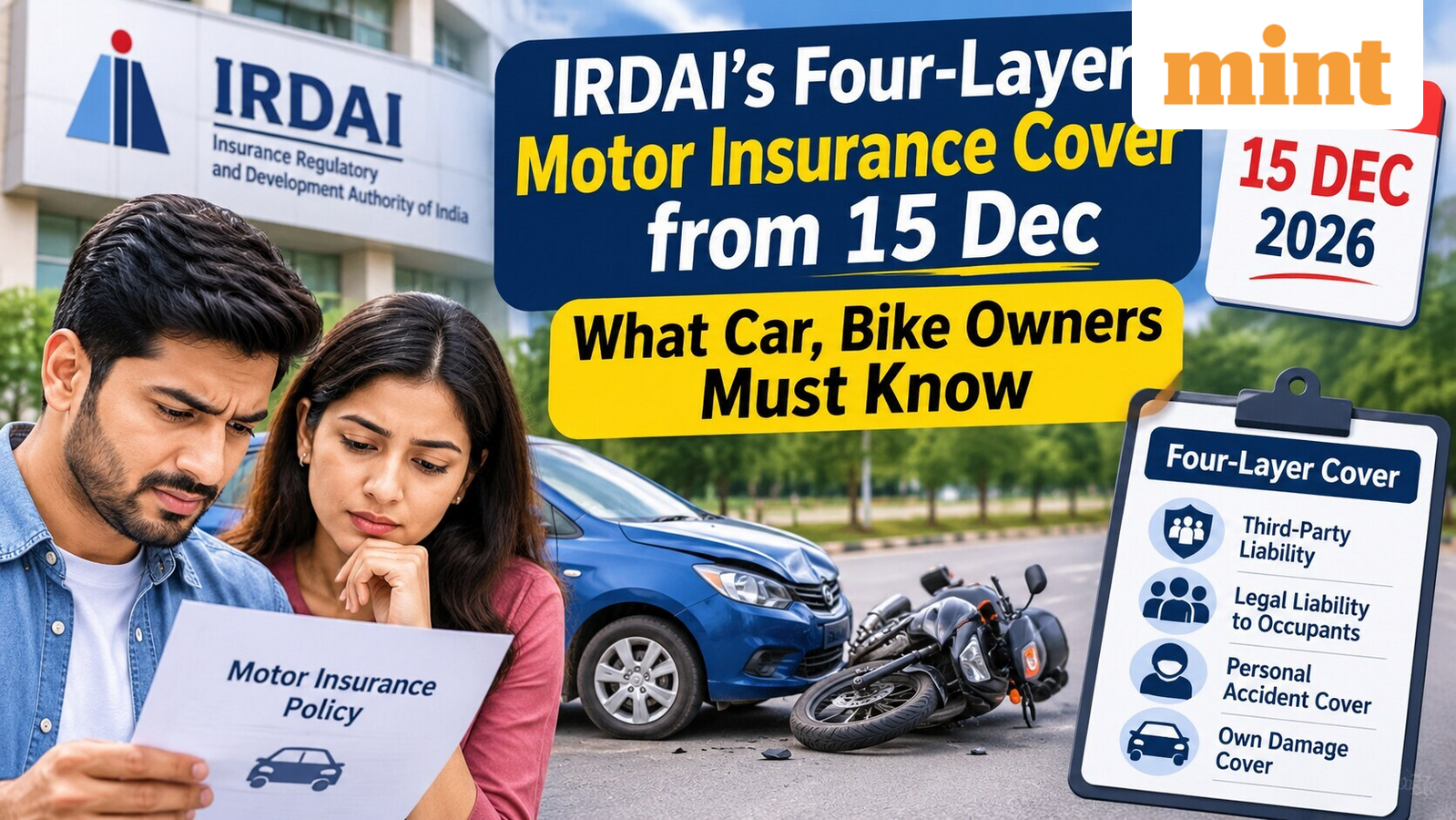
The move follows directions from the Supreme Court in the case of National Insurance Company Ltd. vs Smt. Thungala Dhana Laxmi & Others, which called for a four-layer motor insurance structure covering third-party liability, legal liability to occupants, personal accident and own damage.
“This is to bring clarity about availability of various policy options to the vehicle-owner so as to allow him/her to make an informed choice of purchasing suitable insurance protection,” IRDAI mentioned.
The directions apply to all general insurers, except stand-alone health insurers and specialised insurers. The new framework will come into effect from 15 December 2026, and will apply to all private car and two-wheeler insurance policies issued from that date. Here is what vehicle owners need to know.
What will be the four layers of motor insurance cover?
Under the four-layer motor insurance structure for new cars and two-wheelers, policyholders will be offered the following coverage options:
- Section I – Liability to third parties (mandatory): Covers the vehicle owner’s legal liability for injury, death, or property damage caused to a third party in an accident. This cover is compulsory under motor vehicle law.
- Section II – Legal liability to occupants or pillion rider, including employees of the insured (optional): Covers the vehicle owner’s legal liability towards passengers travelling in the insured car or pillion riders (person seated behind the driver) on two-wheelers. It can also include employees of the insured.
- Section III – Personal accident cover: Includes mandatory personal accident cover for the owner-insured, along with an optional personal accident cover for occupants, pillion riders and drivers other than the owner-driver.
- Section IV – Loss of or damage to the vehicle insured (optional): Covers loss of or damage to the insured vehicle.
Can you choose which covers you want?
Yes. The new structure is intended to give vehicle owners a clearer choice of insurance protection.
While third-party liability remains mandatory, legal liability to occupants and own damage cover are optional. Personal accident cover has separate mandatory and optional components.
IRDAI has directed insurers to provide a customer option form through which buyers can select the covers they want. Customers can tick their preferred options whether they purchase insurance online or offline.
Can existing policyholders add occupant cover?
Yes. “For existing policies also, if cover under section II is sought during the currency of the policy, the same shall be made available upon the payment of an additional premium.”
However, IRDAI clarifies that the additional cover will become effective only from the date and time specified in the endorsement issued by the insurer. An endorsement is an official document recording a change or addition to an existing insurance policy.
Importantly, this option can be exercised only with the insurer who has issued the third-party insurance policy. Policyholders do not need to cancel their existing third-party insurance policy to add the additional cover.
Will insurers disclose the premium for each cover?
Yes. Insurers must transparently mention the actual coverage and the premium charged against each section in the policy schedule. This will help customers understand how much they are paying for individual covers.
They must also issue a Customer Information Sheet (CIS) at the point of sale, along with the customer option form.
When will the new motor insurance rules apply?
The four-layer structure, uniform policy wordings, and mandatory option form will come into force on 15 December. All policies issued from that date must follow the new framework.
IRDAI has also directed insurers to integrate the new structure with Bima Sugam, ensuring that these policies are available on the platform from the same date.
Insurers can continue to innovate and decide the pricing of own damage covers based on market forces, provided they do not restrict the basic coverage prescribed under the four-layer framework.
Disclaimer: This is for informational purposes only. Please consult an insurance expert before making any decisions.