Democrats sweep Congress, setting up years of oversight for banks
- What’s at stake: For financial companies, two years of Democratic control of Congress likely means heightened oversight, although the party’s main targets will be President Trump and his affiliated companies.
- Forward look: The strength of Democrats’ victory means the party will be emboldened on a range of issues and will raise scrutiny of large companies of all stripes, including private equity and Wall Street firms.
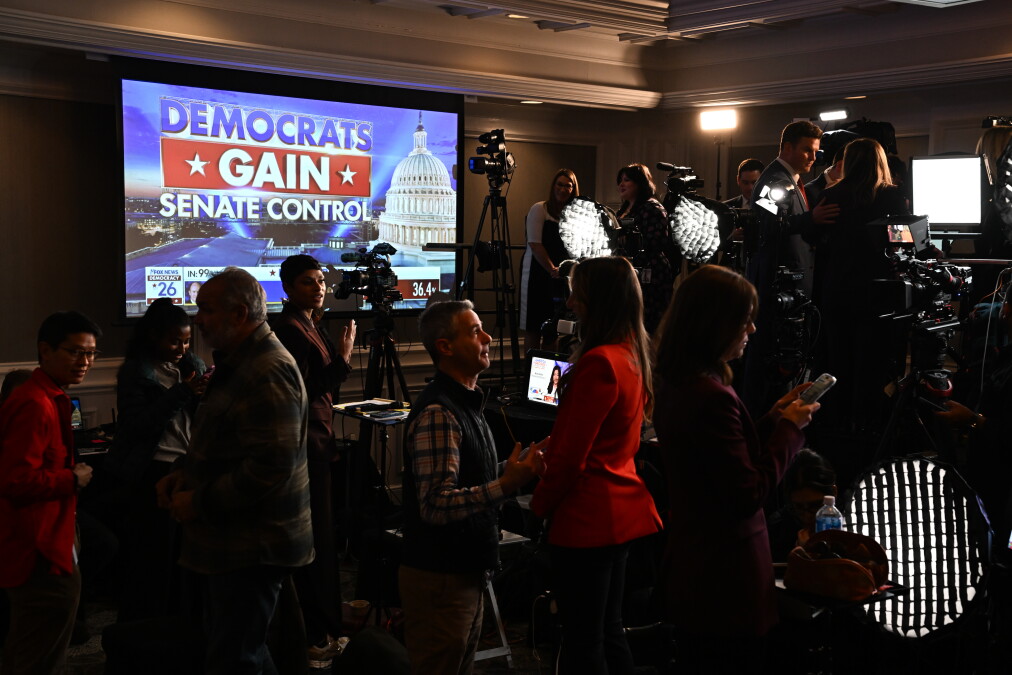
WASHINGTON — Democrats won a commanding victory in the 2026 midterm cycle, reaching deep into Trump country in a repudiation from voters of the administration and the economy.
Processing Content
Democrats’ wins stretched from South Carolina to Texas, Iowa and Kansas, flipping seats that weren’t seen as realistic targets even a few months ago. As of late Tuesday evening, the Associated Press had called the Senate for Democrats and appeared poised to take control of the House next year as well. The decisiveness of Democrats’ victories means an emboldened party, and potentially a more progressive one has they position themselves to make an argument for why voters should entrust them with the White House in 2028.
With the White House still in Republican control for the next two years, Democrats will likely focus their efforts on
But regardless of the prospects for big legislative swings, Democrats will still take the gavels of powerful committees, giving them more power to
Experts anticipate that crypto will be at the top of the list for financial companies, as well as banks that have connections to Jeffrey Epstein. Prediction markets are also on the list, and bank chief executive hearings are likely to return.
In the House Financial Services Committee, Rep. Maxine Waters, D-Calif., will likely become the chair again of the panel. Sen. Elizabeth Warren, D-Mass., the key architect of the Consumer Financial Protection Bureau, will likely hold the gavel of the Senate Banking Committee.
Control of the panels means that Waters and Warren will control the hearing schedule, can block future Trump administration nominees, dictate most of the witnesses for hearings and issue subpoenas. Limited opportunities for legislating might include
They can also push for nominees to boards that are meant to be bipartisan, like the Federal Deposit Insurance Corp. and the credit union regulator. They can call up the heads of agencies, particularly the CFPB, who are meant to regularly testify in front of Congress.
Read more:
The election results are also a
“Corporations, billionaires tried to buy this election,” Brown said in his victory speech in Ohio. “You know that, but as it turns out, as it turns out, there are a whole lot more of us than there are [of them].”
Brown’s victory is just one that bankers watched carefully on Tuesday evening.
Vulnerable House Financial Services Committee Republicans also were unseated. Rep. Anne Wagner of Missouri, who was chair of the House Financial Services subcommittee on financial markets, lost to a Democratic challenger. Reps. Tim Moore of North Carolina, Bryan Steil of Wisconsin and Bill Huizenga of Michigan also looked vulnerable, although the Associated Press hadn’t called their races as of late Tuesday evening.