Democrats’ big win gives Fed a respite from Trump’s wrath
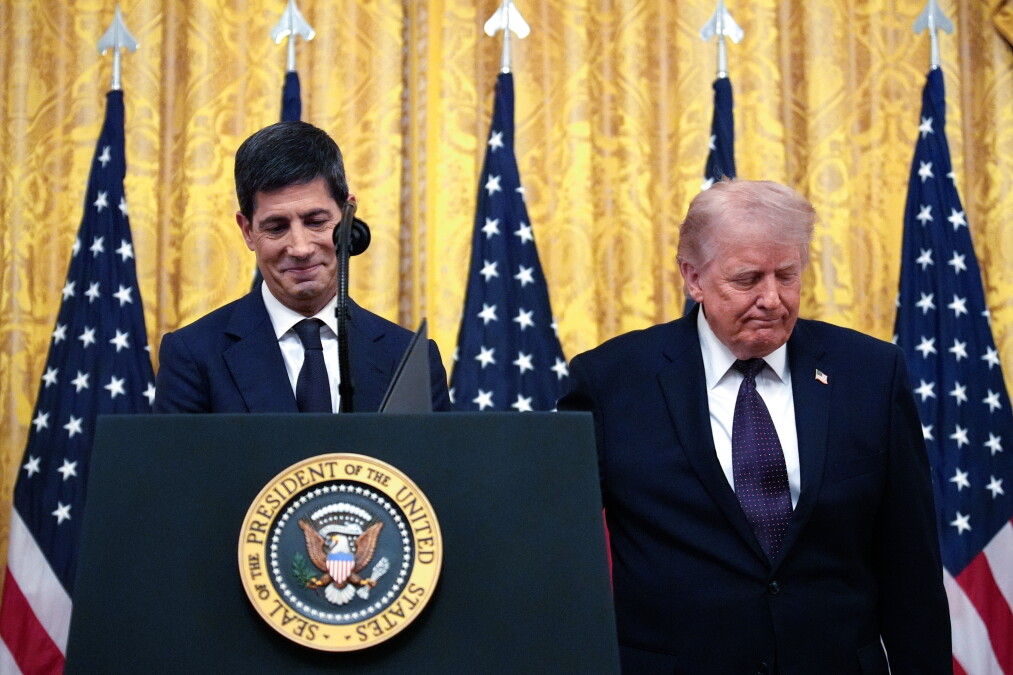
- Key insight: The Federal Reserve will have a freer hand to set monetary policy after Democrats’ victories in Tuesday’s midterm elections because the president will no longer be able to stack the Federal Open Market Committee with officials that are committed to lowering rates at all costs.
- Expert quote: “It allows the Fed to conduct itself in a different way. Does it change what happens with rates? Probably not, but it gives the Fed the operational flexibility to conduct policy in a way that is consistent with its mandate.” — Mark Zandi, chief economist for Moody’s Analytics
Federal Reserve
Processing Content
Democrats
The Democratic majority in the Senate ensures President Donald Trump will not be able to
With Democrats riding a wave of frustration about rising prices and dissatisfaction with the Trump administration, the Fed also now has the political cover to tamp down inflation as it sees fit.
“It allows the Fed to conduct itself in a different way,” said Mark Zandi, chief economist for Moody’s Analytics. “Does it change what happens with rates? Probably not, but it gives the Fed the operational flexibility to conduct policy in a way that is consistent with its mandate.”
Yet, the electoral results do not put concerns about Fed independence to bed entirely. Trump might not be able to make new appointments to the Board of Governors, but he could continue his effort to expand executive control over the central bank.
Specifically, he could continue his
Other Fed governors, including Powell and Michael Barr, who served as the Fed’s top regulator under President Joe Biden, have also drawn the ire of the administration and could be subjected to similar proceedings.
But such efforts would garner little support on Capitol Hill — on the contrary, Democrats at the helm of the Senate Banking Committee and House Financial Services Committee will likely use their gavels to scrutinize Trump’s dealings with the Fed.
In an analyst note published Tuesday, Derek Tang, co-founder of Monetary Policy Analytics, said Fed Chair Kevin Warsh’s “ongoing dialogue” with the president is likely to be “questioned vigorously,” as will Warsh’s
“Hostile questioning could put Warsh’s rhetoric to the test if he is compelled to explain his theory for disinflation beyond a general credibility notion, or at the very least expose more clearly any gaps in the logic,” Tang wrote. “Warsh is already thin ice as he got no support for his chairmanship from Democrats. This contrasts with Powell, who was thought to lean into Democrats’ dislike of Trump to shore up support for the Fed.”
Read more election coverage:
Tang noted that a Democrat-controlled Congress is also likely to be less supportive of the changes to
Thus far, Warsh has walked a fine line with Trump. His rhetoric — praising the strength of the U.S. economy and extolling the promise of so-called “super intelligence” technology — has aligned with the president’s agenda, yet he also voted for a rate hike at his third Federal Open Market Committee meeting as chair. Whether he continues to toe that same line for the duration of Trump’s term remains to be seen.
Michael Redmond, U.S. policy economist at Energy Aspects and a former Treasury economist, said Warsh’s rhetoric as chair — and for many years, dating back to his first stint as a Fed governor two decades ago — has been consistently hawkish, or favoring tighter policy.
“He might be more freely able to match the rate path with his rhetoric,” Redmond said. “I expect a December hike, in part because being past the midterms will mean he does not have to worry about the blowback from the administration if he does continue on this rate hiking cycle.”
Still, while the Democratic sweep of Congress might alleviate some of the political restraints on the Fed, it could also bring with it real changes to the economy and financial conditions that the Fed could have to contend with.
Zandi noted that a divided government could set up for a debt ceiling battle between the White House and Congress. While such brinkmanship is nothing new in Washington, Zandi said current financial conditions inject new risks to a protracted dispute
“A tough battle over the debt limit raises the odds that we see turmoil in markets, especially the bond market which is already very fragile because of the debt load, inflation and the massive investment in the AI buildout,” he said. “We’re much more likely to see some kind of a financial event under a divided government.”
Others worry about changing policy preferences slowing economic growth. Mickey Levy, a visiting fellow at Stanford University’s Hoover Institution and a monetary policy researcher, said a Democrat-controlled Congress could undermine data center construction and slash overall spending in a way that causes unemployment to rise — a development that would force the Fed to choose between its two primary mandates: stable prices and maximum employment.
“Excessively aggressive actions could unhinge financial markets that may rattle households and slow consumption,” Levy said. “However, it’s important to put into context the policies of the new Democratic leadership — how could it be worse than Trump’s tariffs and clampdown on immigration? Nevertheless, significantly slower growth and weaker labor markets could indirectly lead the Fed to pause in its efforts to lower inflation to its 2% target.”