Credit card interest calculator: What will a ₹50,000 unpaid bill cost you over 12 months? Interest math explained
A credit card is a valuable tool that can go a long way towards helping an individual manage day-to-day expenses. It can assist with seamless payments for groceries, clothing, various products and services, and similar expenses, provided the tool is handled responsibly.
On the other hand, it is vital to acknowledge the fact that paying only the minimum amount due on such debt and credit card bills may seem like a comforting and convenient option for cardholders, especially those with a tight monthly budget.
Still, leaving a large chunk of the bill unpaid can make borrowing increasingly expensive and difficult to manage over time. This is because credit card interest rates are among the highest forms of debt, and the outstanding balance can grow very quickly into a substantial sum if dues are not paid for several months in a row and the credit card account is handled recklessly.
For example, consider a ₹50,000 credit card bill to understand how quickly this debt can accumulate. If an individual leaves such an amount unpaid for months, it can have serious financial consequences. This write-up is dedicated towards discussing the same in detail.
₹50,000 unpaid credit card bill: Interest calculation over 12 months
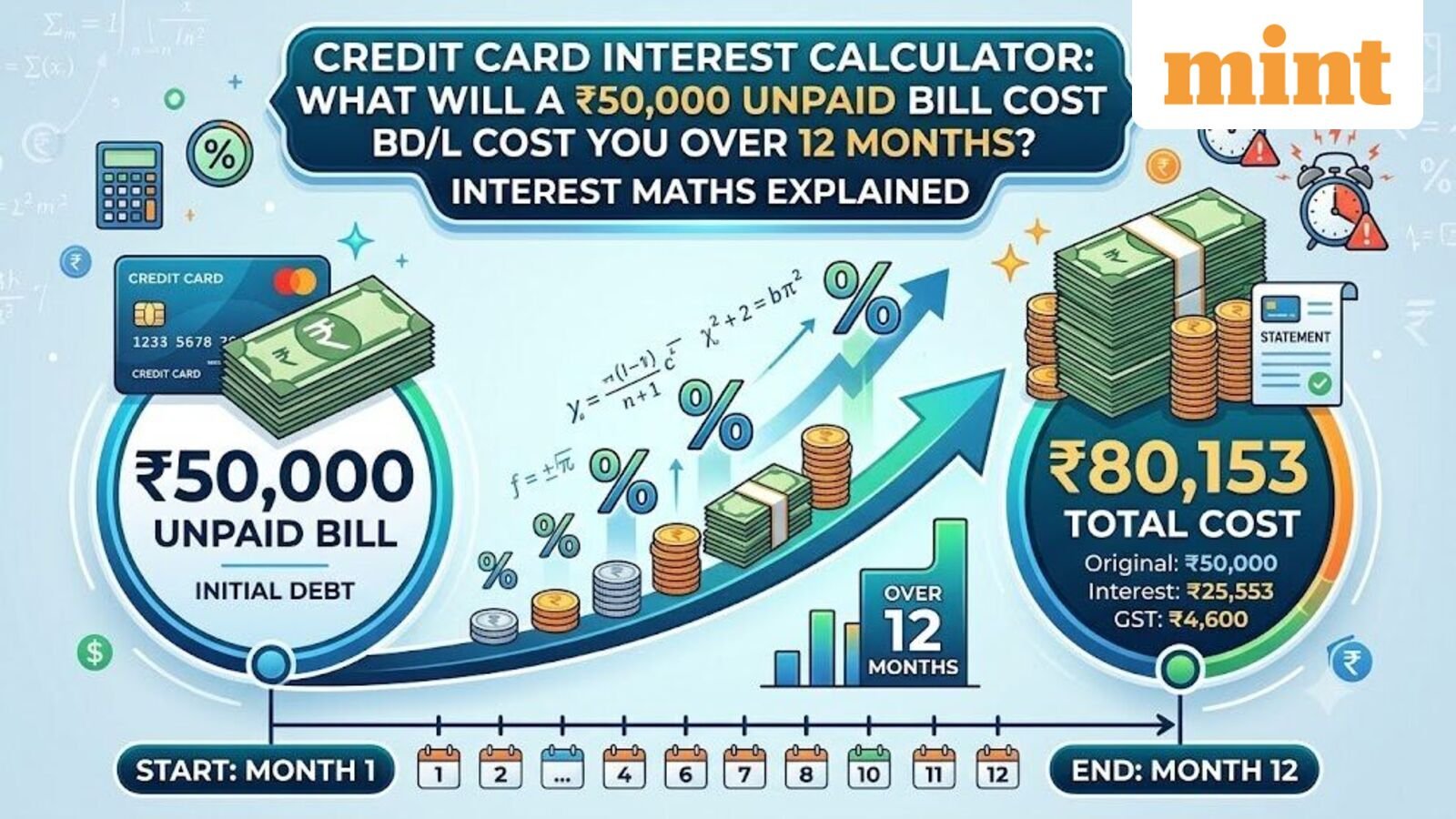
Now, to better understand the implications of keeping ₹50,000 unpaid on a credit card for 12 months (i.e., 1 year), let us assume that the credit card-issuing financial institution charges an interest rate of 3.5% per month, equivalent to 42% annually. For example, suppose the entire outstanding balance remains unpaid for 12 months, with interest compounded monthly. Then the eventual calculations will be as follows:
|
Particulars |
Amount |
|---|---|
| Original unpaid bill | ₹50,000 |
| Monthly interest rate | 3.5% |
| Annual nominal interest rate | 42% |
| Outstanding after 12 months (before GST) | ₹75,553 |
| Total interest charged (excluding late fee, fines and other penalties that can be imposed) | ₹25,553 |
| GST at 18% on interest | ₹4,600 |
| Total amount payable | ₹80,153 |
Note: The calculations discussed above are illustrative; they do not include applicable late fees, fines, and other charges that will be imposed on the cardholder, depending on the card type and issuing institution. They are presented to highlight the importance of managing credit card debt responsibly; final figures may vary depending on the credit card and the issuing financial institution.
This means a ₹50,000 unpaid bill can grow to approximately ₹80,153 in a year, including minimal GST charges on the interest. Hence, the additional costs can increase by more than 50% of the initial amount in just 12 months or so if credit card debt is not repaid responsibly.
This highlights the importance of vigilance and awareness among all credit card holders. To ensure that credit card use remains pleasant and meaningful for the cardholder, making on-time repayments is essential.
Furthermore, these are illustrative estimates based on monthly compounding, not an exact issuer statement. Actual charges depend on the card’s terms, holder’s credit profile, repayment history, daily interest calculation, payments and applicable fees, along with a host of other factors.
Why credit card interest must be kept under control
Credit card debt comes with very high interest rates on the borrowed funds. It becomes very difficult to manage if the borrower falls into the habit of paying only the minimum due and tries to sustain it for months.
Following such a habit does not prevent interest from accumulating on the remaining balance. Moreover, new purchases may also attract finance charges because the interest-free period can be withdrawn.
That is why, cardholders should prioritise clearing their outstanding balances, avoid unnecessary purchases and pay the total amount due by the payment deadline. If repayment is difficult, they should explore a structured repayment plan and seek guidance from a certified financial advisor to address the challenging situation, rather than allowing debt to accumulate.
The key takeaway, hence, is that a credit card should be a payment convenience tool for meeting unavoidable expenses such as medical expenses and unavoidable payments, not an easy-looking option for lavish expenses, nor a long-term borrowing tool.
Responsible repayment, constructive credit card debt management planning and keeping interest costs under control can prevent a manageable bill from becoming a financial burden.
Disclaimer: The calculations are illustrative. Actual interest and charges may vary depending on the credit card issuer, interest rate, repayment history and applicable fees. Cardholders should check their credit card statements for the exact amount payable.