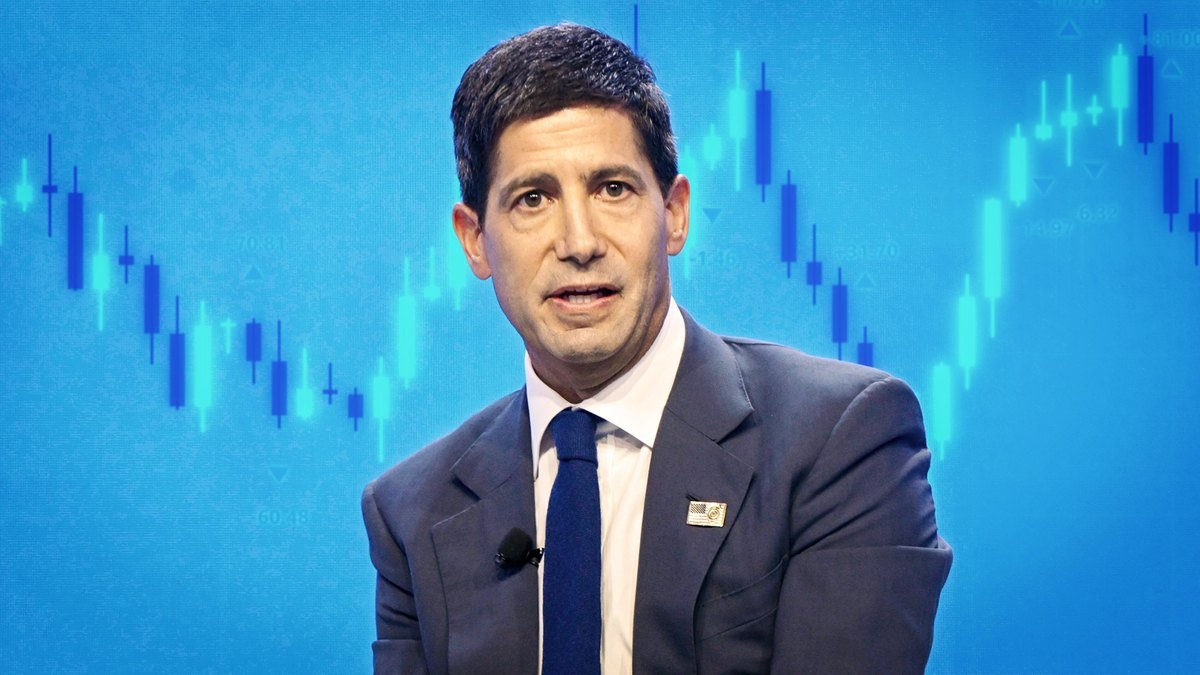
Fed Pauses Interest Rate Hikes for Now as Key Midterm Election Looms
Federal Reserve policymakers have put interest rate hikes on pause for now, as they wait to assess further data on inflation and the strength of the economy.
Fed Chairman Kevin Warsh joined the 10-2 majority on the Federal Open Market Committee on Wednesday, voting to leave the federal funds rate unchanged at its current range of 3.75% to 4.00%.
“Inflation remains elevated,” the committee’s statement said. “The accumulation of more information will help the Committee determine the policy stance appropriate to ensure a timely return of inflation to the Committee’s 2% goal.”
Dissenting were Fed Gov. Lisa Cook and Cleveland Fed President Beth Hammack, who both voted in favor of a quarter-point increase to the overnight rate. Hammack is known for her “hawkish” position on inflation and previously dissented in favor of higher interest rates. Cook, who is the target of removal efforts by President Donald Trump, has never dissented from the majority before.
At a press conference following the vote, Warsh also revealed that the FOMC will reduce its schedule of interest rate votes to seven next year and six in 2028, down from the current annual pace of eight votes.
Last month, the FOMC voted to raise rates for the first time in three years in an effort to clamp down on inflation. But now, with the crucial midterm elections less than a week away, a pause allows the Fed to avoid making political waves as voters head to the polls.
Warsh insisted the election had no bearing on the interest rate decision.
“I didn’t hear a reference to politics, elections, what’s happening in the next week or so,” Warsh said of the two-day FOMC meeting. “I don’t believe it had any role in the decision, not just for me, but my colleagues around the room.”
More rate hikes appear to be on the horizon. Investors now expect the Fed to raise rates by a quarter-point in December and at least once again in the first quarter of 2027.
Mortgage rates, which briefly dipped below 6% in late February, have marched steadily higher this year, fueled by the same inflation concerns that prompted the Fed to take action. Last week, mortgage rates averaged 7.32%, according to Freddie Mac.
The Fed uses higher interest rates to fight inflation and lower rates to stimulate the job market, in line with the central bank’s dual mandate of maintaining price stability and maximum employment. The Fed doesn’t directly set mortgage rates, which instead move in response to the bond market.
Bankrate housing market analyst Jeff Ostrowski says that mortgage rate gyrations since the last Fed policy meeting underscore the fact that the central bank doesn’t control mortgage rates.
“The Fed raised its benchmark rate a quarter-point, and mortgage rates jumped three-quarters of a point in a month. The lesson? Mortgage rates move with 10-year Treasury yields, not the federal funds rate,” he says.
In recent months, bond investors have reacted with alarm over inflation, fueled by rising global oil prices amid the war with Iran. That sent the key 10-year Treasury yield higher, although bond markets have stabilized in recent weeks, bringing mortgage rates down slightly from a three-year high of 7.40%.
“Mortgage rates have not dropped back to their mid-September level, and the housing market is feeling the effects,” says Realtor.com® Chief Economist Danielle Hale.
However, the economist notes home shoppers can still set themselves up for a better mortgage rate by boosting their credit, making a higher down payment, and shopping around for a mortgage.
“Those hoping to make a home purchase in the months ahead should plan for further mortgage rate volatility and rate-proof their home shopping budget by testing out a range of possible mortgage rates so they’ll be prepared to react,” says Hale.
One expected dissent, and a surprising one
Of the 12 voting members of the FOMC, two dissented from the majority consensus: Hammack and Cook.
Hammack is widely viewed as the leader of the panel’s hawkish faction and has not shied away from speaking out about the threat she believes persistent inflation poses to U.S. consumers and businesses.
The Cleveland Fed president, whose current term as a voting member started in January, previously dissented in favor of higher rates, voting against the majority in April and July of this year.
Cook, however, has never dissented from the majority decision since joining the Fed’s Board of Governors in 2022. Dissents are typically more rare from Fed governors than from regional Fed presidents, who are usually more comfortable breaking ranks from the chairman.
Appointed by President Joe Biden to a 14-year term that expires in 2038, Cook has been at the center of a prolonged removal campaign by Trump.
Chris Rupkey, chief economist at FWDBONDS, told CNBC that Cook’s vote to raise rates may have been intended to send a message to Trump.
“This could have been a protest vote as the Trump administration is taking steps to get Fed Gov. Cook to resign one way or another,” he said.
Trump, who vocally favors lower interest rates, attempted to fire Cook last year over allegations that she committed mortgage fraud in connection to the purchase of personal residences before joining the board.
No criminal charges have been brought in the matter, and the Supreme Court blocked Trump’s attempt to remove Cook. Earlier this month, Trump renewed his push by directing a special committee to investigate the allegations against Cook.
What the Fed rate decision means for homebuyers
With inflation still running above the Fed’s 2% target, prospective homebuyers shouldn’t hold out much hope for instant relief on mortgage rates. A recent forecast from economists at the Mortgage Bankers Association projected that mortgage rates would remain above 7% through 2027.
Peter Zaitzeff, a top-selling agent with Serhant in New York City, says that “buyers should accept that 7%-plus rates are the new norm.
“Navigating high interest rates coupled with inflation and high consumer pricing is the new reality,” he tells Realtor.com. “Buyers are more selective and are negotiating harder. We’re seeing greater attention to monthly carrying costs and increased demand for sponsor concessions in new developments.”
“Buyers need to adjust their expectations and recognize that higher mortgage rates may be here for the foreseeable future,” adds Mendel Fellig, a real estate agent with Compass in Miami. “Historically, rates have been significantly higher, and buyers should focus on finding a property they love at a price they can comfortably afford rather than trying to time the market.”
Indeed, the brief period in 2020 and 2021 when mortgage rates dipped below 3% marks the only time in modern history that mortgage rates have fallen that low.
Fellig says that in South Florida, limited inventory has kept many sellers confident in their pricing, while elevated borrowing costs have made buyers more cautious and price-sensitive.
“My advice to sellers is to remain flexible,” he says. “If a property has been sitting on the market and a serious offer comes in, it’s often better to bridge the pricing gap than hold out for an uncertain next offer. In today’s market, realistic pricing and a willingness to negotiate are essential to getting deals done.”
Jesse Ebner, a Colorado broker and owner of Ebner & Associates, says one potential upside of the higher-rate environment is less competition from other buyers.
“In certain situations, buyers may have more negotiating leverage, greater flexibility on terms, or opportunities to secure seller concessions,” she says.
Ebner is already seeing the impact of higher interest rates on buyer behavior, negotiating dynamics, and the overall pace of the market.
“We’re seeing buyers become more deliberate and payment-conscious,” she says. “They may take longer to make decisions, consider a smaller home, expand their geographic search, or become more selective about the features they’re willing to pay for. The monthly payment has become just as important as the purchase price, if not more.”
Get real estate news in your inbox