Digital assets will usher in multiple paradigm shifts in banking
This is the third article in a three-part series. The
Processing Content
- Key insight: The adoption of digital assets and the technology enabling consumers to transact with them at all times will have far-reaching effects on how financial services are delivered — many of which we can’t yet imagine.
- Forward look: As with any new technology there are likely to be missteps, mistakes and failures — it is how we respond as a society and as a financial services industry that will be the true test of how transformational the technology will be.
The transformation driven by
Business and revenue models: Digital assets will change the way the financial services industry serves clients and delivers capabilities, and how those capabilities will be monetized. We often frame the future as banks versus fintechs, or TradFi versus DeFi — but I believe that framing is too narrow and binary. Rather, I believe there will be growth of opportunities, products, transactions, addressable markets and revenues streams. Revenues will not shrink, but they will shift. And there will be winners and losers. The winners will be the ones who fully understand client pain points and needs, and are able to harness and commercialize the new technology to deliver differentiated solutions at scale, in a safe and compliant manner, and also in ways that may have no resemblance to how we do things today.
The ability to work and innovate across the ecosystem rather than building and delivering it all in-house will also be a driver of success. And finally, key to winning in this space will be the ability and willingness to disrupt existing business models — without waiting for the client to explicitly ask for it, or for the market to force it. The industry players who are able to do the above will be rewarded in growth of clients and revenues.
Ownership of the client relationship: How client relationships are defined will change as we shift from bilateral account-based relationships to a multi-asset and multi-issuer wallet-based environment. And which new products are developed to create value and drive client stickiness.
Financial services today are provided in bilateral relationships that are specific to the relationship, transaction type and bank account. They are relatively sticky and difficult to move, but also fragmented and disparate for the client to manage. In an account-based relationship, because changing providers is difficult, it is not always clear if customer loyalty is due to client satisfaction or to friction of movement. The shift from an account-based to a wallet-based environment will mean that the client has much more portability. It will also mean providers will need to define new ways to create differentiation and stickiness, perhaps through new products, value-added services, or packaging of capabilities across a broader set of needs.
Deployment and allocation of capital: Bankers will have to reassess how we use, deploy, and recycle capital for multiple purposes and in real-time. What new opportunities are opened up when assets are no longer locked-up in transit? Greater velocity and efficiency of capital will create new ways for companies and consumers to manage their financial needs and achieve their goals. This opens up whole new possibilities, many of which we have not yet begun to imagine. We are only starting to scratch the surface of the implications of a world where capital is re-usable, fractionalized, always-on and moving at great velocity.
The role of trust: How we define trust and how it is delivered will also be transformed. We often call the DeFi space “trustless.” I think this is a misnomer. Trust is still needed when we are speaking about the management, storage, transfer and growth of value. What may change is not the need for trust, but rather how it is established and delivered. It is possible that trusted institutions continue to play a central role, but deploy trust in new ways that are more targeted, programmable and embedded within digital ecosystems. Banks have an established advantage in providing trust. But they may need to rethink where and how that trust is most needed. Regardless of the model, I believe trust will remain essential. Humans have required and enforced trust for financial interactions for thousands of years, and I doubt that goes away.
Read more:
How we define money: What is “money,” and who gets to define it and control it? This is the one element of the paradigm shift that I think is hardest to conceive and imagine. Money is so fundamental to our everyday life and well-being that we tend to think of it as an immutable concept. But a history of money shows us that it is a malleable and evolving concept. What humans use to store, grow, and transfer value has changed throughout history as technology and beliefs have evolved.
With tokenization, as money becomes computer code, it will change how we define money once again. Just as mobile phones today are unrecognizable as just “phones,” money in the future may be unrecognizable from the shape and function that it has today. I believe it will enable us to integrate the concept of money into a broader relationship or interactions, and redefine how we think of it today as a standalone object. Money may become invisible, no longer a separate event or transaction. And it will force us to deal with questions about who gets to define it, store it, and control it. And it also ties back to the question of trust. Who will we trust to store, move, and grow our money — and why?
So far, I have been quite bullish in my description of the adoption and impact of tokenization. But it’s not inevitable, nor is it likely to be a straight line. Two critical elements need to be in place in order for mass adoption and scale to occur.
Minimum Viable Ecosystem: Payments and financial transactions, especially in the corporate space, involve a lot of parties and complexity, and require coordination, integration and data exchange. Corporations deal with multiple banks, trade counterparties, payment systems, ERP platforms, treasury management systems, etc. All of those need to be aligned and integrated in order for transactions to flow seamlessly. Because the end-to-end processes require orchestration and integration across multiple players, all of the elements of the lifecycle need to be aligned before the full promise of tokenization can be achieved. That is why it will be so critical for the industry players to focus on a network play, one that may include non-traditional partners and collaborators.
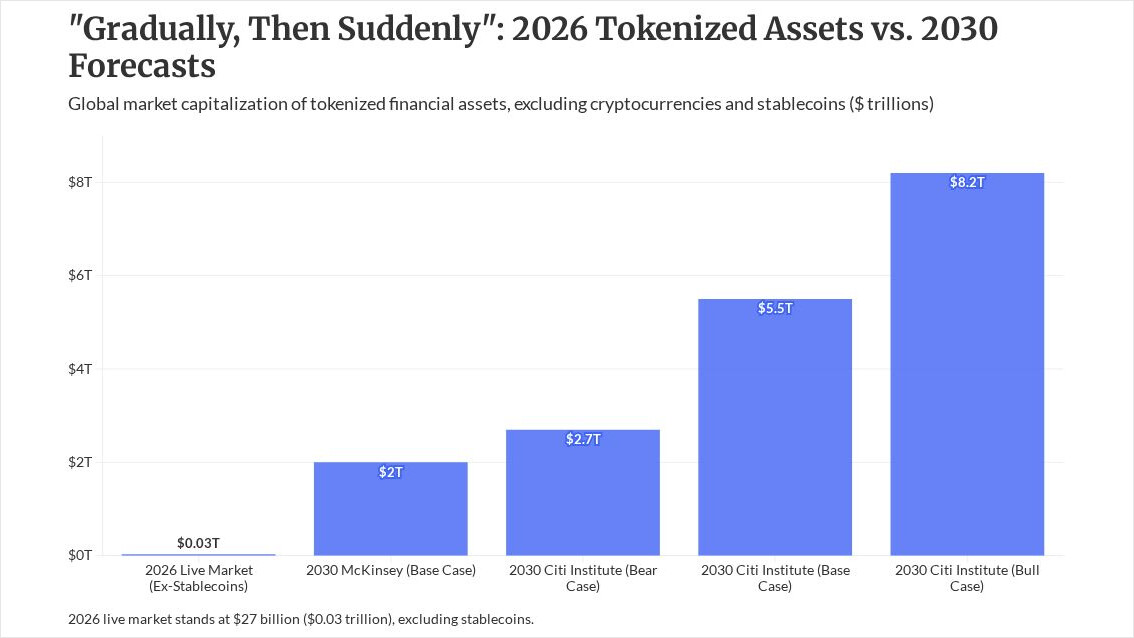
It is likely that for a period of time, innovation rates will be uneven, and interoperability will be challenging. And in the short term, it may cause more friction rather than less. In time, the ecosystem will standardize and find a new normal. But client adoption is likely to be slow in the meantime, until we get to a place where we have a minimum viable ecosystem, one that includes interoperability, scalability and predictability. But once we achieve that point, we will see a hockey stick effect with immediate and rapid adoption. That is why the “wait and see” approach is so risky: Once we “see it” it will have already happened and it may be too late to catch up.
Legal, ethical and regulatory standards: In many ways, the technology is the easy part (not that it’s easy, but it is relatively straightforward). The more challenging areas of this new evolving technology relate to the ethical, legal and societal elements related to intent, identity, responsibility, liability, ownership, protection, safety. How we handle things like fraud, disputes, breaches, failures, losses in a world of tokenized money and real-world assets will be the real test. I bring up the trust factor here once again: We need to trust that the system will work in a way that is predictable, fair, transparent and understandable under all circumstances. As an industry, it will be key to identify and openly discuss the potential for unintended consequences in the product design and delivery decisions we are making. As with any new technology there are likely to be missteps, mistakes and failures — it is how we respond as a society and as a financial services industry that will be the true test of how transformational the technology will be.
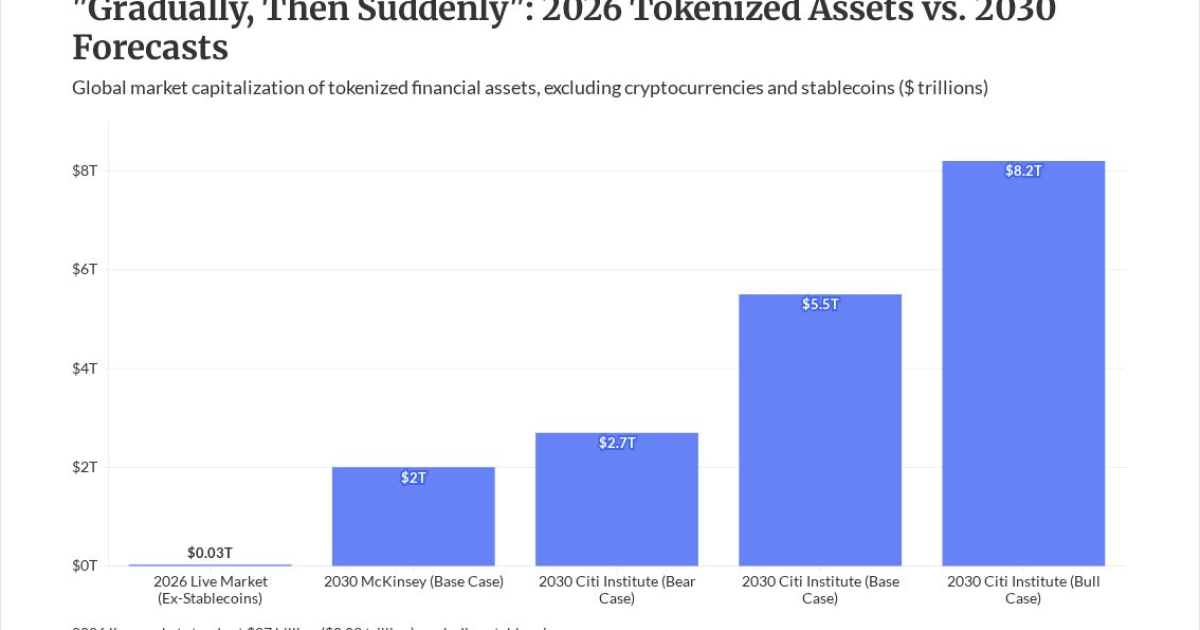
As I reflect and think about how the industry might evolve, I am reminded of a quote from Ernest Hemingway where he describes how things occur: “Two ways. Gradually and then suddenly.” I suspect that five years from now, when we look back at the impact of digital assets, that is how we will describe it: gradually and then suddenly. I, for one, look forward to the journey. To our ability to drive value and solutions for clients in new and improved ways. And I think the future will exceed our expectations — or even our ability to imagine it.