Clients may value certifications more than they understand them
Processing Content
- Key insight: New research from the Investments & Wealth Institute indicates that holding professional certifications can positively impact referrals and prospecting, but such credentials only deliver value if advisors demonstrate expertise to clients.
- Expert quote: “[Advisors] need to understand how to tailor the value of their designations to their target market.” — Jeffrey Czajka, founder of Advisor Growth Solutions
Even if clients don’t know the meaning of the acronyms behind financial advisors’ names, most affluent and wealthy customers do believe they’re important, a new study found.
At least
A widely held belief that clients aren’t aware of them drew only partial support among the group. While more than a quarter of surveyed wealth management clients didn’t know if their advisor held any professional marks, more than 70% knew their advisor was a certified financial planner, chartered financial analyst or another of the industry’s many designations, including the three overseen by the institute — the certified investment management analyst, certified private wealth advisor and retirement management advisor designations.
For advisors making pivotal career and business decisions related to choosing a client niche or adding new services to their registered investment advisory firms’ menus, and for wealth management firms engaged in a fight for top talent, the survey sheds light on the impact of certifications on customer relationships and growth. Because the CFP mark covers so much foundational and broad knowledge, some might suggest it has become “table stakes” for planners, Jeffrey Czajka, the founder of training and consulting firm Advisor Growth Solutions.
“Just knowing your target market, what designation you get and how that applies to them is helpful,” he said in an interview. “[Advisors] need to understand how to tailor the value of their designations to their target market.”
Why designations can resonate with investors, and why they may not
Some advisors’ customer bases have received those messages, according to the survey, which was conducted online in late February and early March among investors who worked with an advisor.
Half the group had between $500,000 and $1 million in investable assets; 36% had between $1 million and $5 million, and 14% had at least $5 million. While that latter group of high net worth and ultrahigh net worth clients represented the smallest part of the sample, they carry outsize weight as the most coveted yet demanding customers in the industry. And they were more likely than the other participants to say that designations or certifications were very important to their selection of advisors and to say that those marks would lead them to refer their advisor to friends and family members.
Other interesting findings from the research included:
- The CFP mark was most commonly cited. When asked whether their advisors held particular designations, 49% said their advisor is a CFP, followed by those who said the advisor is a CFA (23%), CIMA (23%), CPWA (22%), RMA (17%), chartered life underwriter (8%) or another professional certificant (2%). Just 1% said their advisor has no advanced professional certifications. But 28% said they didn’t know whether their advisor has any professional designations.
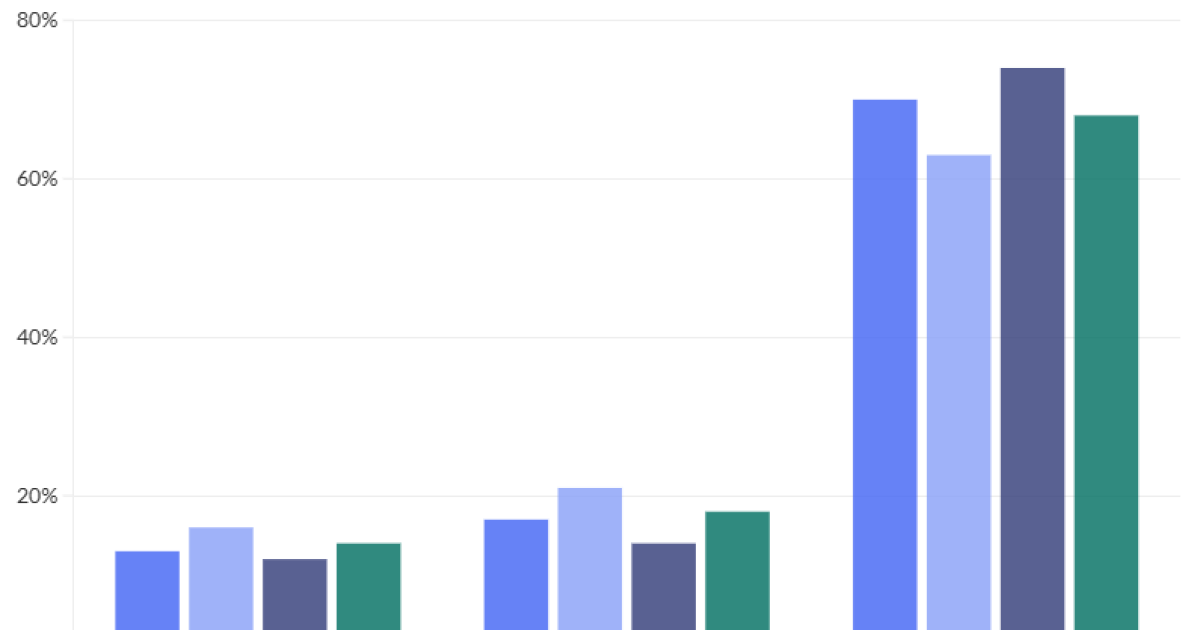
- Expertise is very important to nearly half of wealth management clients. At least 44% of the group said it’s very important that their advisor holds advanced designations or certifications, and another 43% said it’s somewhat important. Only 10% said they were neutral on the question, with 3% saying it wasn’t very important and 1% saying it wasn’t important at all.
- Trust, quality of advice play a role. When asked why certifications mattered to them, investors’ most popular selections were: “They demonstrate that my advisor has advanced or specialized knowledge”; “I have greater trust in the advice I receive”; “They demonstrate that my advisor is up to date on current trends”; “My advisor can respond to more complex needs”; and, “The quality of advice I receive is better.”
- The connection between certification and referrals. More than two-thirds of the investors, 68%, said they would be more likely to refer their advisor to friends and family because they held designations or certifications, while almost half, 48%, said they would be very important in their process of selecting a new advisor. A larger share of high net worth clients said they would be more likely to refer new prospective clients based on the designations (74%), and view them as very important to picking a new advisor (59%).
Avoiding the missed opportunity to demonstrate value
The results reveal how the holders of rigorous professional certifications must demonstrate their knowledge to current or prospective clients to reap the value from designations, according to the author of the report, Absolute Engagement CEO Julie Littlechild.
“Expertise creates value only when clients understand it, experience it and gain confidence because of it,” she wrote. “For advisors and firms seeking sustainable growth, the opportunity lies not simply in developing expertise but in making that expertise meaningful to the people they serve.”
To Czajka, the “awareness gap” among clients who don’t know whether their advisor holds a certification or grasp how the designation benefitted them represented the biggest takeaway from the study.
Advisors and wealth management firms spend a lot of time and money on certifications, Czajka pointed out. They can get a better return on that investment by “not just making it a talking point, but actually integrating that into their client experience,” he said. For instance, they could discuss how tax-planning expertise enables them to reduce clients’ exposure to capital gains, tie portfolio management proficiency into illustrations of their allocation methods or simply share updates about getting those marks or attending continuing education courses.
“You also have to think about, how do you enhance your client process, your client journey, so that you can weave in the value of that designation?” Czajka said. “It needs to be a continuous kind of reinforcement.”