Capital Flooded Into Bay Area Apartments. Then Treasury Yields Spiked
Bisnow/Max Stein
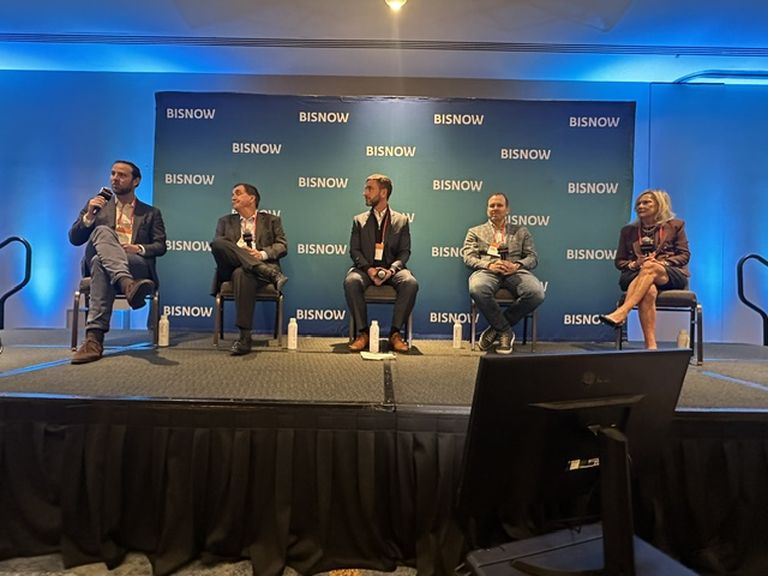
Allen Matkins’ Tim Kelly, USA Properties Fund’s Geoff Brown, Presidio Bay Ventures’ John Meany, Sack Capital Partners’ David Feinberg and Nikols Mortgage Fund’s Carrie Nikols
A surge in apartment rents across San Francisco and the broader Bay Area is drawing investor interest back to the region, but rising interest rates are threatening to derail momentum just as multifamily deal activity begins to rebound.
After institutional capital flooded into Bay Area real estate during the first half of the year, buyers and lenders say higher Treasury yields have sharply altered acquisition economics, slowing transactions across the multifamily sector.
The yield on the 10-year Treasury spiked over 5% earlier this month, its highest level since 2022.
Investors remain attracted to the region’s nation-leading rent growth and limited housing supply, but many deals that worked a few months ago no longer meet return thresholds as debt costs continue to climb, according to panelists at Bisnow’s Northern California Multifamily Annual Conference.
“The first half of the year, there was a flood of capital into our space,” Nikols Mortgage Fund CEO Carrie Nikols said at the event, held at the Parc 55 hotel on Oct. 6. “There was more capital than borrowers. About a month ago, everything completely flipped when the Treasurys screamed up. Yield requirements have gone up, and the returns don’t work.”
Bisnow/Max Stein
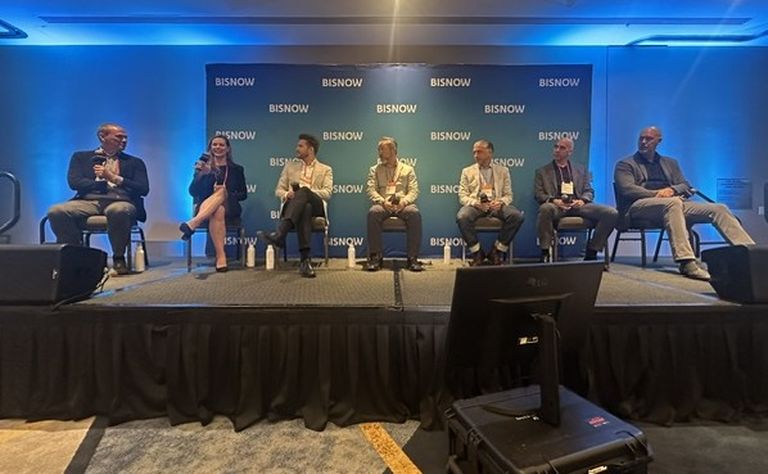
Lubin Olson’s Paul Niewiadomski, Altitude Development Consultants’ Erica Stauffer, Epic Insurance Brokers & Consultants’ Keane Heller, Mill Creek Residential’s Mike Kim, Summerhill Apartment Communities’ Doug McDonald, Kier + Wright’s Mark Knudsen and Greystar’s Gabriel Gardner
San Francisco’s multifamily market is the hottest in the nation for rent growth, with October rents up 25.7% from a year earlier, Apartment List reported. Across the Bay Area, multifamily vacancy rates compressed to 3.8% in the third quarter, down 100 basis points year-over-year, while average asking rents spiked 7.7% in the same time frame, researchers at Kidder Mathews noted.
Institutional capital took note and poured into the sector. Recent large transactions include KKR & Co.’s $346M acquisition of 636 units in west San Jose from Greystar and Property Reserve’s $273M purchase of 331 units in Los Altos from BGRE. Property Reserve, the CRE investment arm of the Church of Jesus Christ of Latter-day Saints, notched the highest per-door transaction of the year with the Los Altos buy at $826K per unit.
Bisnow/Max Stein
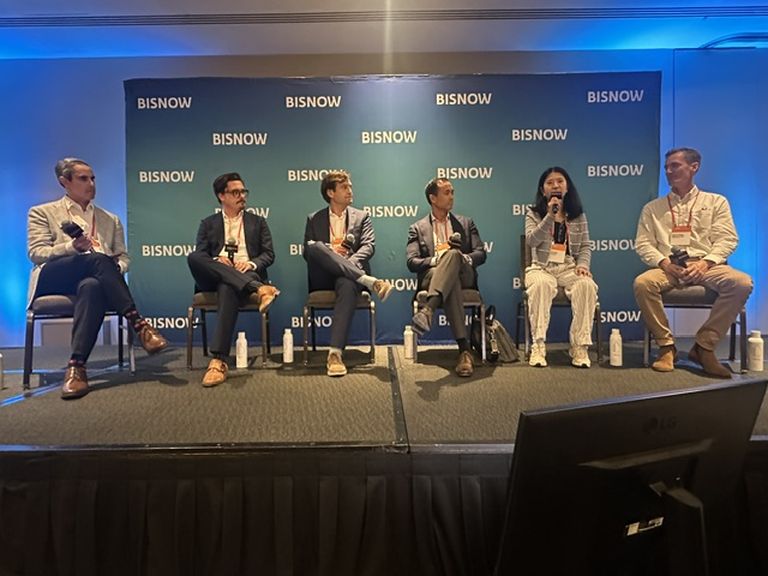
Parity’s Varun Sawhney, BDE Architecture’s Ian Murphy, Presidio Bay’s Matthew Berglund, DM Development’s Mark MacDonald, DivCoWest’s Phoebe Zhang and Sares Regis’ Andrew Turco
Those deals preceded the chillier transaction environment, however, with high borrowing costs expected to mute multifamily deal flow in the final quarter of the year.
“The first half of the year, everybody was excited to invest in real estate,” Sack Capital Partners Managing Partner David Feinberg said. “Capital was robust.”
Sack Capital closed four multifamily deals in the first six months of 2026 when it was in a neutral leverage situation, Feinberg said. However, with debt costs rising 50 to 75 basis points following the Fed’s rate hike, deals are now moving as quickly as a Bay Bridge traffic jam.
“You’re in a negative leverage situation,” Feinberg said. “The Bay Area is one of the few markets that’s experiencing positive rent growth, so the ill effects of debt costs have been muted, but we’re having a very hard time penciling any deals today because the cost of capital relative to cap rates, the spread is too wide.”
Bisnow/Max Stein
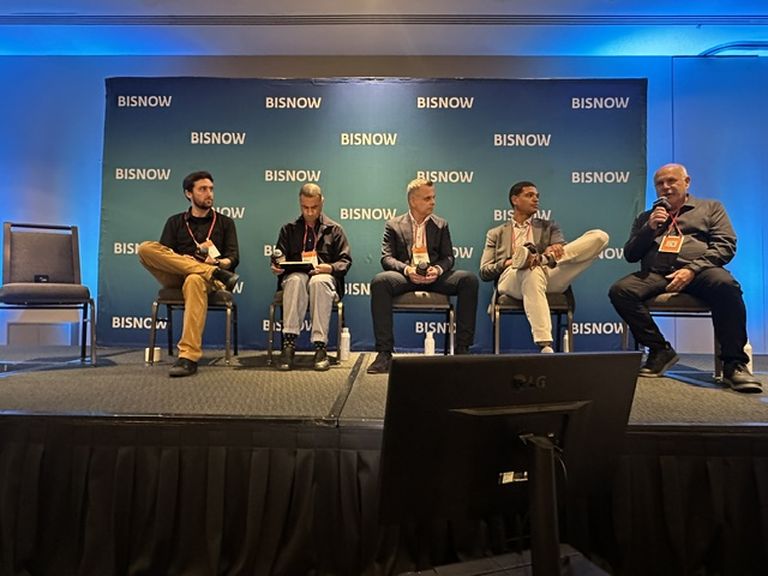
Terner Labs’ Tyler Pullen, AO’s Nick Gomez, Colt Builders’ Janusz Sakowicz, Villa Homes’ Omari Robinson and MBH Architects’ Tim Haley
Deals are still getting done because acquiring existing doors is still 15% to 20% below new construction costs, said John Meany of Presidio Bay Venture’s acquisition and development team. The region’s rapid rent growth also lends itself to finding ways to make deals work since current net operating income benefits from rising rents.
“San Francisco, along with the Peninsula, San Jose and the East Bay, represent three of the four markets with the strongest year-over-year rent growth in the entire nation,” Meany said. “We’re seeing an increased desire to lean in because this is one of the only markets in the country where you can really attract rent growth.”
The majority of multifamily sales in San Francisco historically have been value-add plays on older properties, Meany added. However, investors are gravitating toward core and core-plus transactions over the past few years, and more deals are expected to materialize among stabilized Class-A multifamily buildings as property owners grapple with maturing real estate loans in a high interest rate environment.
Bisnow/Max Stein
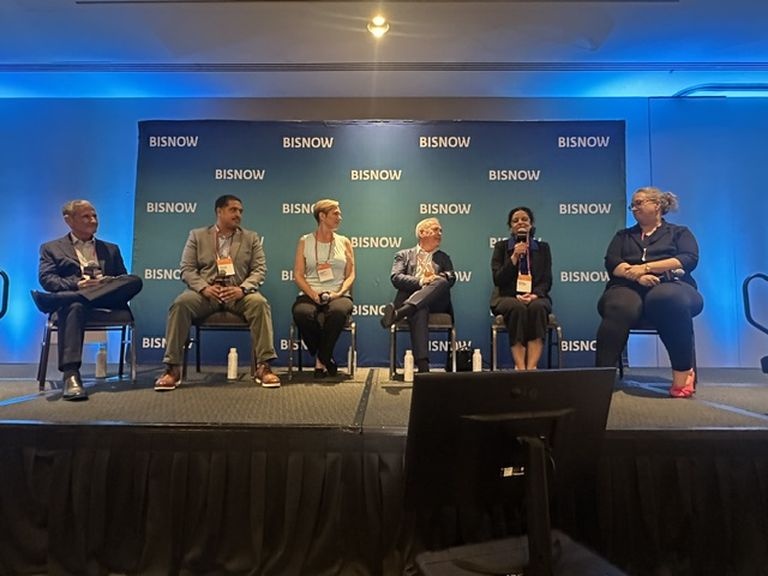
CBIZ’s Ed Hanley, EAH Housing’s Welton Jordan, Incorage General Contractors’ Chrissie Davis, Avanath Capital’s Keith Harris, Bridge Housing’s Smitha Seshadri and Pyatok’s Adrianne Steichen
Affordable housing remains an equally challenging product type to build throughout Northern California because it sits at the intersection of many different players and stakeholders, and it also requires a range of different funding sources, said Smitha Seshadri, executive vice president of development for Bridge Housing Corp.
Completing the required paperwork for affordable housing projects is expected to be easier in the coming year through California Assembly Bill 179, which simplifies the application process through a one-stop shop that allows developers to use a single funding application when applying for multiple revenue streams.
Bisnow/Max Stein
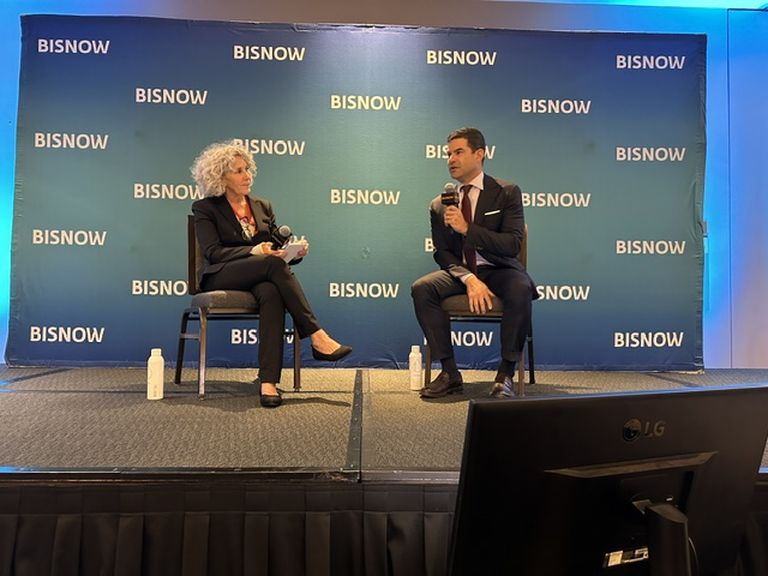
San Francisco Office of Economic & Workforce Development’s Anne Taupier and city and county of San Francisco’s Ned Segal
The capital stack for affordable housing projects in the Golden State typically includes between six and nine funding sources, with each requiring a separate application, Seshadri said.
“You don’t have to apply multiple times, and that is hopefully going to expedite at least the financing side of things,” she said.