British engineering firm Tek4 is joining London’s junior market, Aim. It’s particularly welcome, as the London stock market has spent much of the past decade shrinking. British companies have been taken private or, in some cases, tempted to list in New York instead. Too few new arrivals have replaced them, leaving investors with a dwindling choice of growing domestic businesses.
Tek4 is a small engineering company based in Leicestershire. It makes highly specialised equipment for some of the world’s biggest manufacturers of jet engines and power-generating turbines. Its shares will begin trading on 26 October. But is Tek4 worth buying?
Tek4 helps solve tough engineering problems
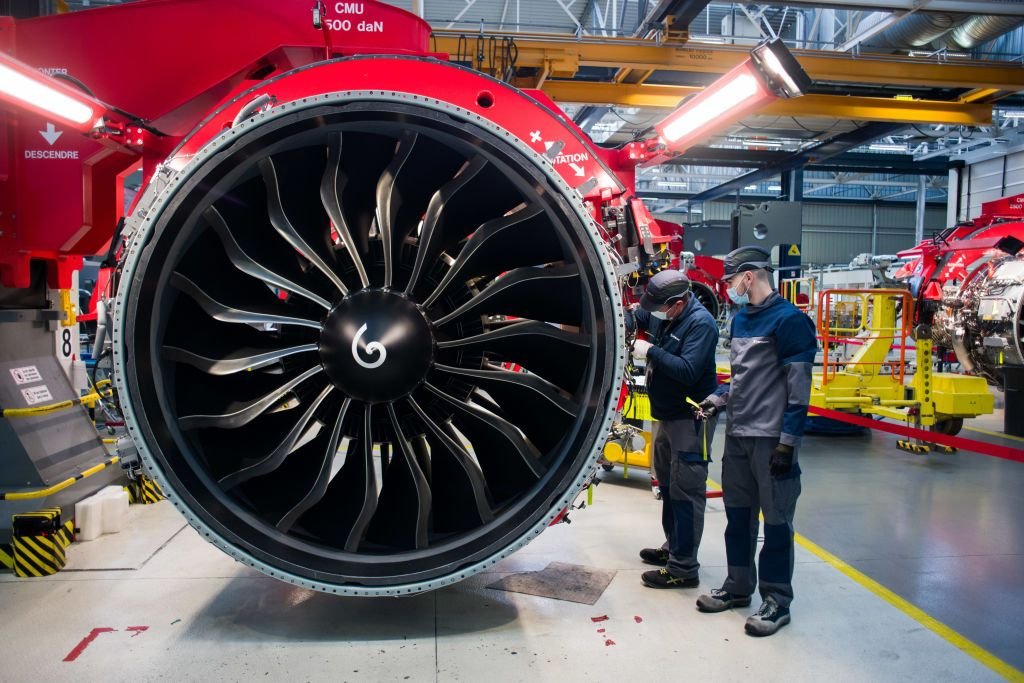
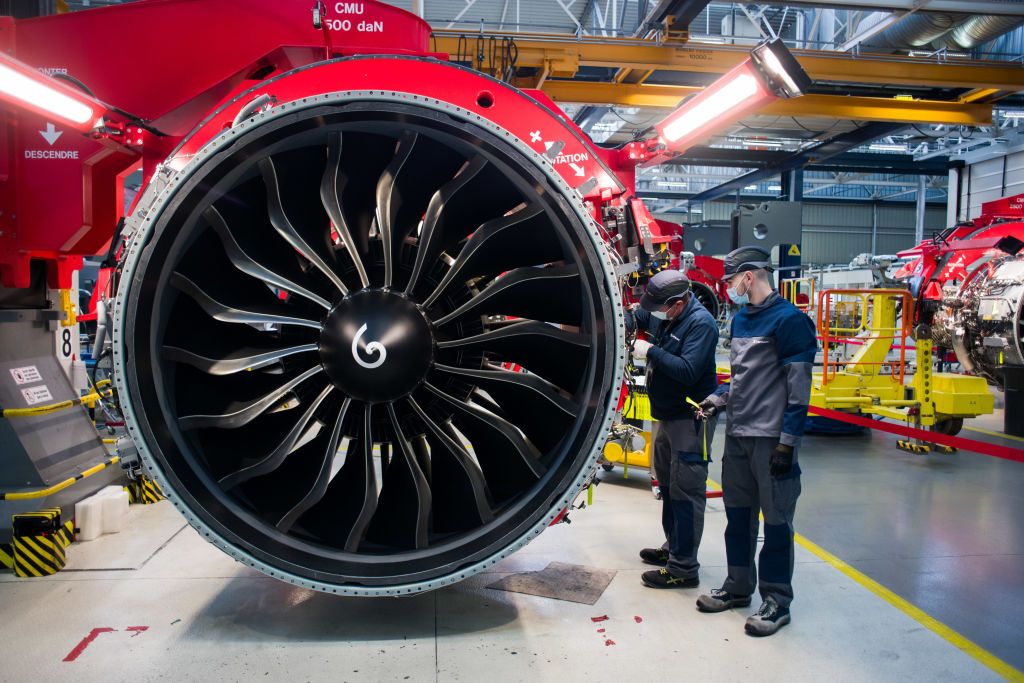
Modern jet engines operate at extraordinary temperatures. The gases flowing through their turbines can be hotter than the melting point of the metal blades inside them. Nonetheless, those blades must survive thousands of hours of service without failure. The solution is ingenious. Engineers pump relatively cool air through hollow passages inside each blade. Thousands of tiny holes allow that air to escape across the blade’s surface, forming a protective film between the metal and the scorching gases. This lets engines run hotter, improving efficiency and reducing fuel consumption. Making those holes is extremely difficult. Turbine blades are made from exceptionally tough alloys and protected by ceramic coatings. The holes must be drilled at precise angles, sometimes through walls barely a millimetre thick. Drill too far and the tool can damage the opposite wall inside the hollow blade, ruining an expensive component.
Start your trial of MoneyWeek today
Get unparalleled financial insight, analysis and expert opinion you can profit from.
Start your trial
Sign up for MoneyWeek’s free twice-daily newsletter.
Join more than 165,000 subscribers and keep yourself informed with latest financial news, insights and expert analysis to help you understand what really matters when it comes to your finances.
Join more than 165,000 subscribers and keep yourself informed with latest financial news, insights and expert analysis to help you understand what really matters when it comes to your finances.
This is where Tek4 comes in. Its equipment uses electrical sparks to remove tiny amounts of metal with extraordinary precision, a technique known as electrical discharge machining (EDM). Sophisticated controls detect when the tool breaks through the blade wall and stop it before it causes damage. Other systems combine lasers with EDM, allowing manufacturers to drill through ceramic-coated blades without moving them between machines. For an engine manufacturer, the purchase price of such equipment is less important than its ability to produce thousands of accurate holes without damaging valuable components.
Tek4 was founded in 2002 by Jason Duffin, an engineer who had already spent years developing machinery for the turbine industry. He previously helped establish MJ Technologies, another specialist engineering business. Drawing on that experience, Duffin concentrated on solving the difficult manufacturing problems faced by turbine makers rather than competing in the crowded market for general-purpose machine tools.
That focus has given Tek4 an international customer base. Its customers include aerospace and power-generation companies such as Rolls-Royce, GE Vernova and Siemens Energy. Although based in Leicestershire, much of its sales go overseas, principally to America and Europe.
Customers also have good reasons to stay. Manufacturing processes for critical engine components must meet exacting standards. Once equipment and its operating procedures have been approved, switching suppliers can require expensive testing and disrupt production.
Tek4 also supplies maintenance, upgrades and specialist tooling. These relationships give it more durable earnings than investors might expect from a small machinery manufacturer.
Tek4 still has room to grow
Tek4 generated about £16 million in revenue in 2025, almost twice the previous year’s figure, while reported profit more than tripled to around £4.2 million. It sold more than 40 machines during the year, with individual systems typically costing between £300,000 and £750,000. Such expensive equipment makes annual results inherently uneven. A handful of additional sales can transform revenue and profit, particularly given the fixed costs of running a factory. Equally, delays to a few orders can have a disproportionate impact on earnings.
New equipment accounts for most of the business, but servicing, maintenance and upgrades contribute a meaningful amount of revenue. This provides a more dependable income stream, as customers need to maintain their machines throughout their working lives. It also strengthens Tek4’s relationships with customers and creates opportunities to sell additional equipment as their requirements evolve.
Demand is supported by rising aircraft production and investment in electricity generation. Modern engines require increasingly sophisticated cooling systems, while manufacturers are seeking ways to improve productivity and reduce waste. Tek4 plans to add a second assembly line at its Leicestershire factory, increasing production capacity substantially.
The company is also broadening its capabilities. In April it acquired Rugby-based InnoLas, a British specialist in advanced laser technology. This could strengthen its existing equipment and eventually open opportunities in other precision industries, including medical devices and semiconductors. But for now, its prospects rest chiefly on turbine manufacturing.
Why investors should buy Tek4
The listing will also give existing investors an opportunity to sell shares. Robin Womersley, a corporate financier and early investor, currently owns 56% of the business, while Duffin holds 34.5%. Duffin is expected to retain a substantial stake after the listing. His interests will therefore remain closely aligned with those of other shareholders.
Once trading on Aim, investors will need to assess the valuation alongside the company’s earnings, growth prospects and the amount of capital, if any, raised for the business itself. There are risks. Tek4 operates in a narrow market, depends on a relatively small number of major customers and sells expensive equipment that buyers can postpone ordering. Its recent results have been impressive, but investors should not assume sales and profits will keep rising at the same pace.
Nevertheless, Tek4 has built a profitable international business around a difficult engineering problem, supported by specialist expertise that competitors cannot easily reproduce.
One flotation will not reverse years of decline in London’s equity market. But Tek4 is a reminder that Britain still produces successful engineering businesses capable of competing internationally. The company looks a promising addition to the Aim market. Whether it becomes an attractive investment will depend on the price shareholders are asked to pay.
This article was first published in MoneyWeek’s magazine. Enjoy exclusive early access to news, opinion and analysis from our team of financial experts with a MoneyWeek subscription.
Development in the U.S. saw spotty progress in the first half of 2026 with costs of materials continuing to climb and asset classes with only the highest returns being built. That means data centers, power infrastructure, advanced manufacturing and pharmaceutical production are taking off, while office, retail and higher education on a national level lag…
Investment expands CPP Investments’ global digital infrastructure portfolio. Your trusted source for commercial real estate intelligence, insights, and market analysis. Register for free to access two complimentary articles per month, or Subscribe to unlock unlimited CRE intelligence. Already have an account? Log in The post CPP Investments to invest US$1.75bn in EQT’s AI infrastructure strategy…
Munis were little changed Friday as short-term U.S. Treasuries cheapened and equities ended higher. Processing Content Muni yields cheapened up to one basis point, depending on the curve. UST yields cheapened 10 years and in, with the largest losses on the front end. One of the big stories of the year has been demand, which…
EQB shares climbed $12.54 to $148.43 by mid-afternoon following Loblaw Companies Ltd.’s announcement of an automatic share purchase plan. The plan allows Loblaw’s broker to acquire additional EQB shares, potentially increasing the retailer’s holdings from about 8.46 million shares to as many as 10.6 million, subject to a cap of 24.9% of EQB’s outstanding shares….
Behind every strong mortgage market are organizations driving confidence, efficiency, and expertise. We’re proud to recognize our partners at #WomenInMortgageCA Summit 2026! Register: https://t.co/L0jfVYZt75 pic.twitter.com/UWclMPHlKs
— Canadian Mortgage Professional Magazine (@CMPmagazine) September 9, 2026 What the sessions cover Three Power Panels run across the day. The first, held at 8:55 a.m., cuts directly…
Institutional traders rarely suffer from a shortage of data. Their challenge is reaching the right analysis quickly enough to influence a decision. Before RBC Capital Markets developed its Multi-Asset Trade Analytics (MATA) platform, clients often moved between separate tools for equities, FX, futures and index events. Pre-trade estimates or rebalance analyses could also require requests…