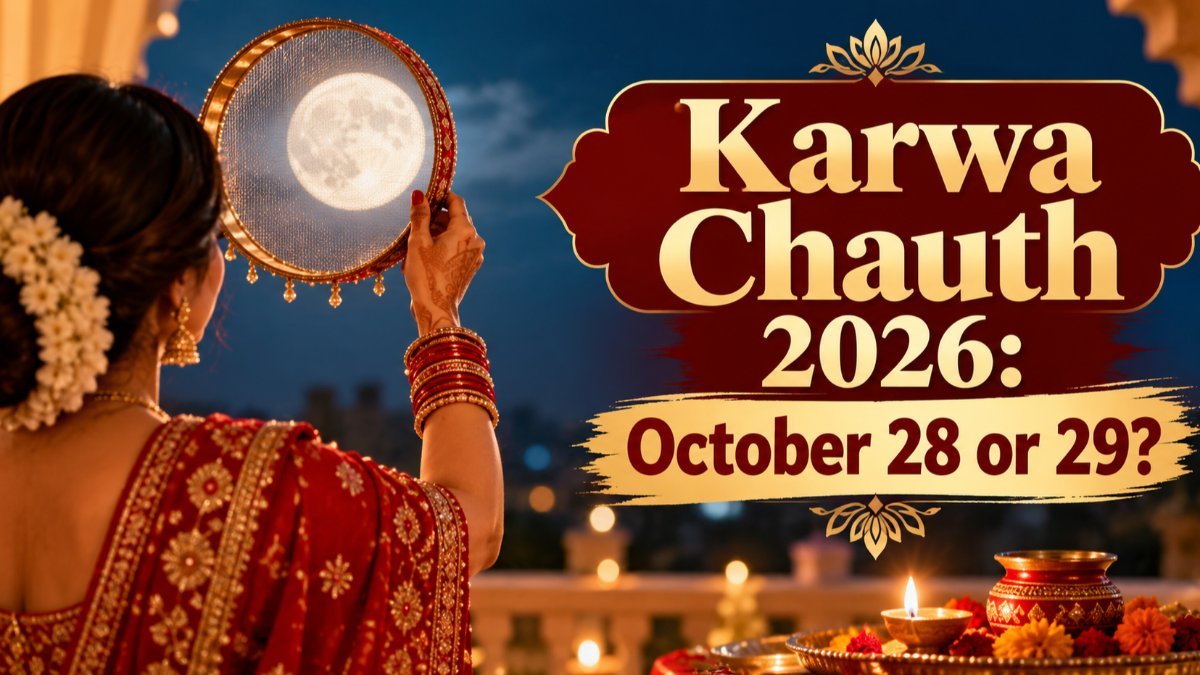
Karwa Chauth 2026: October 28 or 29? Check Date, Puja Muhurat, Moonrise Time and Significance
News
Married women across most of North India and other parts of the country are going to celebrate Karwa Chauth 2026 by keeping a day-long fast for the long life and well-being of their husbands. Karwa Chauth fast is broken only after moon sighting so Moon is an important aspect of the festival.
Karwa Chauth Date & Time 2026
Karwa Chauth will be observed on Thursday, October 29, and not October 28, according to Drik Panchang. Just like every year there is confusion over the festival date because of the way the Chaturthi tithi falls this year.
According to Drik Panchang, the Chaturthi tithi begins at 1:06 AM on October 29 and ends at 10:09 PM on the same day. Since the tithi is in force at both sunrise and moonrise on October 29, that is the day for the fast in India.
In the USA and Canada, the festival is observed a day earlier, on Wednesday, October 28.
Puja Muhurat and fasting time
According to Drik Panchang, the Karwa Chauth puja Muhurat is from 5:38 PM to 6:56 PM, a. The fast begins at 6:31 AM and continues until moonrise at 8:17 PM, so a 13 hours 46 minutes long upvasa. The moon is expected to rise at 8:17 PM in New Delhi on October 29
Women traditionally eat sargi, a meal which is eaten before dawn and is sent by the mother-in-law. Women break the fast with the parana after sighting the moon and completing the rituals.
Significance of Karwa Chauth
The word “karwa” means an earthen pot with a spout, and “chauth” means the fourth day of the Krishna Paksha in the month of Kartik, which is when the festival falls. The spiritual significance of the day is the worship of the divine couple Shiva and Parvati, who are seen as the ideal married pair.
The fast is traditionally observed without food or water. It begins after sargi and ends only after the moon is sighted. Women traditionally break the fast at the first sighting of the moon, often viewing it through a sieve. The husband then offers the first sip of water and the first bite of food, which is the moment the day is remembered for.
Several legends are around the festival, with the story of Queen Veervati who breaks her fast early and her husband falls ill. Then he recovers only after she completes the fast properly.
Other stories link the fast to Savitri, who is said to have won back her husband Satyavan from death, and to Draupadi, who is believed to have observed the fast in the Mahabharata.