Stablecoins are essential to the health of the federal balance sheet
- Key insight: Stablecoin issuers back their dollar-pegged assets with short-dated U.S. Treasuries. As the industry expands, they are picking up the slack left by traditional buyers who have soured on U.S. government debt.
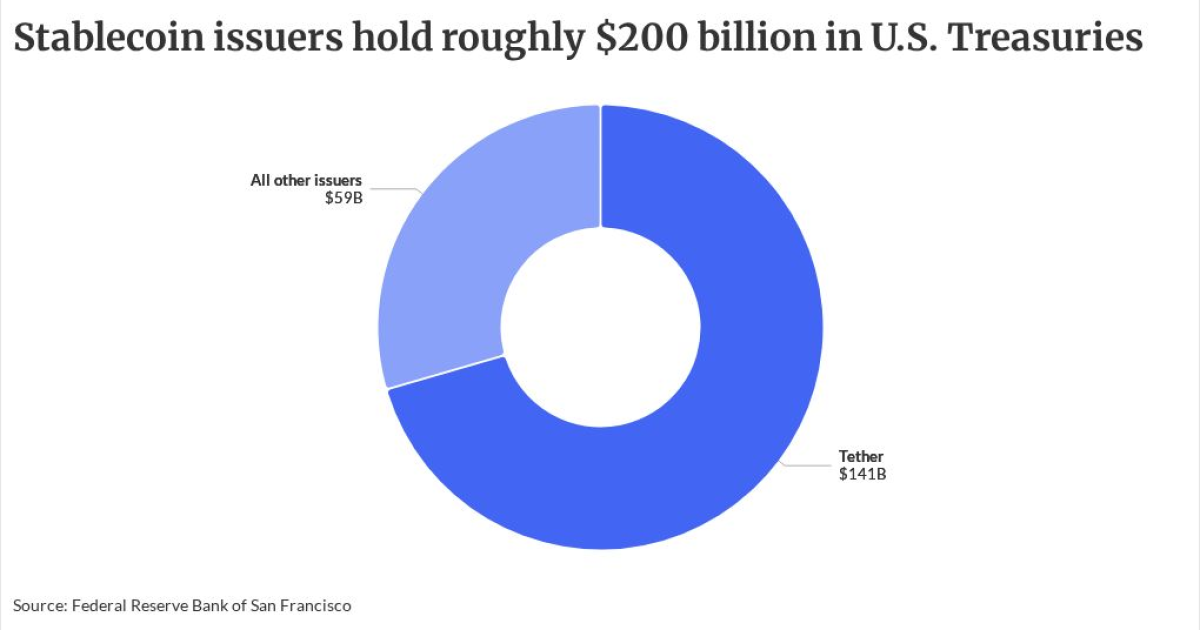
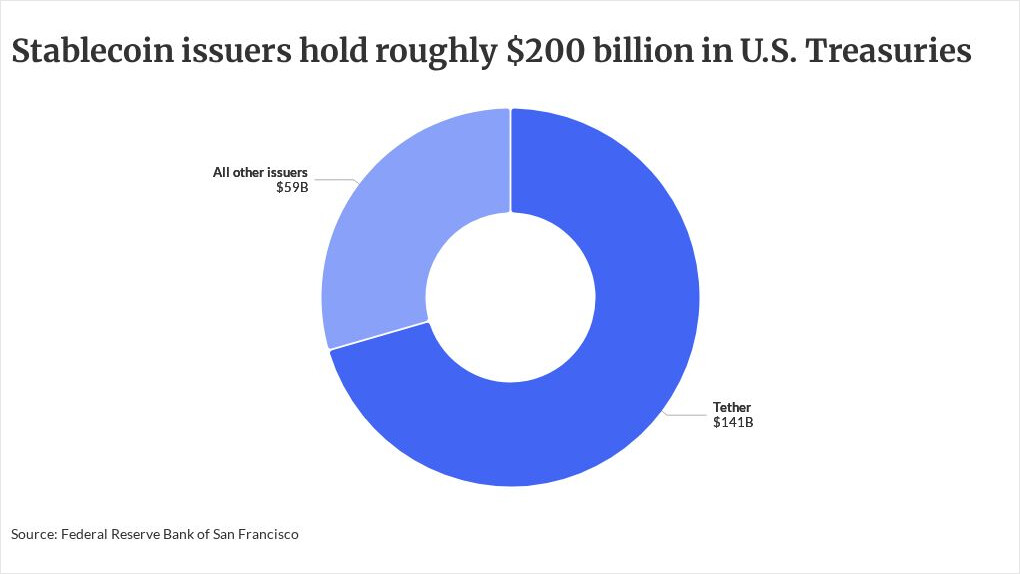
- Supporting data: Data from the Fed’s research shows stablecoin issuers hold roughly $200 billion in U.S. Treasuries, with Tether accounting for $141 billion of the figure.
A declining global appetite for U.S. Treasuries has been
Processing Content
According to the
Data from the Fed’s research shows stablecoin issuers hold roughly $200 billion in U.S. Treasuries, with Tether (USDT issuer) accounting for $141 billion of the figure. This puts Tether ahead of several U.S. allies who were traditionally large buyers.
The Fed further estimates that if the current demand trend sustains alongside stablecoin market cap expansion, stablecoin issuers’ ownership of short-duration U.S. Treasuries could reach $400 billion by 2030. Standard Chartered, meanwhile,
Demand for stablecoins and the resulting impact on Treasury markets has been driven by financial institutions and financial technology companies pushing to tokenize assets by bringing them on-chain. Self-published data from Visa highlighted exponential growth in its stablecoin card programs, with more than 160 active worldwide and payment volume up 200% year over year.
These figures highlight the critical role stablecoins play in transfers, foreign exchange, payments, and lending, including real-world asset tokenization where stocks, commodities, Treasuries, and more are being brought on-chain for 24/7 trading in crypto markets and soon on Wall Street.
Due to their forays into tokenized assets, fintech and TradFi companies are accelerating stablecoin adoption and contributing to their growing impact on the U.S. economy.
Read more:
Treasury demand is central to the stablecoin flywheel because on-chain settlement requires a dollar that essentially “lives” online, and each dollar minted by a regulated issuer is backed by a short-dated Treasury or repo position.
The recently passed GENIUS Act also requires that issuers back every token 1:1 and limits reserves to cash, deposits or Treasuries dated less than 93 days.
With the total stablecoin market cap sitting at $305 billion and the two largest issuers (Tether (USDT) and Circle (USDC) holding approximately $220 billion in Treasury-linked reserves, this figure, and its impact on U.S. Treasury markets, is expected to grow as stablecoin volumes expand with institutional finance initiatives related to asset tokenization.
The trajectory of the circulating supply of tokenized equities has skyrocketed since the Sept. 15 failed procedural cloture vote for the CLARITY Act in the U.S. Senate. After the failed vote, the CFTC and SEC stepped in, announcing several rules that let stablecoin and RWA issuers get busy. The writing is no longer “on the wall.” The mass adoption and integration of stablecoins to the U.S. and global economy is happening as we speak.
The accelerating pace at which tokenized assets are being brought on-chain, and stablecoins’ role in these processes, validate the view that stablecoins are essential to the growth of the U.S. economy and future of capital formation across global markets.