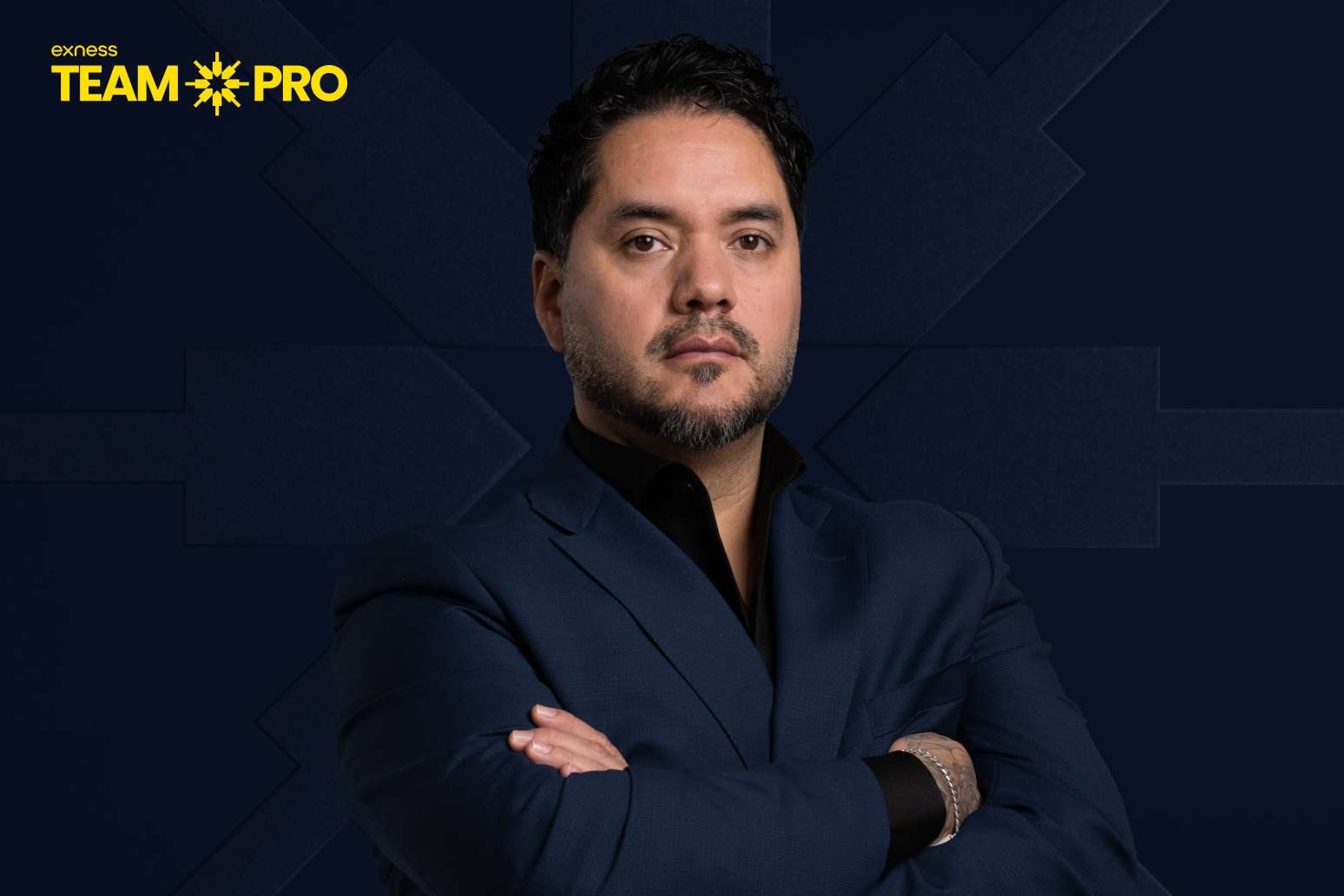
From engineering to trading: New LATAM Exness Team Pro Hiram Medina on how simplicity became his trading edge
Trader and educator Hiram Medina never followed a straight path into the markets. An electronics engineer who built several businesses, he sought greater freedom and more time with his family from trading. That reinvention led to an educational mission built around mindset, discipline, risk management, and simplicity. Now an Exness Team Pro member, Hiram explains why progress often begins by removing complexity.
Before trading, you studied electronic engineering and ran several businesses. How did that journey lead you into the markets?
I studied engineering partly because it was the path my father wanted for me. After graduating, I started several businesses and eventually managed around 15 people. When my son was born, I understood how little time I had for my family.
My online ventures did not succeed, and the businesses gradually disappeared. So, we moved closer to the coast to start again. That’s where my brother introduced me to trading. The freedom attracted me, but I soon discovered that trading demands preparation and discipline.
You began teaching while you were still learning. How did that happen?
When I focused on trading, I gave up my income too quickly, and we reached a difficult financial point. I knew some basics, so I shared that knowledge online. People asked me to teach them, and the work helped my family while I continued studying.
Most of the useful material was in English, while many people across LATAM needed it in Spanish. Translating complex ideas clearly also helped me learn. If you want to understand something deeply, teaching it is one of the best ways.
You often say trading is not based on luck. What makes the difference?
Preparation, structure, repetition, and risk management. Many people can kick a football, but only those who train at a professional level can build a career from it. Trading is similar: you have to practice, study, and develop mastery over time.
A trader should understand probabilities and know the risk before entering. Without a clear process, decisions can become little more than guesswork. A professional has rules and respects them.
Simplicity is central to your philosophy. What does it mean in practice?
At the beginning, I bought many courses and tried different indicators, strategies, and markets. Instead of improving my trading, all that information left me confused. In 2020, I removed almost everything and started again.
Today, I focus mainly on market structure, support and resistance, and a few setups. I primarily follow the Nasdaq 100 around the New York open. If I had to describe my approach, it would simply be: focus on one thing and work to master it.
How has your relationship with losses changed?
I made many mistakes in the past. There were days when I took dozens of trades, spent hours trying to earn back money, while allowing one loss to lead to another. That revenge trading affected my account, my mood, and my family life.
I gradually reduced my number of trades until I reached a controlled routine. I now generally take no more than one trade a day and typically limit risk to around 0.5% to 1% of the account. If it loses, I close the platform. A loss within the plan is simply one possible outcome.
Why do you place so much emphasis on mindset and personal responsibility?
My journey of self-discovery taught me to look inward rather than blaming the world outside. When traders struggle, they often blame the market, the broker, or the strategy. Sometimes the problem is an unexamined habit: impatience, overconfidence, fear, or the need to recover a loss immediately.
If you want a different result, you must be willing to change something in yourself. My teaching is built from my mistakes and the rules I developed to manage them.
How did your engineering background influence that approach?
Engineering taught me that nobody would solve difficult problems for me. The greatest lesson was learning independently and persisting when something felt impossible. When trading became difficult, I knew I could study, test, solve problems, and continue.
Why is transparency so important in the community you have built?
My private community sees my trades, including the losses. I record how I analyze the market and explain the decisions afterwards. They know what I did during the week, so I have to be honest with them. That accountability has made me more disciplined.
I do not present myself as someone who has reached a perfect final level. I may only be a little further along the road. People trust the process when they see that the educator is still learning, reviewing, and taking responsibility.
How do you think trading education is changing across LATAM?
In the past, much trading content focused on cars, parties, and easy money. More people now want the real process: losses, emotions, and the reasons behind decisions. There is also greater interest in trading psychology.
Strategy matters, but habits and emotional reactions determine whether traders follow it. LATAM has a growing community that wants to learn seriously, and better education can help it mature.
What does joining Exness Team Pro mean to you, and what can the partnership bring to your audience?
For me, joining Exness Team Pro reflects the value of education and the responsibility that comes with reaching out to more people. The partnership gives me a wider platform for something useful.
I value Exness’ receptiveness to trader feedback. Spreads, withdrawals, and platform performance are practical considerations, but the greater opportunity is helping more traders build discipline, simplify their approach, and think long term.
What is the single lesson you want traders to take from your journey?
Keep it simple. Focus on one thing: manage risk and work on yourself. Trading is a long-term profession. Discipline changes everything.