AI industry’s economic gravity extends to municipal market

Bloomberg News
Artificial intelligence and the resultant infrastructure demand are driving an economic shift that impacts macroeconomic policy, state realignments, and municipal bond market credit considerations.
Processing Content
While municipal credit ratings have generally demonstrated resilience, analysts and economists are closely tracking tech payrolls, market valuations, capital expenditures and changing municipal spending demands.
Tom Kozlik, head of public policy and municipal strategy at HilltopSecurities, citing Moody’s economist Mark Zandi, noted that AI accounts for roughly 25% of U.S. gross domestic product growth, split between infrastructure build-outs and the investor wealth effect.
This dual-engine growth mechanism of combining physical spending on power, land, and chips with capital gains in the equity markets has given the economy a resilient buffer, Kozlik said.
Public power bond sales are in a third year of record growth, driven by meeting the demands of AI, said Cameron Parks, a managing director at Truist, speaking at The Bond Buyer California Public Finance Conference last week in San Francisco.
“If a
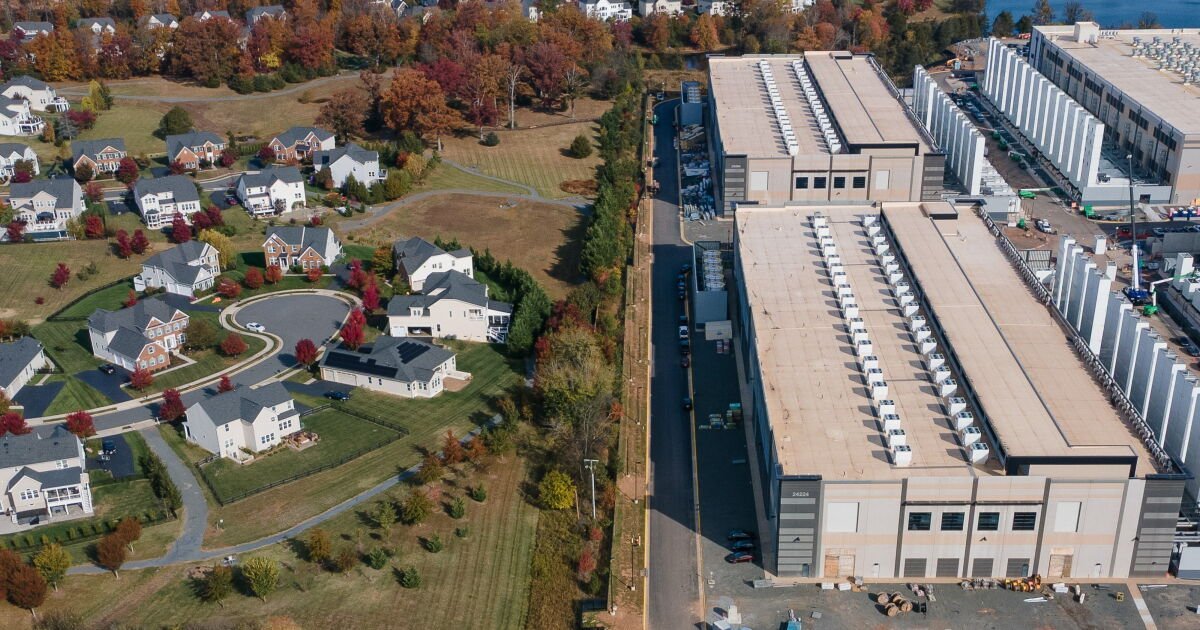
Kozlik said while AI’s contribution to national GDP is profound, its physical footprint remains geographically concentrated.
New paradigm
During his analysis, Kozlik said he compared previous economic cycles with what is occurring today and reached the conclusion that AI is creating a new paradigm.
Adoption of new technology is happening a lot faster, and the amount of money going into AI represents “a massive economic expenditure,” Kozlik said. “It is different from any other economic cycle. This isn’t a regular economic cycle — this is an economic cycle times a certain level of magnitude.”
Typically, the loss of thousands of federal jobs reported during the recent jobs report could be indicative of a recession, Kozlik said. Yet, the U.S. Bureau of Economic Analysis on Oct. 1 reported that GDP had grown by 2.2%, revising its outlook up by 0.7%.
“State and local government jobs were flatlining last year, which doesn’t usually happen unless there is a recession, but we aren’t in a recession. This is a different type of cycle,” Kozlik said.
Capital spending on artificial intelligence infrastructure and surging technology equity valuations have emerged as primary engines propelling economic resilience across the United States and California, even as inflation, interest rates, and labor market weakness persist, according to the UCLA Anderson Forecast’s
The forecast’s economists estimate that high-tech investment and the wealth effect associated with AI equities together account for nearly one percentage point of core GDP growth nationally, aligning mathematically with Zandi’s estimates.
An evaluation of the AI footprint requires looking closely at broad growth metrics alongside state and local impacts, Kozlik said.
“Combined capex among the seven largest AI builders has climbed from $160 billion in 2022, where it stayed through 2023 to a projected $863 billion in 2026,” Senior Economist Clement Bohr wrote in an AI-focused report included in the UCLA Anderson Forecast’s September outlook. “These figures imply some remarkable growth rates of 68% in 2024, 71% in 2025, and 88% in 2026.”
This pace of growth is neither likely nor expected to continue, Bohr said.
“Big tech firms have mostly stopped revising their investment plans upward, and their guidance points growth decelerating in 2027 as annual spending is set to surpass one trillion dollars and increasingly outrun their own cash flow,” Bohr said.
The tech industry has long had an impact on commercial real estate in the San Francisco Bay Area.
“Open AI is now the largest commercial tenant in San Francisco,” Robert Larkins, managing director at Loop Capital Markets, said at the recent Bond Buyer conference there.
“People are conflating AI with everything that is going to kill us, but part of the problem is the tech industry has done a bad job of answering concerns,” like whether data centers will create water shortages in communities and drive up power and water bills, he said.
“People should be more open minded about data centers,” Larkins said. “That is if (public power) clients can extract upfront money, and not over time as stadiums did, because in 10 to 15 years these things will be obsolete,” Larkins said.
As data center development accelerates, public power utilities, water entities, and joint powers authorities face substantial capital requirements to expand grid infrastructure and cooling water resources.
Reflecting on past technological shifts, Kozlik compares the present AI revolution to earlier periods of rapid innovation, such as the personal computer boom of the 1980s and the expansion of the internet in the 1990s. While historical precedent exists, the velocity and scale of the current movement set it apart.
Recent survey data from HilltopSecurities showed that municipal and public sector leaders continue to face severe operational bottlenecks, identifying labor and staffing alongside budget and pension pressures as their primary challenges. This capacity constraint directly influences how local entities manage infrastructure upgrades, cybersecurity threats, and growing energy demands tied to technological advancement.
In the municipal bond market, this broader realignment has translated into a shift from general credit momentum to rigorous credit selection, Kozlik said.
Public finance rating actions have shown selective pressure, with downgrades outpacing upgrades across specific areas such as K-12 education, higher education, and healthcare for the last four of six quarters, he said.
“Public finance downgrades outpacing upgrades is a recession-like trend, but most of that downgrade activity is in education or healthcare,” Kozlik said. “I am not as cautious about the public finance credit landscape as I was in 2018 or 2019. There is a realignment going on throughout the sector in certain geographic areas, but it’s not all good or bad. The end result is that credit selection makes a difference.”
Parallel analysis from the UCLA Anderson Forecast illustrates how these macro dynamics play out in regional economies, particularly in technology hubs like California. UCLA Anderson economists note that high-tech capital expenditures and AI-driven wealth gains serve as vital drivers of core growth, offsetting broader headwinds from inflation and elevated interest rates.
California
In California, where tech venture activity and corporate investment are concentrated, economic output outpaced national growth in early 2026. The state secured over 80% of national venture capital investment in key quarters, demonstrating the power of technological concentration.
Bohr highlighted in his AI-specific report that the AI boom faces imminent headwinds from electricity production capacities and electrical grid limits. Additionally, Bohr noted that broad economy-wide productivity growth from AI may still be years away, as historical general-purpose technologies require extended periods for integration.
Regions hosting major data center corridors or technology clusters benefit from expanding commercial property tax bases and increased local economic activity, he said. Conversely, regions without direct technology investment must navigate persistent cost inflation and state-level budget realignments without corresponding tech revenue boosts.
The California economy grew at an annualized rate of 3.7% in the first quarter of 2026, outpacing the 2.1% national expansion, according to the UCLA Anderson Forecast.
This strength reflects California’s heavy concentration in tech and venture capital, with the San Francisco Bay Area capturing more than 95% of the value of the top 10 venture investments in the Americas during the first quarter, the forecast said. In the second quarter, California secured 82% of all venture capital investment nationwide, the report showed.
Yet California continues to navigate an “employment recession,” with its unemployment rate standing at 5.1% in August, UCLA Anderson Forecast Senior Economist Jerry Nickelsburg said. “The issue with the tech layoffs is that AI is changing the skill mix required and that has employment implications,” Nickelsburg said.
The Anderson Forecast expects AI-related hiring and the end of contraction in tech to begin supporting broader employment growth in 2027 and accelerating in 2028.