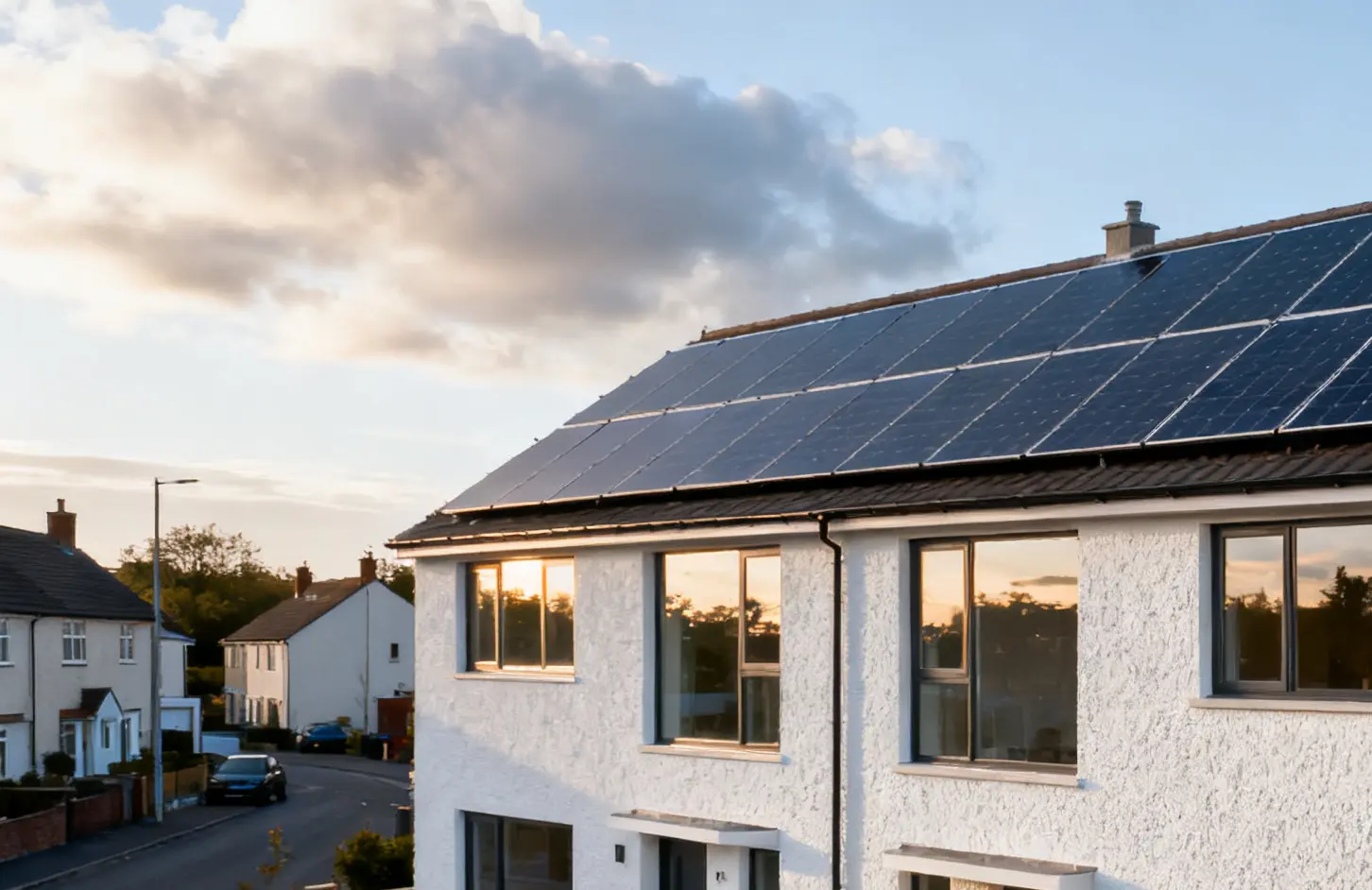
Energy-generating homes see rising buyer interest
Buyer demand for properties capable of generating their own energy has increased significantly, according to data from Rightmove, as households seek greater independence from grid-supplied power amid volatile energy costs.
The property portal’s 2026 Greener Homes Report found that 63% of prospective movers would prefer their home to generate most or all of its own energy. Just 8% indicated a preference to remain fully reliant on the grid.
More than half of respondents, 53%, reported that recent energy price increases have heightened their interest in technologies including solar panels and battery storage systems.
Climate resilience drives property searches
A series of summer heatwaves has also influenced buyer priorities. The data shows that 45% of respondents believe their current property does not perform adequately in hot weather, whilst 87% consider a home’s ability to maintain comfortable temperatures during summer as an important factor when selecting their next property.
Searches for homes advertised with air conditioning rose 104% compared to the same period last year, according to Rightmove’s analysis. This trend aligns with broader changes in homebuyer search behaviour observed across the market.
Since 2022, mentions of heat pumps in property listings have increased by 151%, while solar panel references have risen 94%.
Price premium for energy-efficient features
Properties featuring energy-generating technologies command substantial price premiums. Homes advertised with air conditioning have an average asking price of £947,509, compared to the national average of £367,440. Properties mentioning heat pumps average £545,220, whilst those with solar panels average £412,901.
The concentration of these features in higher-priced properties suggests a market divide in access to energy-efficient technology. This pricing dynamic occurs as overall house price growth continues to moderate across the UK.
New-build advantage in energy ratings
The gap between new-build and existing housing stock remains pronounced in energy performance. Rightmove’s data indicates that 89% of new-build homes achieve EPC ratings of A or B, compared to just 6% of resale properties. Some 23% of new builds reach the highest EPC A rating, against only 1% of existing homes.
Wales leads in EPC A-rated new construction at 54%, followed by the North East at 44% and the East Midlands at 31%.
Implementation gap persists
Despite widespread support for energy efficiency measures, with 75% of movers believing more should be done to assist households with improvements, only 5% of current homeowners rank green upgrades as a priority.
Colleen Babcock, property expert at Rightmove, said: “We’re seeing growing interest in homes that give people more control over how their energy is generated, stored and used. Several years of energy price volatility have encouraged more households to think about reducing their reliance on the grid.”
Ian Harris, President of NAEA Propertymark, noted that whilst energy efficiency is gaining prominence in buyer considerations, it does not necessarily determine purchase decisions. “Buyers still need to balance energy performance with affordability, location and the amount of space they need,” Harris said.
The findings highlight an emerging challenge for the property market as demand for energy-efficient features grows whilst much of the existing housing stock requires substantial investment to meet these expectations. Access to financing options for property improvements may prove important as homeowners consider energy upgrades.