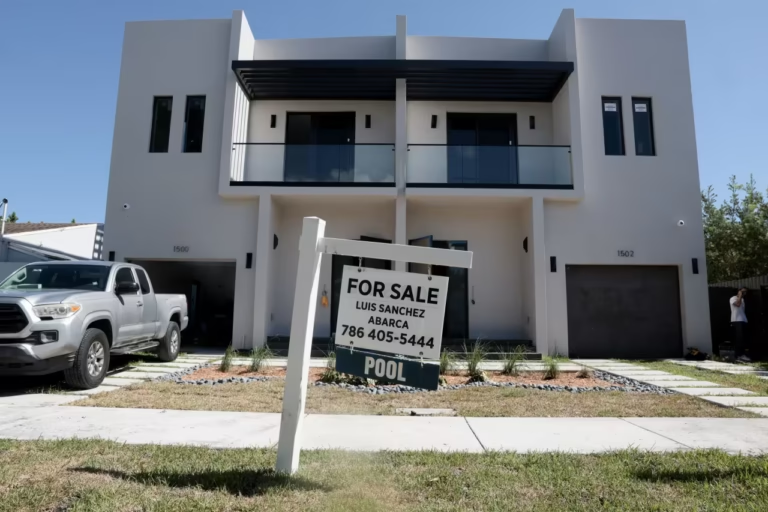
Small Investors Made Housing Gains as Washington Limited Big Institutions
Investors might have slowed their home purchases as Washington scrutinized their industry. But they remain a steady force in the housing market, a new analysis from the Realtor.com® economics team has found.
Investor buying in the national housing market fell 7% in the first half of 2026, compared to the year before. They purchased 224,000 homes, the lowest first-half total since 2020, according to the latest investor report from Realtor.com.
The slowdown happened as Congress finalized legislation affecting large institutional investors in the housing market. But not all investors felt that equally—and investor purchases are still above where they were before the COVID-19 pandemic, says Realtor.com senior economist Hannah Jones.
Investor activity still comprised 10.7% of home purchases in the first half of the year, down just 0.3% from the first half of 2025. Small investors remained the dominant force there, as large mega-investors pulled back.
Mega-investor purchases are down 70% compared to where they were in 2021. Non-investor home transactions are down 34.3% at the same time, which indicates that investor activity is still contracting faster than the market at large.
In the meantime, small investors—entities and people with fewer than 10 total purchases—have grown. They accounted for around 50% of investor purchases at the height of the pandemic. They make up about 66.2% of investor purchases today. And that’s the highest share of small-investor activity in 15 years, Realtor.com data show.
“Small investors, corporate entities with fewer than 10 total purchases, have always been the majority of the investor buyer market, and that hasn’t changed,” the report states. “What has changed is the margin.”
Purchases holding steady
The median investor purchase amount is up 3.5% year over year, compared to the 1.9% increase in the market at large. So while investor purchases tend to be far below the market average—$295,000 for investors and $380,000 for the overall median purchase price—the difference is narrowing. Investor purchase prices are still 22.4% below non-investor prices, though.
And in the first half of 2026, investors bought 55.5% of those homes with cash. That’s a decline from about 68% in 2021 and 2022. For the market at large, all-cash buys account for about 30% of purchases.
The Midwest continues to be the dominant region for investor purchases, thanks to its relative affordability. The Sun Belt, too, marks a major market for these investors, due to ample inventory and softening prices.
Missouri, Montana, and Mississippi, for instance, are states where buyers might feel the competition from small investors. They make up 10% of purchases in those states, and their lower-priced purchases suggest they might compete with entry-level buyers.
Meantime, mega-investors account for 1.9% of purchases in Texas, 1.8% in Nevada, and 1.3% in Georgia. Meanwhile, pricier West Coast metros such as Portland, Colorado Springs, and Oxnard sit well below the national average for investor activity. In those cities, investors were net sellers in the first half of the year.
“Because small investors are the most stable cohort and now the clear majority of investor activity, their presence in affordable Midwest and Sun Belt markets is likely to persist even as large and mega-investors continue to exit,” the report states. “That means that buyers in these markets, especially entry-level buyers, could continue to see some competition from investors.”
Realtor.com compiled its report using deed data to get a sense of how corporate entities are acting in the market. It breaks down activity among small-, medium-, and large-sized investors, and by city.
The timeline on the report also coincides with a shift in mortgage rates, which dipped just below 6% in February, then began a steady rise throughout the year amid the conflict with Iran.
A year of attention
In January, President Donald Trump signed an executive order to discourage investors from benefiting from federal assistance in home purchases. Congress codified further limitations in the 21st Century Road to Housing Act, which became law in July. That bill targets investors who own more than 350 properties. After some wrangling, it excludes the build-to-rent industry.
Small investors tend to have a far larger presence in the housing market, Realtor.com found. But large investors are concentrated in some large markets where they account for a significant share of the housing stock.
Investors who own more than 1,000 homes accounted for 2.2% of the share of home sales in August, up from 1.4% in February, according to recent data from real estate analytics firm Cotality.
Is the large investor pullback temporary? That remains to be seen, Jones says.
“With the uncertainties around President Trump’s proposed large investor ban, it’s not surprising to have seen a pullback among investors whose business models may have been threatened by policy changes,” the report states. “Now that the 21st Century Road to Housing Act is law, investors have more certainty. If that was a contributor to the pullback, we may see more large investor activity in the second half of the year.”
Kelli Lawrence, CEO of Indianapolis-based build-to-rent developer Onyx+East, tells Realtor.com that investors have felt more confident in recent months. The attention helped them educate lawmakers on their value in the modern housing market.
“It definitely put a pause on the capital markets,” Lawrence says. “But the long-term demand and need didn’t diminish in any way.”