OCC report conflates valid risk calls with discrimination
Processing Content
- Key insight: Banks must weigh the potential reputational damage of serving certain customers against the business those relationships bring, experts say.
- Supporting data: The Office of the Comptroller of the Currency reviewed more than 100,000 complaints, hundreds of individual customer decisions and approximately 420,000 pages of documents from nine large banks, but could not identify the scale of debanking.
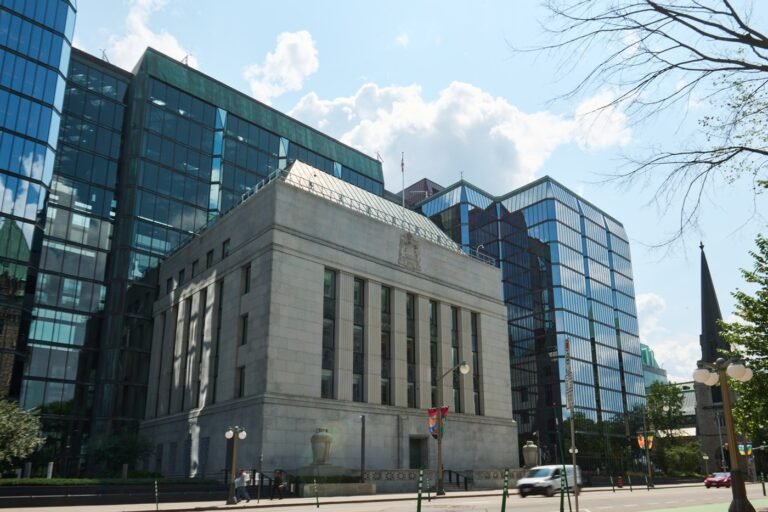
The Office of the Comptroller of the Currency’s debanking report last week — the administration’s latest effort to crack down on alleged bias against politically disfavored groups — showed how much human judgement banks exercise when considering whether ties to certain controversial customers are worth the business they bring in, experts said.
Speaking at an
But experts say managing how customer relationships impact a firm’s public standing — a subjective exercise that will invariably look different at each firm — is something banks can’t afford to disregard. Adam Levitin, a professor at Georgetown Law School, said in a recent
“If a bank gets bad press, its share price might sag, etc. Why shouldn’t the bank respond proactively to manage its image?” Levitin wrote. “The job of bank regulators is to make sure that banks do not take excessive risks. It is not their job to tell banks to take greater risks.”
The report is the
While the document provided a number of anecdotes and primary evidence of conversations between bank employees about whether to onboard certain customers, the report did not quantify the extent of those actions, how politically motivated banks’ choices were, or prove customers suffered financial harm.
CATO Institute analyst Nicholas Anthony said the report “raises questions about the scale of the problem,” providing little quantitative data on the more than 100,000 complaints, hundreds of individual customer decisions and approximately 420,000 pages of documents from the country’s nine largest banks. While the report offers some anecdotal evidence that those reputational conversations took place, its conclusions are broader than what is established as evidence.
“The new OCC report on debanking leaves much to be desired [and] largely treats reputational risk as a bank industry practice while giving insufficient weight to the role regulators played in making it a longstanding feature of bank supervision,” Anthony wrote in an email. “The OCC presents only a limited number of detailed examples of alleged political discrimination. Its findings about bank policies are broader than those individual cases, but the report does not establish the overall scale of the problem.”
Banks
Critics of banks’ posture toward novel technologies in the last administration often point to what they say was the Biden administration regulators’ expansive definition of reputational risk, a longstanding category of risk evaluated by bank supervisors. The Federal Deposit Insurance Corp. and the OCC under the second Trump administration have taken
Former Comptroller of the Currency Eugene Ludwig, who now runs a fintech-focused venture capital firm, said the concept of reputational risk has drifted away in recent years from what it was understood to encapsulate when he was in office in the 1990s.
“Reputation risk, as we used the term and concept in 1996, is different from the focus today,” Ludwig wrote in an email. “Our focus was essentially on misdeeds or violations of law that could put a bank at considerable safety and soundness risk, such that, say, a ‘run on the bank’ could occur.
“Today, the term is used much more broadly,” he added.
The OCC report details a number of instances when politically charged events drove banks to distance themselves from certain businesses and industries, either due to a conflict with internal policies or a fear that a public backlash could hurt their brand.
In one instance, JPMorganChase’s payment-processing subsidiary WePay closed the account of a merchant selling Trump and Make America Great Again-branded merchandise in February 2021, shortly after the Jan. 6 insurrection, because they said the merchandise violated its policies against promoting hate, violence or racial intolerance.
JPMorgan has
Graham Steele, a senior fellow at the Roosevelt Institute and former Treasury Department assistant secretary during the Biden administration, says the internal bank employee communications show a more nuanced judgement than the Trump administration claims. Rather than reflecting disagreements between the bank itself and the customer’s religious or political leanings, the communications display deliberations about whether the customer’s conduct is compatible with the banks’ brand image.
“You see employees talking about different customers and sort of saying, ‘Is this consistent with our values? Is this the kind of customer we want to be banking because it adheres to our policies or not?,” Steele said. “This is the whole thing about reputational risk: something might not necessarily be illegal or illicit, but trust and confidence in these financial institutions matters for them and for their businesses, and so they’re trying to get a sense of [whether] these customers … comport with our own values as an institution or with the broader public set of values that can then lead to us losing business over time.”
Neal Moran, a retired OCC examiner who supervised large OCC banks for more than a decade, argues the quest to prove that politically motivated debanking occurred during the Biden administration amounts to a form of political pressure from the current administration to affirmatively do business with industries and clients they favor.
“Reputation risk never played more than a tangential role in bank supervision. A simple search of public enforcement actions will show that,” Moran said. “Gould and other bank regulators claim they want examiners to focus more on ‘material financial risk,’ but this report suggests they want to spend more time hunting witches.”
Levitin says there are distinct flavors of debanking that are differentiated based on the risk that banks are attempting to mitigate. One is denial of services due to a customer’s disagreement with the bank’s viewpoint; another is a denial of service because of reputational risk to the bank based on a customer’s stated views. The last is a denial of service because of a bank’s concern with the actual customer’s line of business.
“There’s virtually no evidence of the first type of discrimination, but there’s a lot about the second and third,” Levitin wrote. “The first instance is about the bank itself having a taste for discrimination, such that the bank will turn down the customer even if the relationship could be profitable, [whereas] the second and third types of discrimination are about a bank responding to concerns about how dealing with a customer will affect its business overall — in other words, they are about rational business decisions.”
While determining what is hate speech versus discrimination is a thorny issue, Levitin argues reputation remains a crucial factor in sound business decisions.
“The line between expressing a strongly-held view that is negative about another group and hate speech is nebulous,” he wrote. “But that does not mean that a financial institution cannot attempt to draw it.”
“The discrimination is not actually on viewpoint. It is discrimination based on conduct,” he concluded.