Last date alert! Income tax audit deadline ends today: Who must file? What happens if you miss the due date?
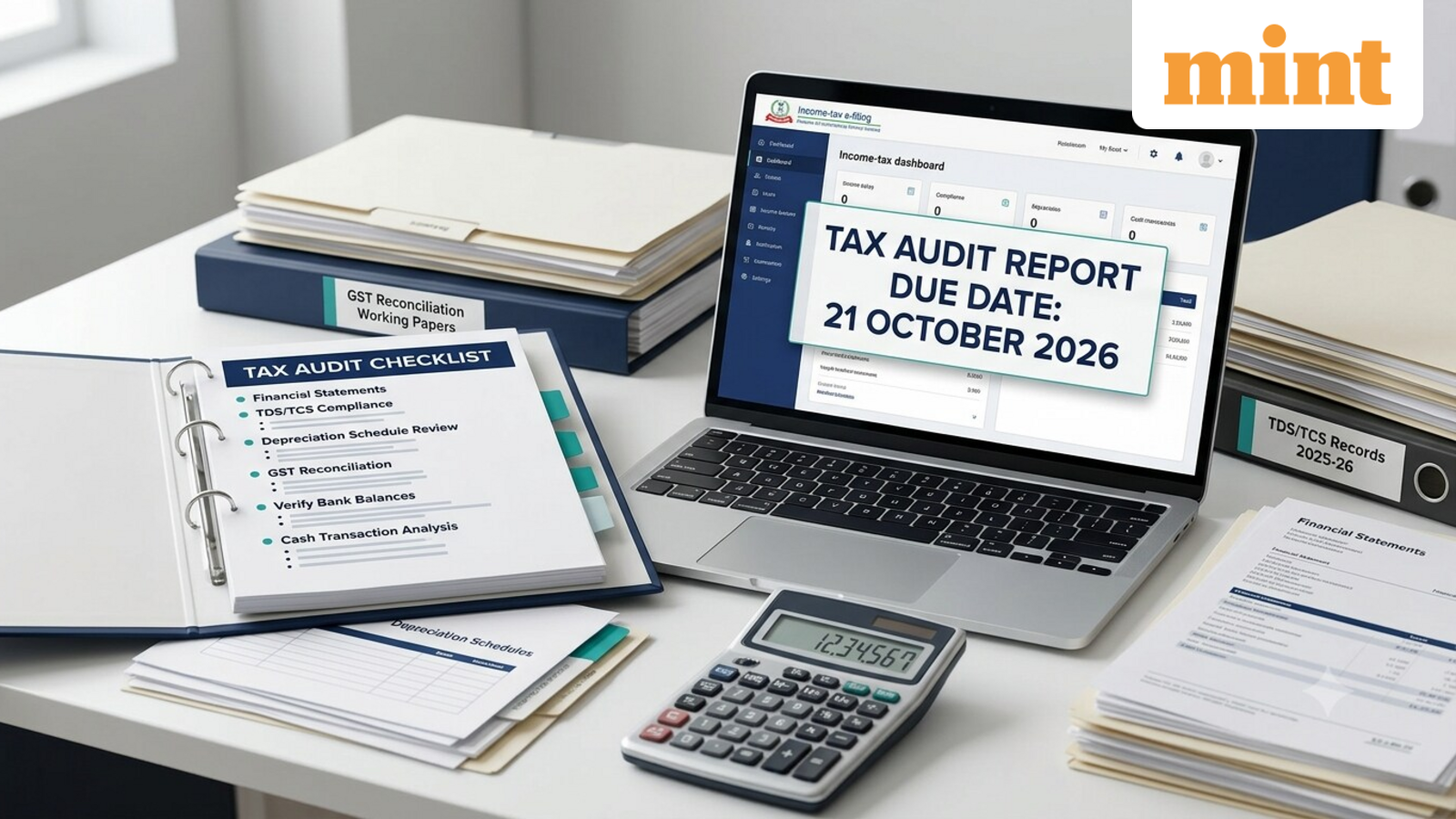
The tax audit report deadline for Assessment Year (AY) 2026-27 was extended from September 30 to October 21, 2026. Taxpayers who are required to get their accounts audited must file their audit reports by today’s deadline.
The due date to file income tax returns for taxpayers covered by tax audit requirements has also been extended from October 31 to November 21, 2026, giving them extra time to file their returns after submitting the audit report.
Not everyone making money from business or professional services need to get a tax audit done as the requirement depends on applicable turnover or gross receipt limits and other conditions under the Income-tax Act.
Who needs to file a tax audit report?
For businesses, a tax audit is required if their total sales, annual turnover or gross receipts exceed ₹1 crore in a relevant financial year. However, this threshold is raised to ₹10 crore where the cash receipts and cash payments levels are less than 5% of total receipts and payments, respectively.
For professionals, on the other hand, the general threshold for requiring a tax audit is ₹50 lakh in gross receipts.
This provision also applies to taxpayers opting out of presumptive taxation schemes such as Sections 44AD, 44ADA, 44AE, 44BB, and 44BBB, or those declaring lower income than prescribed under these schemes, subject to conditions including exceeding the maximum exemption limit.
Companies whose accounts are audited under company law must also file their audit reports. The requirement also applies to firms, LLPs and other entities covered under the applicable audit provisions.
What happens if you miss tax audit deadline?
If a taxpayer fails to get their accounts audited or furnish the audit report within the deadline as required under Section 44AB of the Income-tax Act, a penalty is imposed by the income tax department.
The assessing officer may impose a penalty of 0.5% of the taxpayer’s total sales, turnover or gross receipts from business or profession, or ₹1.5 lakh, whichever is lower, according to information available on the tax department’s portal.
What documents are audited?
A tax audit involves examining the books of accounts and supporting documents to verify a business’s financial records and compliance with income-tax rules. These can include:
- Cash book
- Ledgers and journals
- Bank statements
- Stock records
- Sales and purchase invoices
The chartered accountant examines these records to verify the business’s financial transactions and ensure that the required particulars are correctly reported under the Income-tax Act.
Which ITR form applies to a tax audit case?
There is no separate income tax return form called a “tax audit ITR”. The applicable form depends on the taxpayer’s legal status and sources of income.
Most individuals and HUFs whose business or professional accounts are audited will file ITR-3. Partnership firms and LLPs generally file ITR-5, while companies generally use ITR-6.
ITR-4 is designed for eligible presumptive taxation cases. It should not be selected just because the taxpayer previously filed ITR-4. If regular books, audit requirements or other eligibility restrictions apply, then a different form may be required for such cases.
Selecting the wrong return form can make the return defective. The form should therefore be confirmed before importing data, entering schedules or paying self-assessment tax to avoid any future hassle.