Washington must do more to maintain dollar-settlement dominance
- Key insight: China does not need to replace the dollar to normalize non-dollar settlements. Washington must offer a faster, cheaper and more interconnected dollar system before China entrenches alternative rails.
- Supporting data: In July, Bank of China reported handling over 600 billion yuan in cross-border mBridge transactions since April 2024.
On Sept. 24, The Clearing House
Processing Content
That same day, Bloomberg
Washington should integrate these approaches. It should build a shared, blockchain-based settlement backbone linking tokenized bank deposits and regulated dollar stablecoins. Deposits should be the banking foundation that stablecoins could augment. A common infrastructure would make private financial services more interoperable while still encouraging market competition. An exporter should not be forced to join its customer’s payment network to collect an invoice instantly and cheaply.
Stablecoins broaden public access to digital dollars, but sending a token is just half the transaction. The recipient still needs to convert the proceeds.
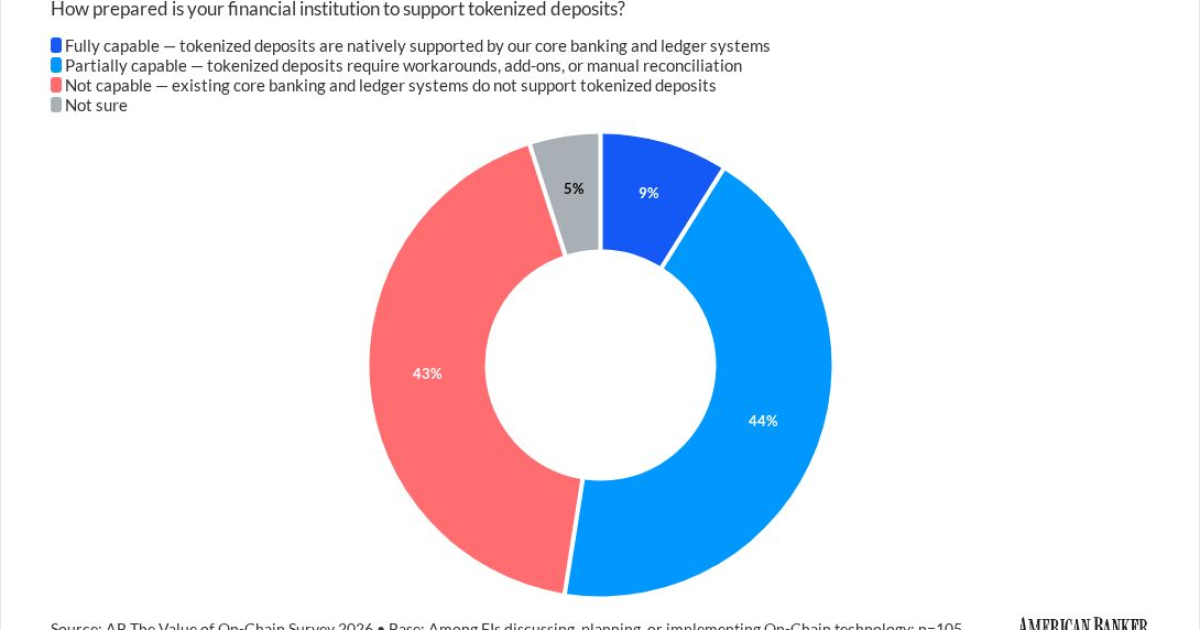
Tokenized deposits, which combine programmable money with existing banking relationships, offer a stronger digital payment foundation. In this model, the sender’s bank would reduce the sender’s deposit, the recipient’s bank would increase the recipient’s deposit and the banks would
That preserves existing payment and credit relationships. Besides payments, businesses need working capital and loans. Bank deposits
The
In a July case study, JPMorgan
A shared programmable ledger would offer participating institutions a secure record of payment conditions and settlement status. Rather than passing money through vulnerable intermediary chains and reconciling disparate records afterward, they could coordinate transfers and settlement simultaneously.
Regulated stablecoins could connect to that backbone. A business paid in stablecoins should be able to pay directly into a supplier’s bank account. Preapproved network intermediaries could arrange redemption, allowing settlement banks to streamline the corresponding dollar transfer. The reverse route would fund stablecoin issuance. Businesses could then choose how they want to pay without forcing that choice on their partners.
Issuers would remain responsible for redemption and related
Read more:
Stablecoins would bring business to dollar banking. Tokenized deposits would offer stablecoin users more places to spend and receive money. Competition would shift from locking in customers to serving them better.
China is attempting to build digital payment alternatives that no longer rely on the dollar. In July, Bank of China
These choices may become self-reinforcing. Banks integrate their systems, treasurers reorganize cash management and suppliers become accustomed to receiving the digital yuan. Washington should connect emerging dollar networks before separate systems entrench incompatibility.
Private firms are trying to build networks, but they cannot resolve cross-border legal and regulatory questions alone. Treasury should coordinate that work. A common ledger needs a shared rulebook.
The
The network should publish operating rules and secure initial customer commitments by mid-2027, followed by a limited commercial service pilot by the end of 2027. Initial service could prioritize banks in Asia and the Gulf to offer a dollar-based competitor to mBridge.
While a supervised private consortium could operate the infrastructure and user fees could cover operating costs, Treasury must coordinate between regulators and industry. The Fed and partner central banks must also facilitate settlement system access for eligible institutions. Any institution that meets published standards should have network access.
The rulebook should specify payment, fraud and system failure liabilities while protecting sensitive customer data. Furthermore, participating issuers must ensure tokens traded within the network are ultimately redeemable in cash. Regulators should require stress tests for sudden withdrawals and outages.
Washington should aim for instantaneous around-the-clock settlement. Advance-deposited funds could backstop quick transfers outside current operating hours. The Fed also
China does not need to replace the dollar to normalize non-dollar settlements. Washington must offer a faster, cheaper, and more interconnected dollar system before China entrenches alternative rails. And to do that effectively, America’s digital dollars must work better together.