
GASB to give government accountants some breathing room
Key insight: Here’s why GASB is pausing new accounting standards until fiscal year 2029.
What’s at stake: Strained government accounting departments struggling to balance shrinking staff with rising audit demands.
Expert quote: “You’re being asked to do a whole lot more stuff.” — Joel Black, GASB
Processing Content
The Governmental Accounting Standards Board plans to allow accountants time to adjust to its existing standards over the next two years before burdening them with new standards before 2029.
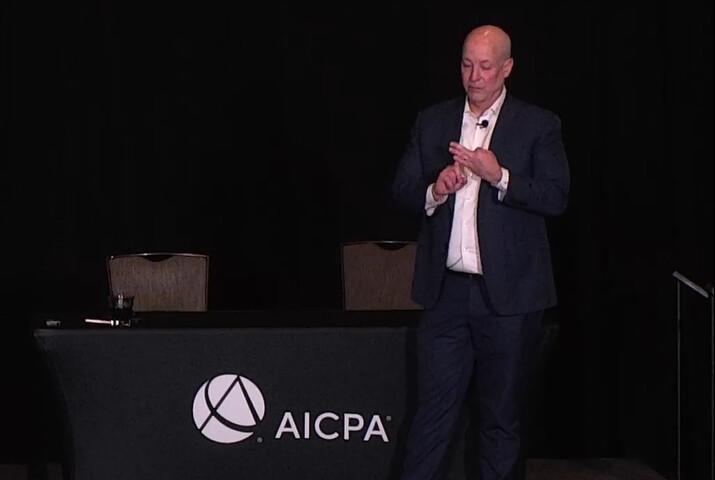
GASB chair Joel Black explained the GASB’s latest standards and plans Monday during the AICPA Governmental and Not-for-Profit Conference.
“At the GASB, we do understand that clients and firms are challenged for resources with the CPA pipeline shortages,” he said. “You’re being asked to do a whole lot more stuff. All the federal money is coming in, with more single audits. The current and existing resources, if they’re even maintained the same, or more likely are shrinking, we’re being pulled in lots of different directions. And we understand that when we change GAAP, we’re asking you or your clients to use those resources on something you otherwise wouldn’t have to do.”
He noted that GASB has made a conscious effort to make sure those resources will be used on a significant improvement in the financial report. “The result of that has been fewer standards coming out than in the past, and fewer projects on our agenda,” said Black.
The state and local governments that are applying GASB standards often need to do more with less. “Governments are always strained for resources, trying to reduce taxes or at least keep them the same if taxes aren’t going away altogether,” said Black. “And even if a government has the opportunity to grow their personnel, they’re going to do something citizen-service direct facing, like adding a firefighter, a police officer, a teacher, not necessarily an accountant.”
He said the board is trying to maintain a high bar of significant improvement in the financial report moving forward. He noted that some new standards are taking effect this fiscal year, such as Statement 103, Financial Model Improvements, and Statement 104, Disclosure of Certain Capital Assets, along with an Implementation Guidance Update that came out in 2025. In fiscal year 2027, the main new standard taking effect will be Statement 1205, Subsequent Events, along with an
(See
“There are going to be no new standards in fiscal year 2028,” said Black. “Maybe if we need another implementation guide by then, maybe something else would come up, but it would be something that you guys need us to do for there to be anything new in 2028. The earliest, I believe, a new standard would come out would be FY 2029, which would be effective, and that would be our infrastructure project. It would not be any earlier than that, but isn’t yet an issue. The standards of that effective date isn’t final. So again, not as much to do. But when we work on projects, and you’ll see this on especially our existing projects, they’re big projects. They’re significant improvements. That doesn’t mean they necessarily all have to be huge, but they are going to be meaningful.”
He noted that every GASB standard now has a materiality box. “It says the provisions of the statement need not be applied to immaterial items,” said Black.
The concept is similar to materiality for auditors and aims to lessen the burden on government accountants. GASB first heard during feedback on its standards for leases and subscription-based IT arrangements that they would be a great deal of work to implement. The Government Finance Officers Association on educating government officials about what materiality means in terms of how to use it for financial reporting.
“For the auditors in the room, I would just say maybe expect some more conversations with your clients about how they use materiality,” said Black. “And anytime I talk to a government official about this, I say you’ve got to talk to your auditor, plan with your auditor. Just do what you think is right. You’ve got to coordinate with them because they have to deal with your decisions on materiality as part of their audit plan, as part of their audit materiality, etc. All of us, if we can have those conversations early, especially when you’re implementing a new standard, we can be more efficient and effective with our financial reporting, rather than just have them account for every dollar using GAAP, because that isn’t really what the board intended when they issued the standard.”
Despite the breathing room for its stakeholders, GASB will still be busy working on developing a number of major projects in the meantime for the future, including infrastructure assets, going concern uncertainties and severe financial distress, revenue and expense recognition, voluntary digital financial reporting and more.
Introductory bullet points created by AI with editorial review.