Off-Market Office Leases Are on the Rise in a Frenetic Manhattan – Commercial Observer
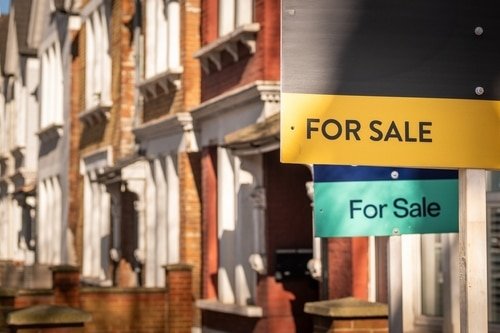
Off-market deals have been a common practice in residential real estate for a long time. Brokers discreetly get high-profile buyers into hot listings before spaces ever hit the open market, and — boom — they’ve got a deal.
Lately, though, off-market deals have become a trend in commercial real estate, too, specifically in Manhattan’s office market.
As available office supply continues to tighten and tenants scramble to secure high-quality space, many office owners in the borough are quietly keeping blocks of office space off the market to get eager and willing tenants into new leases faster, according to JLL.
The tactic is one formed out of necessity. In an office market as fast-paced as Manhattan’s today, neither landlords nor tenants can really afford to take their time and shop around, even if they wanted to wait for a specific moment or earn higher rents.
“It’s less about holding back space because of the rents they can receive, and more about the pace of the leasing market,” said Melanie O’Brien, head of research at JLL. “So it’s not that [landlords are] waiting for a certain moment. It’s the fact that some of the things that they may have done prior to the space being available in the past — like marketing and setting up for the full launch — doesn’t need to happen because tenants are moving very quickly.”
Manhattan’s office leasing totaled 10.06 million square feet in the third quarter of 2026, according to a report from Colliers. That total was 16.2 percent above the five-year quarterly average of 8.66 million square feet and 19.2 percent higher than the 10-year average of 8.44 million square feet. Year-to-date demand reached 32.86 million square feet, the strongest comparable period since 2000.
This year’s third quarter also happened to notch the strongest third quarter of office activity in Midtown South on record, with demand rising 10.7 percent year-over-year, according to Colliers. Plus, September’s 64.76 million square feet of total available supply was Manhattan’s lowest availability since August 2020 and 34 percent below the post-pandemic peak.
“Everybody’s coming back faster, and all of a sudden there’s no supply,” said Kirill Azovtsev, a vice chairman in Savills’ New York office.
Millions of square feet are set to come online in the coming years with new developments — see Related Companies’ 858,500-square-foot 625 Madison Avenue, Related and Oxford Properties’ 1.4 million-square-foot 70 Hudson Yards, or BXP’s 930,000-square-foot 343 Madison Avenue, for example — but it hasn’t stopped tenants from aggressively searching for space now, especially as supply continues to dwindle from conversions. As a result, deals get signed faster.
Enter the off-market appeal.
“What I’m hearing from brokers is really needing to set the tone with tenants that if you’re slow or if you’re indecisive, that space will go quickly,” O’Brien said. “Some tenants have been burnt by that process, so then the next time they’re more likely to try and move quickly and seek out that off-market opportunity. It’s less about landlords demanding higher prices and waiting. It’s mainly a product of the market.”
It’s also a product of brokers already knowing what space is going to become available before it’s even online, which pushes landlords to get deals done faster, Azovtsev said.
“Our job as a broker is go find that space,” he said. “We’re trying to anticipate a potential space that may open up, or where a potential availability may come from. … The space isn’t being withheld. It’s more so who is the first one who is going to find out, and then it never hits the market.”
Most of the leases that end up off-market are for recently vacated, smaller blocks of space — usually roughly 5,000 square feet to 20,000 square feet across a floor or two — that landlords need to fill. Some tenants lease those spaces directly, but many end up subleasing the blocks for a last-minute space — a win-win for a landlord looking for a temporary fix.
There have been some bigger off-market leases lately, though.
At 71 Fifth Avenue, owned by a joint venture between Madison Capital and Lubert-Adler Partners, a source said a roughly 30,000-square-foot lease has been signed there for an artificial intelligence company. Not only did that deal happen before the space hit the open market, but the deal also secured some of the “highest rents” the building near Union Square “has ever seen,” the source said. Spokespeople for Madison Capital and Lubert-Adler Partners did not respond to requests for comment.
Another AI firm is discreetly looking for roughly 50,000 square feet in Midtown South, according to the source.
“[AI tenants] really look for built immediate to-go space, and there’s very little of it,” said Evan Haskell, an executive vice president at CBRE. “They’re the ones who are having to scour the market, find these hidden spaces, and do whatever they can because there’s just so little built space for them.”
AI and Midtown South seem to go hand-in-hand in off-market deals. Plenty of early-stage technology and AI firms need a place to land — quickly — and they often look to Midtown South, particularly in SoHo or the Meatpacking District, according to Patrick Steffens, senior director of office leasing at Avison Young.
“There’s next to no good space left in SoHo and the Meatpacking District,” Steffens said. “The better buildings have the luxury of scarcity, and, when things are scarce, hidden is attractive from a marketing standpoint.”
Most AI tenants are pursuing built-out, furnished spaces on short-term subleases and making rapid decisions, sometimes for more space than they currently need. Steffens said Avison Young is currently working with a “handful” of AI companies looking for off-market space, but space can get snatched up quickly.
“There were a handful of off-market subleases being circled
around in the last two weeks or so that we missed out on because we were too small,” Steffens said. “It was for groups trying to sublease two or three floors — we only needed one.”
It’s all very confidential, especially when it comes to big-name companies.
This past August, Elon Musk’s SpaceX completed its $60 billion acquisition of Cursor, a popular AI-powered code editor and coding assistant developed by AI applied research lab and software company Anysphere.
Before SpaceX bought Cursor, the AI firm had office space spread across a few different buildings in SoHo. Following the acquisition, Cursor had extra office space left over, and brokers were able to find subtenants for that space off-market, according to a source with knowledge of the deals.
It’s unclear which buildings in SoHo were subleased as part of those deals. A spokesperson for Cursor could not be reached for comment.
AI transactions aside, some tenants are also taking up off-market space by simply exercising their right of first offer, a clause that requires a landlord to first present available space in the building to the current tenant before publicly marketing that space. If the tenant decides to expand, that space never hits the market.
There were recent cases of that at an office building along Park Avenue, where three tenants exercised their right of first offer and took spaces in the 50,000-square-foot range, according to a source.
“There can be value in having early conversations about potential availability, particularly when an existing tenant is looking to expand,” said Jonathan Iger, CEO and president of Sage, which owns several office buildings in Midtown East. “It allows both sides to explore options and determine whether there’s a fit before a space formally comes to market.”
The amount of available office space that never hits the open market in Manhattan is unknown, but one thing’s for sure: It’s making a dent in the numbers. According to JLL, off-market deals are creating a “shadow market” that never shows up in the “official” availability rate.
Manhattan’s office availability rate declined by 0.6 percent during the third quarter of 2026 to 12.4 percent, according to an office report from Colliers, representing the 10th consecutive quarter in which availability tightened or remained unchanged and the longest such stretch since 2007.
However, the “real” availability rate — when factoring in off-market leases — is actually a lot lower than it looks, according to JLL’s O’Brien.
“In certain submarkets, the sentiment is that it is lower than what it looks like on paper because we’re always tracking backwards and looking at deals closed,” O’Brien said. “We know that with those deals that are yet to be signed, they’re in the administrative stage where we can’t reflect it in the numbers just yet, but it’s probably already gone.”
Most landlords signing off-market deals are either choosing specific new tenants to bring in — like desirable AI or finance firms — or moving existing tenants around within their portfolios to free up larger, more flexible blocks of space. It’s largely the latter, according to O’Brien.
Because availability is so low in high-activity markets like Midtown — where Colliers found the availability rate decreased 0.4 percent from the second quarter to 11.9 percent during the third quarter of this year — many landlords are freeing up blocks in Midtown and moving their existing tenants to different buildings within their portfolios.
“Those are the type of behind-the-scenes conversations that have permeated the last quarter versus earlier in the year,” O’Brien said.
But those conversations aren’t without risk.
“Off-market deals are risky for the landlord because if they don’t open it up to the market, then they don’t know the value of it, or they don’t know how much the market would’ve paid for it,” Azovtsev said.
Manhattan’s average office asking rent increased by 0.4 percent quarter-over-quarter during this year’s third quarter to $78.36 per square foot, the highest since July 2020, according to Colliers. Year-over-year, the average rent climbed 4.6 percent, the sharpest year-over-year increase in a third quarter since 2019. In addition, Class A pricing hit a record high of $85.45 per square foot.
Some office buildings are blowing those rents out of the water.
Late last month, hedge fund manager Castle Hook Partners leased the entire penthouse of Related Companies’ upcoming 625 Madison Avenue for $375 per square foot, surpassing the former New York City record of $327.50 per square foot for a private family office’s lease at Soloviev Group’s 9 West 57th Street.
“In New York, we’re seeing $300-per-square-foot deals,” O’Brien said. “The market is really responding to this lack of supply.”
Those high rents put pressure on smaller landlords to raise their prices, and even more pressure on tenants to find affordable office space.
It doesn’t help those tenants that Manhattan’s office supply pipeline has collapsed 80 percent, and that there’s currently only 10 blocks of office space over 250,000 square feet available in Midtown, according to Haskell. Factor in vacant buildings facing special servicing or capital stack issues, and that number probably goes down to around four buildings, Haskell added.
“When you really start to peel back the onion, many of those blocks are also short-term sublease space with four years left. No large tenant is going to want that,” Haskell said.
To make things even more difficult for searching tenants, New York City’s wave of new office developments won’t come online for years, and those new developments are already roughly 70 percent spoken for following large deals with anchor tenants who signed years in advance, according to Haskell.
All the while, law firms are still gobbling up the only large chunks of space left, and some companies are even marking their territory across several office buildings, leaving no space for smaller tenants looking to set up in the Big Apple (for example, J.P. Morgan expanding its offices at both 390 Madison Avenue and Five Manhattan West after opening its own 2.5 million-square-foot office tower at 270 Park Avenue — do they really need all that space?).
In the meantime, it seems like landlords are holding all the power, and that tenants might need to resort to off-market deals to secure office space — if they can find them.
Isabelle Durso can be reached at idurso@commercialobserver.com.