Bowman: global regulators should match Fed’s ‘modernization’
- Key insight: Federal Reserve Vice Chair for Supervision Michelle Bowman wants to use the report she commissioned on the failure of Silicon Valley Bank to influence bank oversight around the world.
- Expert quote: “The benefits of our supervisory modernization efforts are not limited to the Federal Reserve. They have implications far beyond the United States.” — Federal Reserve Board Vice Chair for Supervision Michelle Bowman
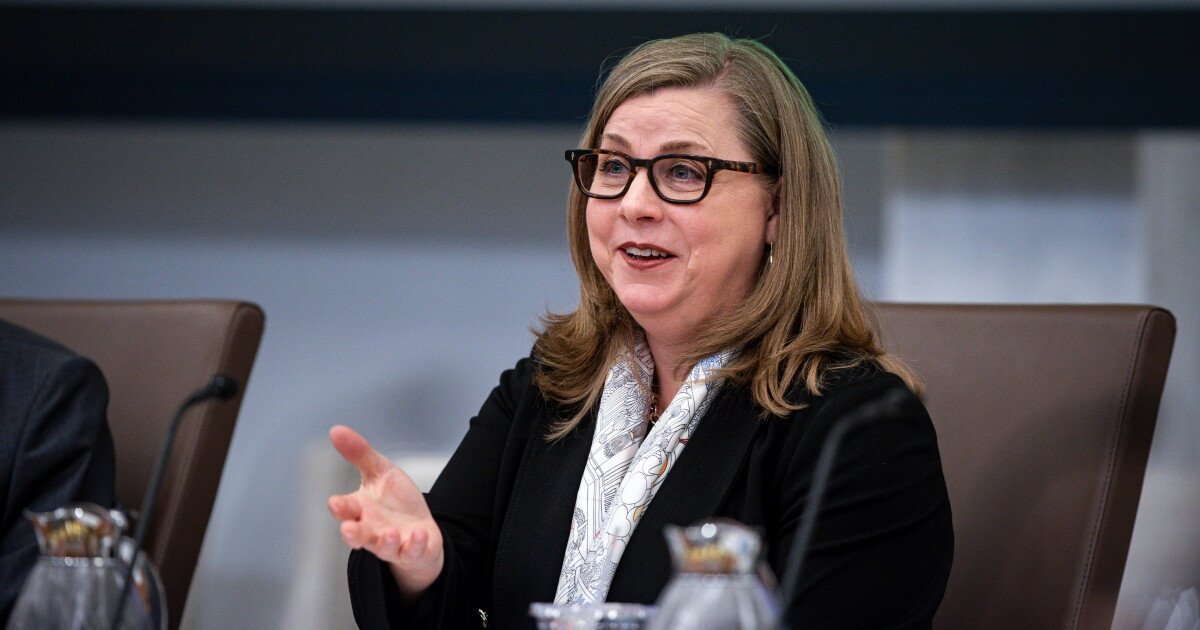
The Federal Reserve Vice Chair Michelle Bowman wants to export her supervisory reforms to other banking jurisdictions around the world.
Processing Content
In a speech delivered at the Bangkok Economic Festival on Thursday, Bowman said changes she has championed in the Fed’s bank oversight — namely focusing on material financial risks, tailoring expectations by bank size and revising organizational structures — are models that other countries should follow.
“The benefits of our supervisory modernization efforts are not limited to the Federal Reserve,” Bowman said. “They have implications far beyond the United States.”
In her remarks, Bowman also criticized international standard setting bodies such as the Basel Committee on Banking Supervision and the Financial Stability Board for blindly adopting policies based on faulty premises.
Specifically, Bowman took issue with the bodies perpetuating faulty claims about banking risks and using them to shape policies around the world. She pointed to the recently released
“The independent review of SVB shows that international standard-setting bodies, including the BCBS and the FSB, relied unquestioningly on incomplete reports compiled quickly and shortly after the failure of SVB,” Bowman said. “The independent review found that both the BCBS and the FSB took language nearly verbatim from other reports published in the United States that were not based on complete or accurate information.”
As a result, Bowman said, both the Basel Committee and FSB pursued “additional regulatory work” that was “inherently flawed because it was based on incomplete and faulty initial report findings.”
The Basel Committee is composed of banking regulators around the world and was founded to establish common rules and approaches for banking oversight around the world — an attempt to tamp down on regulatory arbitrage. The FSB, meanwhile, facilitates cooperation between jurisdictions all over the world to help them safeguard financial stability.
Read more:
To maintain their credibility, Bowman said, the entities should follow the Fed’s lead by focusing on
“Simply accepting data and analysis without rigorous validation risks building international standards on flawed foundations, potentially undermining both the effectiveness of regulations and the credibility of these critical institutions,” she said.
Since becoming vice chair for supervision, Bowman has spearheaded a sweeping reform effort across the Fed’s regulatory and supervisory activities. This has included working with other bank regulators to amend rules as well as revising the central bank’s internal structures for supervision.
Bowman said she has sought to spread the Fed’s new approach internationally through her role as chair of the FSB’s Standing Committee on Supervisory and Regulatory Cooperation.
While the bulk of Bowman’s reforms have resulted in fewer reporting obligations for banks and narrowed the scope of supervision, she noted that modernization is more than just a hands-off approach.
“Modernization is not about doing less,” she said. “It is about more effectively prioritizing the things that matter the most.”